Foreign News
Monkey Vs Bear: China-Philippines Slug It Out Online


In the real world, while monkeys and bears may inhabit the same ecosystem, faceoffs or fights are rare or not known to happen. But when it comes to China vs the Philippines, monkey vs bear has taken on a whole new life, as propaganda cartoons.
Beijing kicked off the cartoon skirmish after a round of confrontation near Second Thomas Shoal, with state-run China Daily releasing an AI-generated video on its Chinese-language social media platforms.
The animation depicts the Philippines as a ragged monkey performing karaoke on a stage symbolising the South China Sea. During the performance, the monkey sings the “wrong lyrics” before being reprimanded by unseen handlers and thrown into the sea.
Then a whale appears, describing the 2016 South China Sea arbitration ruling as “ocean garbage”— echoing Beijing’s longstanding rejection of the Hague tribunal’s decision while portraying China as the protector of maritime peace.
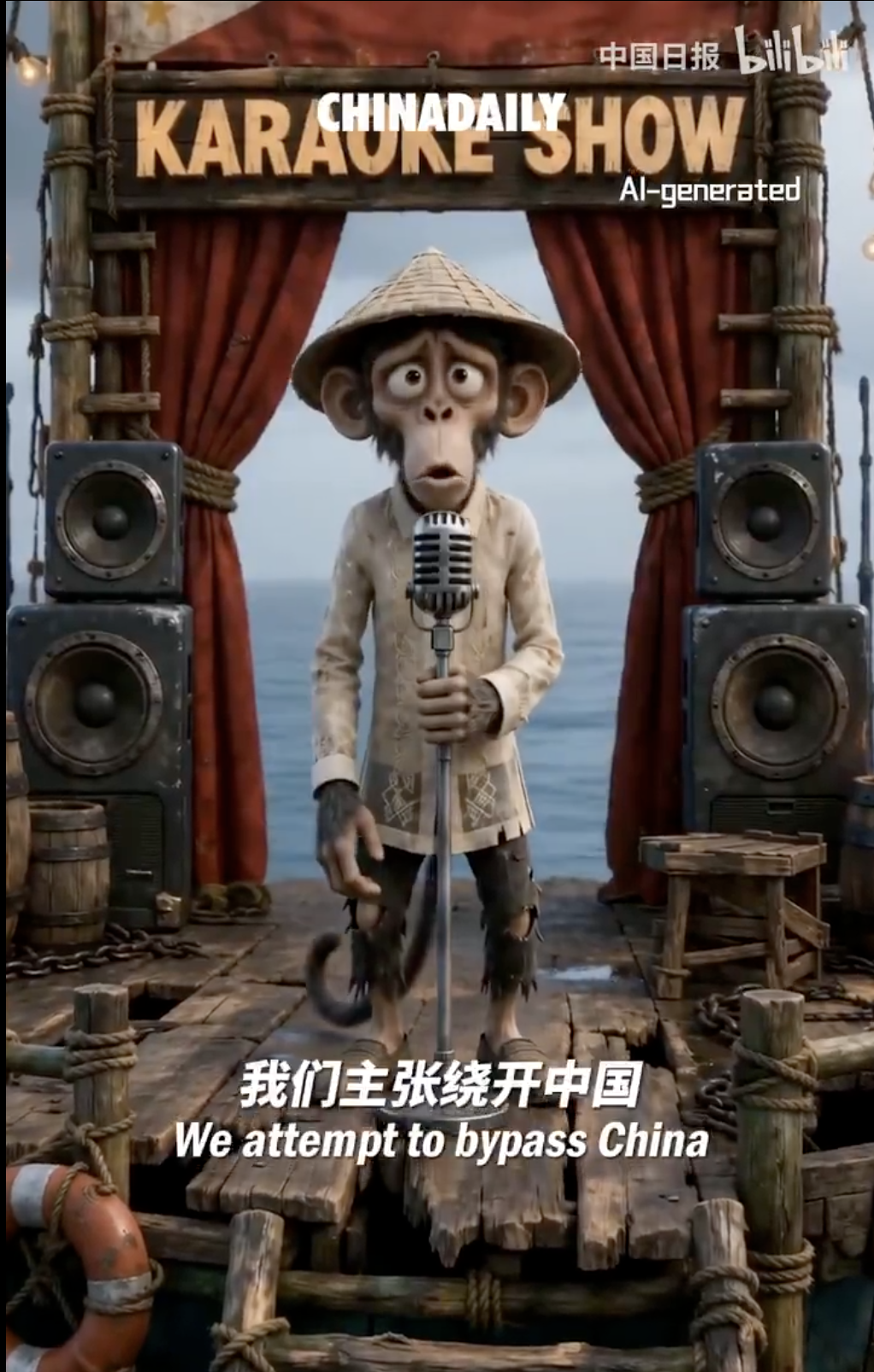
Some Chinese social media users objected, wondering why a state media outlet that frequently condemns perceived insults against China would itself use imagery that many viewed as derogatory towards Filipinos.
But if there’s one thing the Philippines has demonstrated in its long confrontation with China over its territorial waters, it doesn’t lack spunk or imagination.
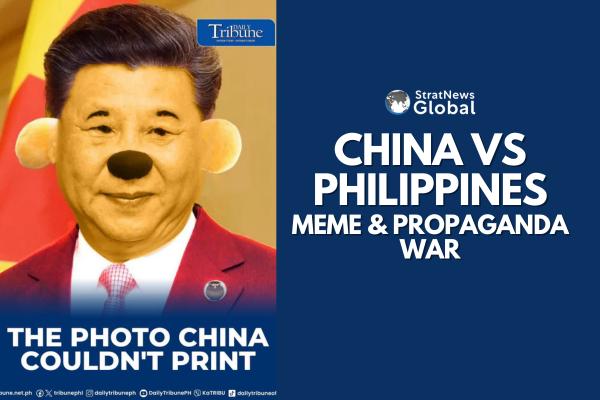
A leading newspaper in Manila, The Daily Tribune, posted a cartoon of China’s President Xi Jinping with bear-like ears and nose provocatively headlined “We’re reporting this because they can’t.” (Screenshot Below)
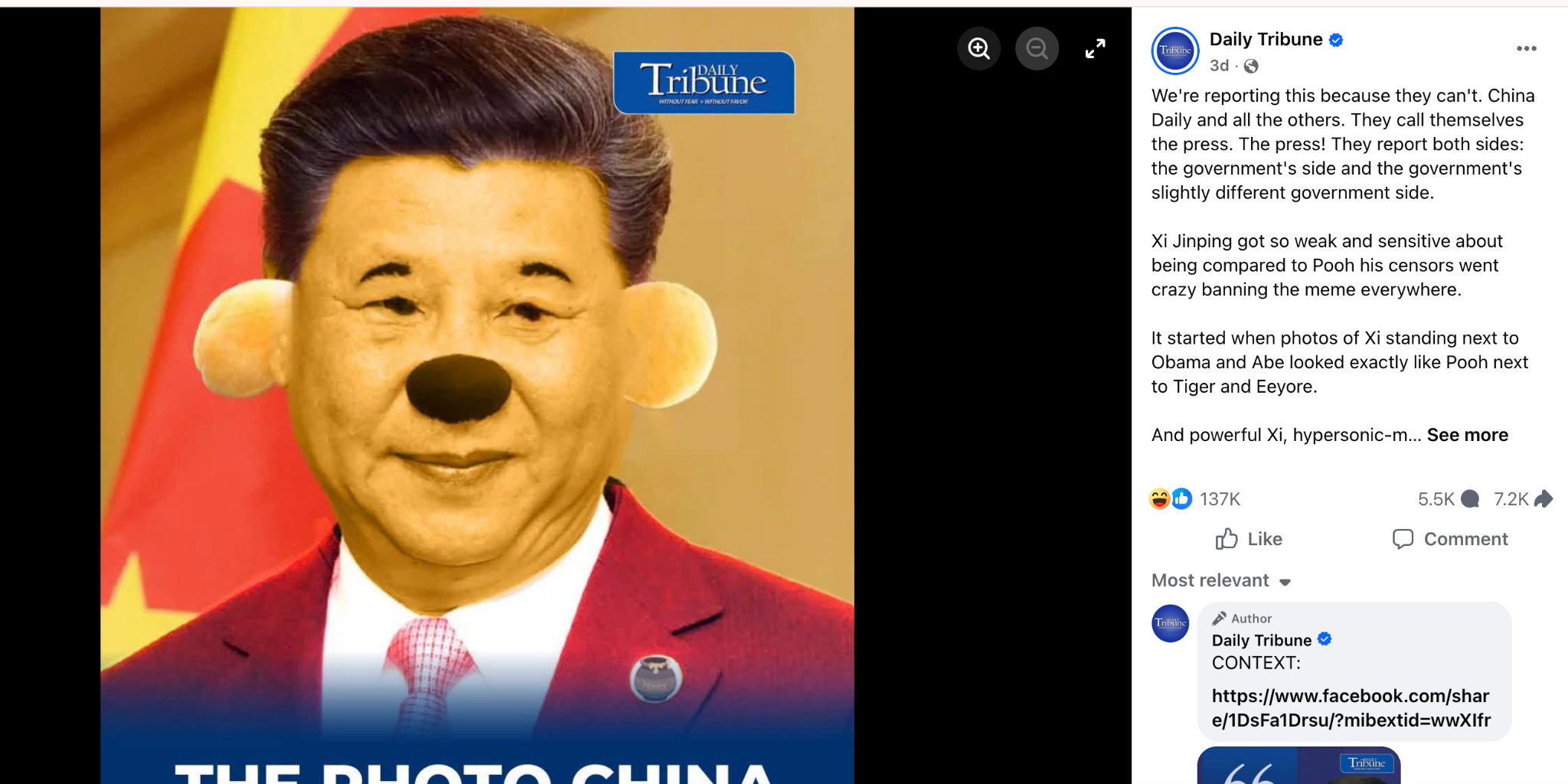
The allusion was to Winnie-the-Pooh, a banned cartoon character in China because it has often been used to satire Xi Jinping. China has dipped into the same playbook, using cartoons to target the United States and Japan, India and Taiwan, often portraying them as aggressors or puppets of Washington while reinforcing China’s official narrative.
The exchange highlights how modern geopolitical rivalries are no longer fought only through diplomacy or military posturing. Increasingly, they are also fought through memes, AI-generated videos and social media campaigns, where winning the narrative can be almost as important as winning the argument.