

Health
World Population Day: NPC urges improved reproductive health services

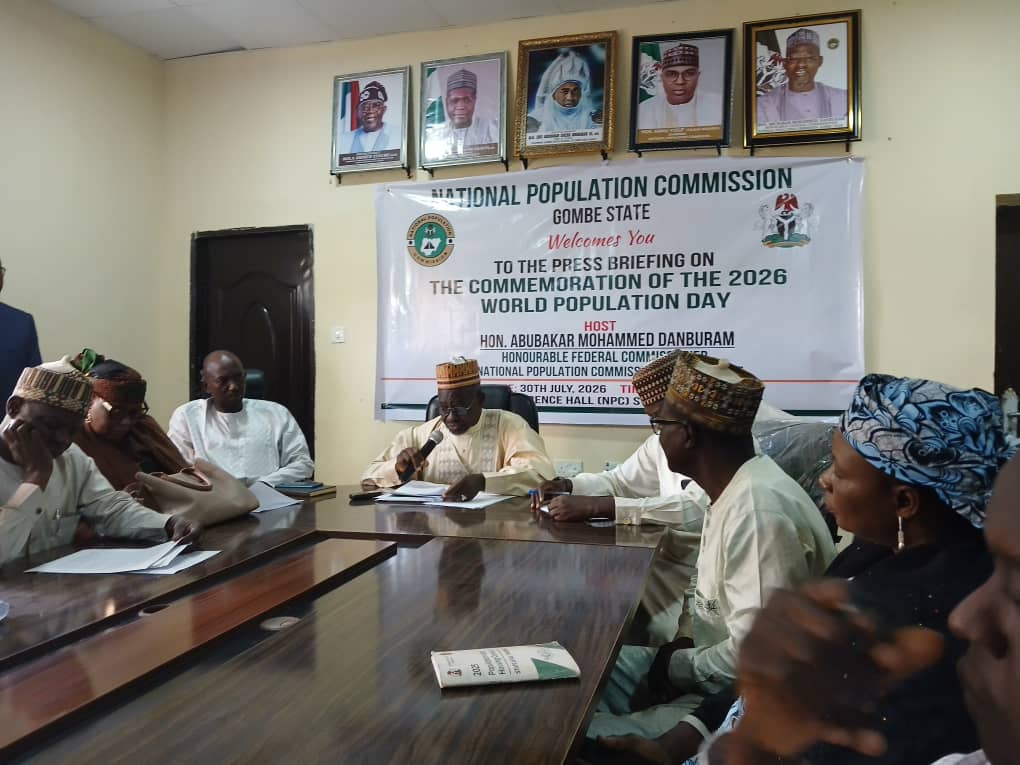
The National Population Commission has called for increased investment in youth-friendly healthcare and reproductive health services, expressing concern that adolescent fertility remains high despite a decline in Nigeria’s overall fertility rate.
The NPC Chairman, Dr Aminu Yusuf, represented by the Federal Commissioner in Gombe State, Hon. Abubakar Danburam, made the call on Thursday during a press briefing in Gombe ahead of the 2026 World Population Day.
Speaking on this year’s theme, “Realising the Hopes and Aspirations of Young People – Today and for the Future,” Danburam said improving young people’s access to healthcare was critical to unlocking Nigeria’s demographic dividend.
He noted that while the latest Nigeria Demographic and Health Survey showed the country’s Total Fertility Rate had dropped from 5.3 to 4.8 children per woman, adolescent fertility remained 15 per cent, indicating persistent gaps in reproductive healthcare.
Yusuf said, “The latest Nigeria Demographic and Health Survey shows the national Total Fertility Rate successfully declined from 5.3 to 4.8 children per woman, but adolescent fertility remains stubbornly high at 15 per cent, reflecting ongoing structural barriers to comprehensive health coverage, low modern contraceptive prevalence, and reproductive agency for young women.”
He stressed that empowering young people with access to quality healthcare, education and reproductive health information would improve health outcomes and accelerate national development.
According to him, “Unlocking the immense potential of our youth requires deliberate investments in quality education, healthcare, skills development, decent employment opportunities, gender equality and meaningful participation in decision-making processes.”
The NPC boss added that when young people are healthy and empowered, the country stands to benefit from increased productivity, innovation, economic growth and social cohesion.
Yusuf said Nigeria, with an estimated population of 238 million, remains one of the youngest countries in the world, with people aged 15 to 29 years accounting for about 30 per cent of the population.
He also linked reproductive health to the country’s quest for a demographic dividend, saying informed reproductive choices among young people would reduce dependency ratios and enhance economic growth.
“Central to realising this potential is ensuring that individuals and couples, particularly young people, can exercise informed choice over their reproductive lives, including the timing, spacing and number of their children. When people are empowered with the information and services to make these decisions freely, fertility transitions accelerate, dependency ratios improve, and the conditions for a demographic dividend become attainable,” he said.
Yusuf, however, noted that infrastructure deficits, economic hardship and insecurity continued to hinder young people’s access to essential services.
He urged governments and stakeholders to prioritise investments in youth-friendly health services, human capital development and evidence-based policies, saying such interventions were necessary to secure Nigeria’s future.

He also called on the media to sustain advocacy on population and reproductive health issues as part of activities marking the 2026 World Population Day.
Copyright PUNCH
All rights reserved. This material, and other digital content on this website, may not be reproduced, published, broadcast, rewritten, or redistributed in whole or in part without prior express written permission from PUNCH.
Contact: health_wise@punchng.



