

Education
Concern, worry as divergent views greet rising fuel prices – EnviroNews


– Advertisement –
An economist, Prof. Kenneth Ife, says the latest increase in Dangote Refinery’s petrol gantry price will raise transport and business costs and further weaken household purchasing power.
Ife, who is also the President, Institute of Professional Economists and Policy Management (IPEPM), said this in an interview on Sunday, September 20, 2026, in Lagos.
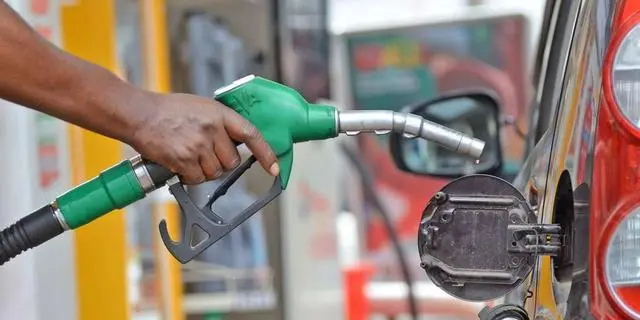
He said the increase would also put pressure on food prices and inflation as higher energy costs spread across the economy.
On Sept. 12, Dangote Refinery increased its petrol gantry price from N1,265 to N1,350 per litre, its fourth increase since Aug. 21.
The cumulative increase has raised the refinery’s gantry price by N185, or 15.9 per cent, in 22 days.
Ife said petrol prices could rise further if international crude prices remained elevated amid disruptions to global oil supplies.
He said the price of Bonny Light had risen sharply to 112 dollars per barrel before dropping to 108 dollars.
According to him, crude prices can rise further if tensions around major oil-producing countries and key shipping routes intensify.
He said any further escalation of tensions in the Middle East could exert additional pressure on crude and refined petroleum product prices.
Ife said recent attacks on Saudi energy infrastructure and disruptions around major shipping routes had heightened concerns over global oil supplies.
He said higher petrol prices would directly reduce household purchasing power through increased transportation and energy costs.
“The petrol price increase transmits directly to shrinkage in household purchasing power,” he said.
Ife said higher transport costs would also push up food prices and worsen energy and food insecurity.

“Cost-push inflation will be aided by the rising input cost,” he said.
The economist said higher costs of imported goods and industrial raw materials would further increase the cost of doing business.
He added that the development could reduce the competitiveness of Nigerian businesses in regional and global markets.
Ife urged the Federal Government not to return to petrol subsidies but to adopt measures that would reduce domestic fuel costs.
He called for full implementation of the Petroleum Industry Act (PIA) and stronger domestic crude supply to local refineries.
“The government can get Nigerian National Petroleum Company Ltd. to supply the full complement of crude required by local refining capacities,” he said.
“Under the PIA, domestic crude supply operates on a willing-supplier, willing-buyer basis, with the regulator empowered to establish a Domestic Crude Supply Obligation,” he added.
Ife also urged the government to accelerate the deployment of Compressed Natural Gas (CNG) as an alternative to petrol in the transport sector.
He proposed partnerships with filling station operators to expand CNG infrastructure and vehicle conversion.
“The government can rapidly accelerate the CNG gas expansion and capacity utilisation by taking CNG to the mass market,” he said.
Ife said wider CNG adoption could reduce dependence on petrol and help lower energy costs for households and businesses.
He said the government could pursue the measures while allowing market forces to determine petrol prices.
The Presidential Initiative on CNG and Electric Vehicles currently reports more than 400 certified conversion centres and over 90 CNG refuelling stations nationwide.
The initiative aims at expanding CNG infrastructure and reducing transportation costs following the removal of petrol subsidies.
Checks in parts of Lagos on Sept. 20 showed petrol selling for between N1,400 and N1,500 per litre at some filling stations.
Meanwhile, mmotorists, commuters and road transport workers in the Federal Capital Territory (FCT) have expressed concern as petrol prices rise again, pushing up transport fares and household expenses.
Checks in Abuja showed that MRS outlets were selling petrol at N1,395 per litre, while NIPCO outlets were selling at N1,430 and Mobil outlets at N1,400.
However, other outlets were selling the product at prices approaching N1,450 per litre, depending on location and prevailing supply costs.
The development had raised concerns among vehicle owners and commuters, with transport operators saying increased fuel costs were putting additional pressure on their businesses.
Udoh Daniel, a motorist in Abuja, described the latest increase as unbearable, saying the rising price of petrol was affecting household finances.
“Imagine buying petrol at N1,414 per litre. My cousin told me that it is selling for N1,450 presently in Dawaki,” Daniel said.
He said the continuous increases were making it increasingly difficult for motorists to maintain their vehicles and meet other financial obligations.
Mrs. Favour Adeniji, another Abuja resident, said the latest increase was coming at a difficult period for families following the resumption of academic activities.
“Our children have just returned to school, and we are struggling to pay their fees when the petrol price increase was slammed on us.
“This is ill-timed. The government and other people responsible for this are not considerate at all because it has created additional pressure,” she said.
A civil servant, Ali Salisu, also expressed concern over the effect of rising petrol prices on workers whose salaries had not increased in line with the cost of living.
“Salaries are not increasing, yet the price of petrol keeps rising and pushing up the price of everything else.
“This administration is pushing workers and ordinary Nigerians to the edge.
“There is a popular saying that if you chase a goat to a brick wall, it will have no choice but to hit back at you.
“I hope the government is not gradually pushing Nigerians to their limit,” Salisu said.
For commuters, the impact is being felt directly through higher fares on some routes within Abuja and its suburbs.
Commuters from satellite towns and other surrounding communities going to the city centre now spend more on daily transportation than they did before the latest petrol increase.
Commuters travelling from the Masaka-New Nyanya-Ado-One Man Village axis to the city centre said fares had increased from N1,000 to N1,200.
Similarly, commuters from Kubwa, a satellite town to Federal Secretariat, Wuse and Berger now pay N1200, instead of N1000
The additional N200 per trip could translate into thousands of naira in extra monthly expenditure for workers who commute to Abuja every weekday.
Transport workers have also expressed concern that higher fuel costs are reducing their daily earnings because a larger proportion of their revenue is now spent on petrol.
A taxi driver, Salem Ogbe, said operators were caught between increasing fares to cover their expenses and protecting passengers from additional financial pressure.
“I am tired of this job because there is hardly any profit left,” Ogbe lamented.
He said drivers could not increase fares every time petrol prices rose because passengers were also struggling with higher living costs.
According to him, transport operators were therefore being forced to absorb part of the increase, despite the additional cost of fuelling and maintaining their vehicles.
“The situation is particularly challenging for drivers who cover long distances daily and consume significant quantities of petrol before returning home,” he said.
Mr. Collins Ejiga, a private vehicle owner, said the increase had eaten deep into his savings and was affecting his livelihood.
“When the pump price was N1,265 per litre, I was buying 50 litres for #63,250, which lasted me for a week.
“With the latest increase to N1,450, I am buying the same quantity for N72,500, which is about a N10,000 increase. The pressure is becoming unbearable,” Ejiga lamented.
Some motorists stated that, to mitigate the pressure, they were reducing unnecessary journeys, combining multiple errands into single trips and considering public transportation to control their monthly expenses.
Some commuters on the other hand, said they faced the difficult choice of paying higher fares, walking longer distances or waiting for cheaper means of transportation.
The increase has also raised concerns among traders and small business operators because higher transportation costs could increase the cost of moving goods from markets and distribution centres.
Some of the business owners said they had no choice but to increase the prices of their wares to cover the increased cost of transportation.
Meanwhile, economic experts had warned that increased transportation and production costs could eventually feed into the prices of food and other essential commodities.
They contended that the development could further compound the challenges faced by Nigerians who were grappling with rising living costs.
The latest adjustment is the fourth upward review of Dangote Refinery’s petrol gantry price since Aug. 21, bringing the cumulative increase to N185 within the period.
Motorists and transport operators have urged stakeholders in the petroleum sector to ensure greater stability in petrol prices to enable households and businesses to plan their finances.
For FCT residents, the concern extends beyond the price displayed at filling stations, as each increase affects the cost of commuting, household budgeting and daily economic activities.
As motorists and commuters adjust to the latest increase, transport workers say further petrol price increases could create additional pressure on fares and the already stretched finances of passengers.
In a related development, a stakeholder has said that eising petrol and energy costs can undermine Nigeria’s local manufacturing drive by increasing production costs and making locally produced goods less competitive.
Dr Nathaniel Oladunjoye, an economist and Senior Lecturer, Department of Economics, Obafemi Awolowo University, Ile-Ife, said this in an interview on Sunday.
Oladunjoye said reducing production costs was critical if Nigerian manufacturers were to compete effectively with imported products.
“Manufacturers using diesel or petrol will inevitably factor higher energy costs into the prices of their products.
“If the government wants to improve local manufacturing so as to reduce over-dependence on importation, one of the major indicators is the cost of production,” he said.
Oladunjoye said unreliable electricity supply further increased production costs because businesses were forced to rely on expensive alternative power sources.
According to him, the combined impact of high fuel, diesel and electricity costs can make locally manufactured goods more expensive than imports.
“For all producers who are producing, possibly using PMS or using diesel, they will definitely factor in the cost of production.
“Consumers will naturally favour cheaper imported products when locally manufactured alternatives become more expensive. Once locally produced goods are much more expensive than imported goods, it means that the cost of production is high.
“Government must deliberately reduce production costs to improve the competitiveness of Nigerian businesses and strengthen domestic manufacturing,” he said.
The economist said that petrol prices had a ripple effect across the economy because transportation and production costs influenced prices of goods and services.
He urged the government to address the structural factors driving production costs while ensuring that Nigerians benefited more from the country’s oil resources.
He said that lowering energy costs would help manufacturers expand production, compete with imports and contribute more effectively to economic growth.
“This is because once the cost of PMS goes down, other macroeconomic variables will automatically adjust to it,” said.
Oladunjoye has also urged the Federal Government to increase fuel supply to cushion Nigerians from rising petrol prices.
He said government’s intervention was necessary because rising petrol prices were worsening poverty and reducing welfare of Nigerians.
“Once the policy of the government is driving people into poverty, penury, and driving people into multidimensional poverty, then the government must take caution.
“Nigeria, as an oil-producing country, should ensure that its citizens remain primary beneficiaries of the nation’s natural resources.
“As such, government policies should improve citizens’ welfare rather than make vulnerable Nigerians worse off,” he said.
According to the economist, the government can intervene without necessarily returning to the previous petrol subsidy regime.
“If the government does not want to reintroduce subsidy, fine. But the government can also oversupply.
“The federal government can increase the quantity of petroleum supplied to the Dangote Refinery while requiring the product to be sold at an agreed price.
“The relief is coming in the form of more supply of the product to Dangote than pushing the continuous increase to the income of the citizens,” he said.
He said such intervention would provide relief to households already facing declining incomes and increasing transportation and living costs.
Oladunjoye also urged the government to strengthen border controls and provide relevant agencies with equipment and personnel to tackle fuel smuggling.
He said government should not transfer the cost of porous borders to Nigerians through higher petrol prices.
“Rising petrol prices have broad effects because transportation costs influence the prices of food and other goods.
“The resulting increases can worsen poverty, inequality and unemployment while placing further pressure on households.
“So, let us address the issue of poverty. Let us address the issue of inequality. Let us address the issue of unemployment,” he said.
He said government’s primary responsibility was to improve citizens’ welfare and prevent policies that would make vulnerable Nigerians worse off.
He said that Nigerians should be primary beneficiaries of the country’s oil resources, particularly given the relatively low income levels of many citizens.
“How can a worker earning N77,000 minimum wage cope when petrol costs more than N1,400 per litre.
“The government should intervene when essential commodity prices rise excessively, because even capitalist countries intervene in their economies.
“There is no more rational justification when the welfare of the people keeps declining,” Oladunjoye said.
By Olusegun Aribike , Emmanuel Ijikanmi and Lucy Ogalue



