

Education
UN report warns biodiversity targets at risk despite global commitments – EnviroNews


– Advertisement –
Countries have made significant progress in establishing national commitments to protect and restore nature, but urgent action, stronger ambition and increased financing are needed to meet global biodiversity targets by 2030, according to a new United Nations report.
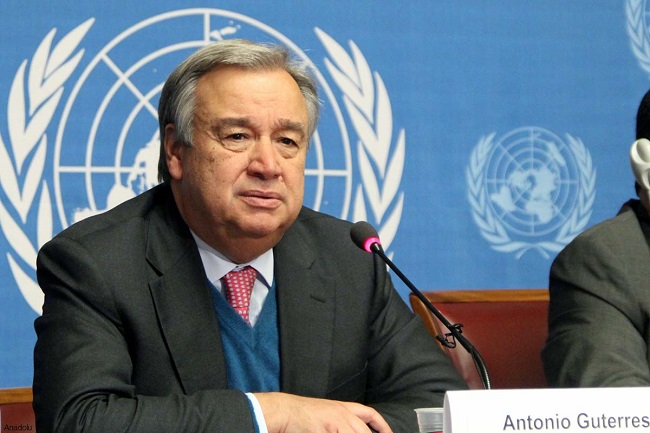
The report, titled State of Biodiversity Action, was formally launched by UN Secretary-General António Guterres ahead of global biodiversity negotiations in Yerevan, Armenia.
It provides the first global assessment of collective progress under the Kunming-Montreal Global Biodiversity Framework, adopted in December 2022, which sets 23 targets for halting and reversing biodiversity loss by 2030 and four long-term goals for 2050.
According to the report, nearly 90 per cent of the 196 Parties to the Convention on Biological Diversity (CBD) have established national biodiversity targets, while close to 60 per cent have developed national biodiversity strategies and action plans.
More than 70 per cent have also submitted national reports, while Indigenous Peoples and local communities, subnational governments, businesses and civil society organisations have registered approximately 5,000 commitments to support the global framework.
However, the report warns that these commitments have yet to translate into sufficient action, with fewer than half of the national targets assessed by countries currently on track.
National Commitments Fall Short
The report identifies a significant gap between countries’ national commitments and the ambition required to achieve the global biodiversity targets.
Although national targets address an average of 22 of the framework’s 23 global targets, many countries have not fully incorporated the scope and requirements of those targets into their national plans.
For instance, while several countries have established targets to promote positive incentives for biodiversity conservation, far fewer have committed to reducing harmful subsidies, as required under Target 18.
The report also highlights shortcomings under Target 3, which calls for the conservation of at least 30 per cent of the world’s land and sea areas by 2030.
It notes that current national pledges fall significantly short of the global conservation ambition.
Other major challenges include inadequate financing, limited implementation capacity, insufficient data and knowledge, and weak coordination across government institutions and wider society.

Targets requiring action beyond environment ministries, particularly those relating to business practices, sustainable consumption, harmful incentives and finance, are among the areas experiencing the greatest delays.
The framework recognises that biodiversity loss is driven by several interconnected factors, including land- and sea-use change, unsustainable exploitation of species, climate change, pollution and invasive alien species.
Addressing these pressures requires coordinated action across agriculture, fisheries, forestry, infrastructure, finance and business, rather than relying solely on environmental policies.
The report identifies key priorities, including reforming incentives that encourage environmental damage, promoting sustainable production and consumption, improving corporate disclosure of biodiversity-related impacts and dependencies, and directing investments towards conservation, restoration and the sustainable use of nature.
Guterres Calls for Urgent Action
Commenting on the findings, Guterres said the report demonstrated that critical elements required to achieve global biodiversity goals, including financing, capacity, cooperation and data, remained inadequate.
“The report shows that many of the critical elements of progress, including finance, capacity, cooperation and data – are still missing in action,” the Secretary-General said.
“Nature won’t thrive on good intentions. Guided by the evidence in this report, we can halt and reverse biodiversity loss and secure the natural foundations upon which all human life and prosperity depend.”
Guterres stressed the importance of accountability, international cooperation and the contributions of Indigenous Peoples and local communities, whose traditional knowledge and stewardship play important roles in protecting ecosystems.
He noted that these efforts were essential to safeguarding food and water security, public health, livelihoods and economic resilience.
Ahead of the Leaders for Nature Summit, the UN chief also called for increased financial and technical support, particularly for developing countries, alongside reforms to harmful subsidies and greater investment in nature-positive activities.
He further urged governments to integrate biodiversity considerations more effectively into public policies, national budgets and development planning.
COP17 to Assess Global Progress
The findings are expected to inform the first global review of collective progress under the Kunming-Montreal Global Biodiversity Framework at the 17th Conference of the Parties to the Convention on Biological Diversity (COP17), scheduled to take place in Yerevan from October 19 to 30, 2026.
At the meeting, governments will assess progress towards the framework’s objectives and consider measures to accelerate implementation.
Armenia’s Minister of Environment and incoming COP17 President, Hambardzum Matevosyan, said the conference would provide an opportunity to determine the extent of progress achieved and identify the changes needed to close existing implementation gaps.
“COP 15 gave us the framework. COP 16 advanced important mechanisms for its implementation. COP 17 must now help us determine where we stand, what is working, where progress is falling short and what must change to accelerate implementation,” Matevosyan said.
The Executive Director of the United Nations Environment Programme (UNEP), Inger Andersen, also called for more ambitious action, warning that climate change was placing increasing pressure on ecosystems.
“This report shows that we are making progress, but we must do much more, especially as accelerating climate change impacts place growing pressure on nature,” Andersen said.
“We cannot tackle climate change, biodiversity loss and pollution in isolation.”
Similarly, the Executive Secretary of the Convention on Biological Diversity, Astrid Schomaker, said the report had provided a clearer picture of global progress and the remaining gaps.
“We know where we stand. We know where the gaps are. Now we must work together to close them,” Schomaker said.
She described COP17 as an opportunity to build on existing achievements, strengthen international cooperation and place biodiversity at the centre of decision-making across governments and society.
Armenia to Host Leaders for Nature Summit
Ahead of COP17, Armenia will host the Leaders Summit on Biodiversity, themed “Leaders for Nature,” in Yerevan on October 16.
The summit is expected to bring together senior political leaders to discuss the report’s findings and strengthen political commitment to implementing the Kunming-Montreal Global Biodiversity Framework.
The gathering comes as countries approach the halfway point towards the framework’s 2030 deadlines, with the report underscoring the need to move beyond setting targets to delivering measurable results.
The UN assessment makes clear that achieving the global biodiversity goals will depend on stronger national commitments, adequate resources, effective accountability and coordinated action across governments, businesses and communities.
With COP17 approaching, governments face growing pressure to translate their existing pledges into concrete measures capable of halting and reversing biodiversity loss while protecting the ecosystems upon which human well-being and economic prosperity depend.



