

Foreign News
At 91, The Dalai Lama’s Ideas Still Travel


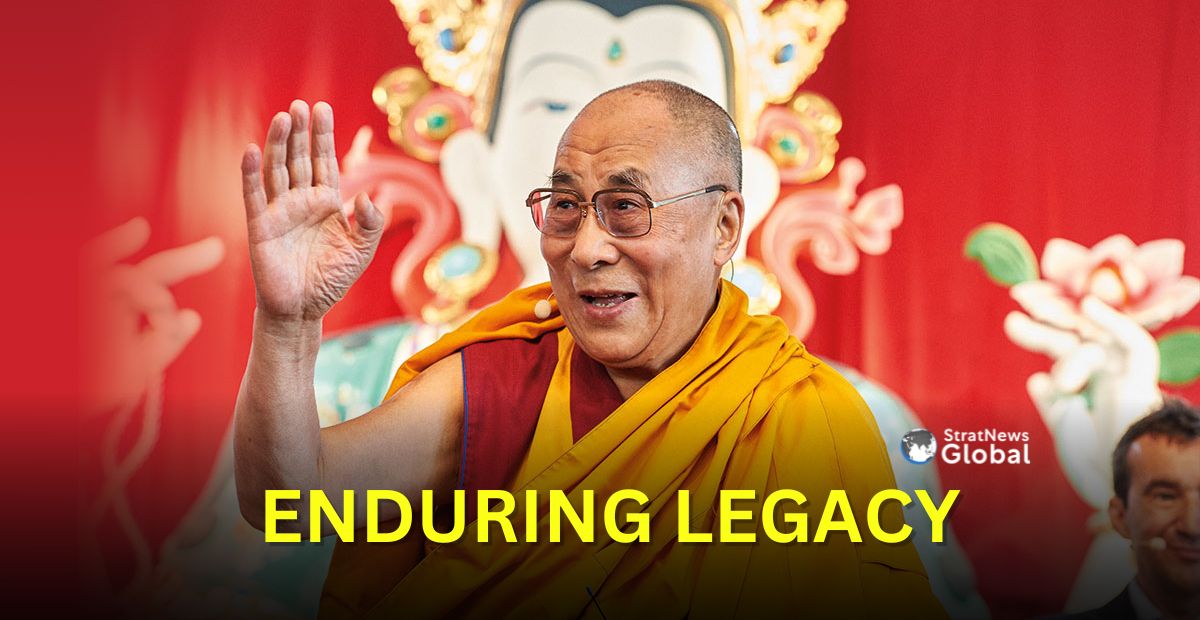
Some birthdays are marked by celebration. Others quietly become markers of history. As the Dalai Lama turns 91, the occasion carries a significance that extends well beyond age. His life is a reminder of an extraordinary life lived across two worlds, one left behind in 1959, the other painstakingly rebuilt in exile.
For more than six decades, the Dalai Lama has come to represent not just Tibetan Buddhism, but a rare continuity in an increasingly fractured world.
The 14th Dalai Lama, Tenzin Gyatso, has remained a constant public figure. Governments have changed, alliances have shifted and new conflicts have emerged, yet the image of the smiling monk speaking of compassion has endured. His message has consistently found an audience.
For Tibetans born in exile, his role has been even more profound. He has become the bridge between memory and identity, between a homeland many have never seen and a culture they continue to preserve. In many ways, his presence has ensured that exile has never meant erasure.
Perhaps that is why each birthday is not simply a celebration of longevity but an affirmation that ideas can outlast political circumstances. At a time when global discourse is increasingly shaped by competition and conflict, the Dalai Lama’s vocabulary remains rooted in compassion, dialogue and ethical responsibility.
Dalai Lama’s birthday wishes poured in from around the world, with tributes lighting up social media through the day. Several events were organised to mark the occasion, among them a gathering in Bodh Gaya, where the Asian Buddhist Conference for Peace observed the day as the Universal Day of Compassion.
The programme went beyond tribute, exploring the role of compassion in peacebuilding and conflict resolution while bringing together monks, scholars and delegates from across Asia.
In his address, ABCP Deputy Secretary General and Secretary of its India National Centre, Shri Sonam Wangchuk Shakspo, urged Buddhist institutions to engage with contemporary challenges, from ethical education to artificial intelligence, while preserving the Nalanda tradition, arguing that compassion must remain relevant to a rapidly changing world.
IIM Bodh Gaya’s Director Dr. Vinita S. Sahay’s call to integrate Buddhist values into management education and her invitation to monks, should they wish, to engage with students at the institute. It was a quiet reminder that Buddhist thought is increasingly finding relevance beyond monasteries, in classrooms, leadership and public life.
At 91, the Dalai Lama’s greatest legacy may be not only the life he has lived, but the conversations his ideals continue to inspire.



