

Education
FSU wildfire experts available for interviews


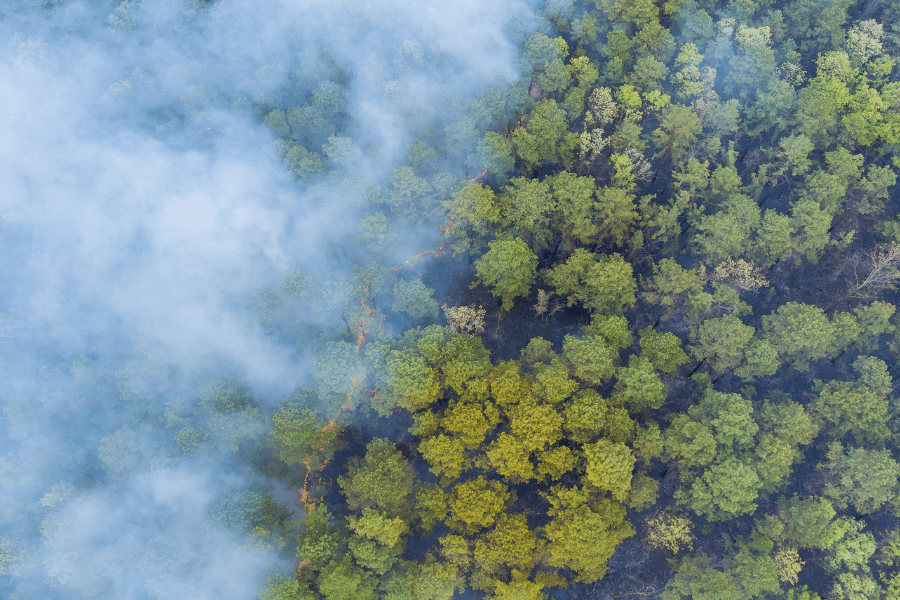
As wildfire smoke spreads across parts of Canada and the United States, Florida State University experts are available to discuss the conditions fueling the fires, the risks to communities and the science behind wildfire response.
Extreme heat, below-average rainfall and dry vegetation have accelerated wildfire activity in Canada, sending intense smoke south across the border and into the Northeastern and Upper Midwestern United States. While wildfires are common in Canada, a heat dome in late June has increased the number of outbreaks. Nearly 950 active wildfires are burning according to the Government of Canada’s National wildland fire summary.
Simultaneously, an active wildfire season has taken place in the U.S. Close to 40,000 fires have burned through more than 3.6 million acres in 2026 — above-average activity for mid-July. A USA Today analysis of Monitoring Trends in Burn Severity (MTBS) data shows that by the early 2020s, the average annual acres burned in the U.S. had nearly tripled compared to the 1990s.
Reporters seeking expert insight may contact the FSU faculty members listed below. Their expertise is organized by topic to help media quickly identify sources on fire modeling, disaster response, firefighter safety and catastrophic risk financing.
Fire modeling
Kevin Speer, former Geophysical Fluid Dynamics Institute (GFDI) director and professor of scientific computing
- Email: kspeer@fsu.edu
- Speer is an expert in climate change, from global ocean circulation to the dynamics of hydrothermal plumes. Recently retired, he served as director of the GFDI from 2011 to 2026 and was a leading expert on the 2025 Los Angeles wildfires.
Disaster response
Yushun Dong, assistant professor of computer science
Firefighter safety
Meredith McQuerry, director of the ThermaNOLE Comfort Lab
- Email: mmcquerry@jmc.fsu.edu
- McQuerry’s research uses the functional design process to engineer better performing protective clothing for first responders, military personnel, healthcare workers and athletes. She tackles personal protective equipment (PPE) issues that many firefighters deal with, ranging from improper fit, reduced mobility, low durability, chafing and overheating.
Catastrophic risk financing
Charles Nyce, professor and Florida Surplus Lines Insurance director, Risk Management & Insurance Center
- Email: cnyce@wertheim.fsu.edu
- Nyce has authored numerous articles on risk management and insurance topics, including title insurance, IPOs, enterprise risk management, predictive analytics and natural hazards. He is a leading insurance expert on catastrophic risk financing and one of the nation’s top voices when it comes to insurance topics related to natural disasters.



