Education
At desertification forum, experts warn of deepening crisis in Northern Nigeria – EnviroNews
– Advertisement –
The Citizens Free Service Forum (CFSF) on Thursday, June 18, 2026, convened a virtual Expert Training on Desertification in Northern Nigeria, bringing together journalists, community activists, gender advocates, and labour experts to spotlight one of the country’s most urgent but under‑reported environmental crises.
The event, held a day after the global commemoration of the World Day to Combat Desertification and Drought (June 17), formed part of a broader June calendar of environmental observances, including World Environment Day, World Oceans Day, and World Wind Day.

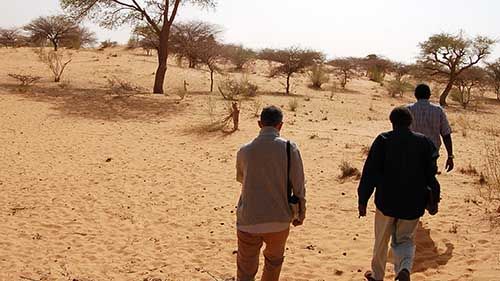
Nigeria ‘Under Assault’ from Climate Impacts — CFSF Director
In his welcome address, Comrade Sani Baba, Executive Director of CFSF, warned that Nigeria is facing a multi‑front environmental emergency.
He noted that while the entire country is grappling with rising sea levels, coastal erosion, gully erosion, biodiversity loss, and deforestation, the northern region is experiencing a particularly devastating threat: the steady march of the Sahara Desert.
According to him, desertification now affects about 45% of Nigeria’s landmass, with states such as Adamawa, Borno, Gombe, Yobe, Jigawa, Katsina, Kebbi, Sokoto, and Zamfara losing an estimated 350,000 hectares of land annually.
Baba also highlighted the dramatic collapse of Lake Chad, which has shrunk from 25,000 km² in the 1960s to less than 1,500 km² today, destroying the livelihoods of more than 40 million people who once depended on fishing and farming.
He stressed that the crisis is being worsened by human activities such as overgrazing and unsustainable farming, leading to crop failures, water scarcity, and escalating farmer‑herder conflicts.
“Millions of people in Northern Nigeria are affected by desertification, yet these issues remain under‑reported,” he said. “This workshop aims to equip journalists with the skills to tell these stories powerfully enough to drive policy action.”
Women Bear the Heaviest Burden – Gender Expert
A major highlight of the training was the presentation by Hajia Azizat Mohammed Adangba, Trustee, Community Based Initiative for Growth and Sustainability, on “Impact of Desertification on Women in Northern Nigeria.”
She explained that women in the region play multiple roles – smallholder farmers, food processors, water collectors, caregivers, and household managers – yet they lack the rights and resources needed to cope with environmental shocks.
What Women Lack


- Land ownership and inheritance rights
- Access to credit and climate finance
- Decision‑making power
- Access to climate information
- Political representation
The Consequences
- Disproportionate exposure to climate risks
- Reduced coping capacity
- Worsening poverty
- Heightened health risks
- Deepening marginalisation
Adangba outlined a comprehensive set of gender‑responsive solutions, including strengthening land rights, supporting women‑led green enterprises, expanding access to climate finance, mandating women’s inclusion in environmental governance, and investing in climate‑smart agriculture and water infrastructure.
Her message was unequivocal: “No desertification strategy is complete without a deliberate, resourced gender lens. Women’s resilience is Northern Nigeria’s resilience.”
Workers Face Livelihood Collapse – Labour Perspective
In another presentation, Ayemhenre Kelvin, Chair, Socialist Workers League, spoke on “Desertification Impacts on Nigerian Workers.” He described desertification as both an environmental and economic crisis, with direct consequences for labour markets and household survival.
Key Impacts on Workers
- Collapse of smallholder farming and rising cost of living
- Loss of livelihoods across agriculture, fishing, and pastoralism
- Poor and unsafe working conditions as resources dwindle
- Migration pressures leading to overcrowded labour markets and job insecurity
Kelvin warned that without urgent intervention, desertification could accelerate rural‑urban migration, deepen unemployment, and fuel social instability.
A Call for Stronger Reporting and Stronger Action
Participants agreed that desertification is not just an ecological problem but a development, security, gender, and labour issue. They emphasised the need for:
- More investigative reporting on environmental degradation
- Stronger policy advocacy
- Community‑driven adaptation strategies
- Government accountability on land restoration commitments.
CFSF pledged to continue building the capacity of journalists to report environmental issues with depth, accuracy, and urgency.
As Comrade Sani Baba concluded: “We cannot reverse desertification without informed citizens and a responsive government. The media must help drive that change.”