

Foreign News
Becoming a monk and living in a monastery increases life expectancy, according to a scientific study published in Austria – ZENIT


(ZENIT News / Rome, 07.14.2026).- For decades, scientists have searched for the keys to a longer life in diets, exercise programs, supplements, and increasingly sophisticated medical interventions. Yet one of the most intriguing findings in longevity research comes not from laboratories or wellness clinics, but from monasteries.
A major long-term research project known as the German-Austrian Monastery Study has found that men living in religious orders enjoy significantly longer life expectancy than men in the general population. Even more remarkably, the study suggests that the widely accepted gap between male and female longevity nearly disappears within monastic communities.
The findings emerge from one of the most extensive investigations ever conducted on religious life and health. Launched in 1997 under the direction of demographer Marc Luy, the project sought to answer a longstanding scientific question: how much of the difference in life expectancy between men and women is biological, and how much is shaped by lifestyle and social factors?
To explore that question, researchers examined the lives of nearly 16,600 members of religious orders—9,569 nuns and 7,022 monks—from sixteen monasteries in Germany and Austria. The database includes information ranging from birth dates and educational backgrounds to family histories, missionary activity, and causes of death, covering more than a century of human experience.
The results challenge common assumptions about aging.

In Austria, boys born in 2025 are expected to live about 80.15 years, compared with 84.6 years for girls, a difference of 4.45 years. Yet among members of religious orders, that disparity shrinks dramatically. According to Luy’s research, biological factors appear to account for no more than about one year of the gap. Most of the difference observed in society at large stems from non-biological causes linked to lifestyle, behavior, and social circumstances.
In other words, men do not necessarily die younger primarily because they are men. They often die younger because they live differently.
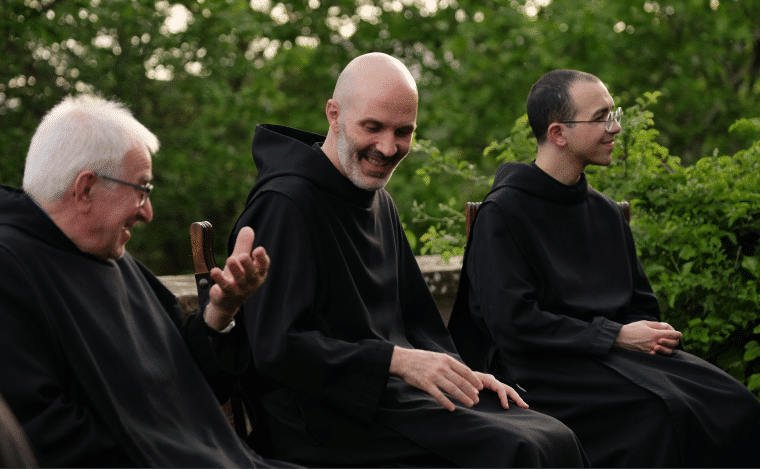
The monastic environment appears to reduce many of the risks that shorten life. Religious communities offer structured daily routines, stable social relationships, regular schedules for work and prayer, and a shared spiritual purpose. These elements create conditions that support both physical and psychological well-being.
Researchers found that monastery life functions in some ways like the protective effects often associated with marriage. Community members watch over one another, unhealthy habits such as smoking and substance abuse are less common, and signs of physical or mental decline are often recognized earlier. Regular schedules reduce chronic stress, while prayer and meditation contribute to emotional stability.
Faith itself may also play a role. A life shaped by a clear sense of meaning and vocation can provide resilience during periods of suffering, illness, or uncertainty. According to Luy, this sense of purpose is one of the characteristics shared by several of the world’s so-called «Blue Zones»—regions where unusually high numbers of people live to 100 years and beyond.
One particularly striking conclusion concerns social inequality.
In the general population, people with higher levels of education typically enjoy longer lives than those with less schooling. Inside religious orders, however, these differences largely disappear. Because monks and nuns share similar living conditions, healthcare access, daily schedules, and material resources, educational background has far less influence on health outcomes.
The finding offers a powerful reminder that longevity is not determined solely by genetics or personal wealth. Social structures, supportive communities, and stable living conditions can profoundly influence human health.

The study also highlights an important contrast with the growing commercial «longevity industry,» which promotes expensive treatments, specialized diets, and high-tech monitoring systems. Members of religious orders do not organize their lives around the goal of living longer. Their longevity appears instead as a byproduct of a life ordered toward something else: service, prayer, discipline, and community.
As Luy notes, many modern longevity strategies are accessible primarily to those who are already healthier and more affluent. Monastic life points toward a different lesson. The factors associated with longer lives are often surprisingly simple: meaningful relationships, reduced stress, a stable daily rhythm, mutual care, and a sense of transcendent purpose.
The German-Austrian Monastery Study began with a modest academic thesis in the late 1990s. Nearly three decades later, it has become one of the most significant contributions to the scientific understanding of aging. Its central message is both profound and countercultural: while there may be no miracle formula for a long life, communities built on faith, discipline, and shared purpose can create conditions in which human beings not only live longer, but often live better.
Thank you for reading our content. If you would like to receive ZENIT’s daily e-mail news, you can subscribe for free through this link.




