

Education
Brazilian cities advance climate projects through COP30 legacy programme – EnviroNews


– Advertisement –
More than 100 Brazilian cities and state governments are implementing climate projects targeting waste management, sustainable transport, emissions reduction and climate resilience through a programme designed to translate commitments made at the 30th UN Climate Change Conference (COP30) into practical action.
The Brazil Mutirão Programme, a partnership between C40 Cities and the Global Covenant of Mayors for Climate & Energy (GCoM), with support from Bloomberg Philanthropies, is supporting subnational governments to accelerate climate solutions and strengthen access to climate finance.
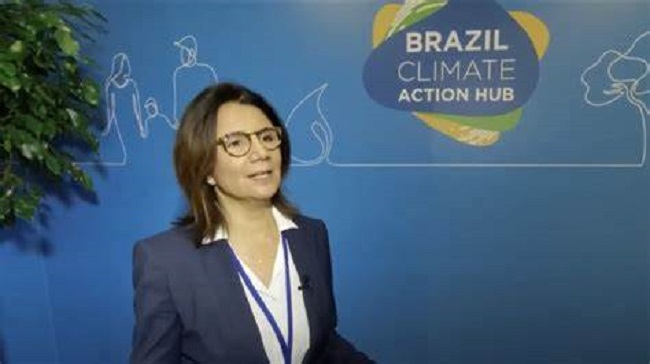
Launched during COP30 in November 2025, the programme has provided direct technical support to more than 50 cities and states to implement high-impact projects in transportation, waste management, climate budgeting and climate action planning.
According to the programme, seven Brazilian cities are developing climate budgeting systems to integrate climate commitments into government policies, decision-making and public expenditure.
The initiative assigns responsibilities across municipal departments to reduce greenhouse gas emissions and strengthen community resilience to climate impacts.
In the waste management sector, 21 subnational governments are developing 17 projects aimed at reducing methane emissions from decomposing organic waste in landfills.
The projects are expected to process more than 30,000 tonnes of organic waste annually when fully implemented.
Similarly, 12 subnational governments are developing sustainable transportation initiatives, including electric bus deployment and active mobility projects.
More than $230 million has already been mobilised with state and federal government support to procure over 200 electric buses.
Ana Toni, Chief Executive Officer of COP30, said climate policies must go beyond targets to deliver tangible improvements in people’s lives.
She identified clean air, quality public transportation, resilient infrastructure, economic opportunities and a fairer future as essential outcomes of climate action.
According to her, collective action involving governments, communities and international partners is necessary to secure a liveable planet for future generations.
On sustainable transportation, the programme disclosed that procurement arrangements had been formalised for more than 200 electric buses, including 100 for the Recife Metropolitan Region in Pernambuco, 96 for Belo Horizonte and 27 for Montes Claros.

The buses form part of nearly 600 electric buses covered by projects being developed with technical support from the programme.
Ilan Cuperstein, C40 Cities’ Regional Director for Latin America, said the transition to zero-emission public transport fleets was increasingly becoming part of climate policy in Brazilian cities.
He said electrifying public transportation would improve air quality, public health and transport services while supporting local economic development.
Cuperstein added that established financing pathways and technical support networks were helping municipalities overcome barriers to adopting electric mobility.
In waste management, the programme is addressing methane emissions generated by the inadequate disposal of food scraps, garden trimmings and other organic materials, which account for approximately half of Brazil’s municipal solid waste.
The statement noted that organic waste decomposing in landfills produces methane, a greenhouse gas with a warming potential approximately 80 times greater than carbon dioxide over a 20-year period.
Projects in Curitiba, Guaxupé and Maracaju are developing solutions to improve organic waste management, while an initiative in Benevides, Pará, is integrating waste management with environmental education across 41 municipal schools, with the potential to reach more than 10,000 pupils.
Curitiba Mayor and C40 Cities’ Vice-Chair for Latin America, Eduardo Pimentel, said expanding composting would reduce methane emissions, minimise waste sent to landfills and produce fertiliser for urban agriculture and green spaces.
He described the initiative as an extension of Curitiba’s longstanding efforts to promote waste separation and environmental sustainability.
The programme is also helping municipalities integrate climate considerations into public budgeting and governance.
Through climate budgeting, local governments can track how public funds are allocated, identify financing gaps and prioritise investments in climate mitigation, adaptation and social equity.
In Salvador, the Municipal Climate Governance Policy was established in September 2026 to integrate climate action into public policies, urban planning and municipal budgeting.
The policy also strengthens implementation of the city’s Climate Mitigation and Adaptation Plan, which runs until 2049 and includes an ambition to achieve carbon neutrality by that year.
Campinas has also announced plans to formally identify, from 2028, budget expenditure that contributes to or undermines its climate targets.
Similarly, Curitiba signed a climate budgeting decree in October 2026 to incorporate mitigation and adaptation objectives into its municipal budget cycle.
The decree provides for the establishment of a committee led by the Finance Secretariat to coordinate implementation, monitoring and evaluation.
Deputy Mayor of Salvador, Ana Paula Matos, said adequate budgetary allocations were essential to implementing effective public policies and protecting vulnerable communities.
She explained that the city’s climate governance policy would help authorities track and prioritise resources more effectively.
Beyond major urban centres, the programme is supporting 11 cities across the Amazon region to strengthen climate planning.
Six of the cities are developing Local Climate Action Plans, two are advancing sustainable mobility projects, while three are working on waste management initiatives.
The cities are also using the City Climate Compass, an artificial intelligence tool that combines information on emissions, climate risks and vulnerabilities to help local authorities identify and prioritise interventions.
One of the participating cities is Belém, which hosted COP30 and is now pursuing sustainable urban mobility through the revitalisation of its historic centre under the Belo Centro project.
Belém Mayor, Igor Normando, said climate planning must reflect the needs of people living in the Amazon, particularly communities affected by flooding and inadequate urban infrastructure.
He highlighted the importance of expanding green spaces, improving urban mobility and ensuring that climate investments produce tangible benefits for vulnerable residents.
The programme also emphasises coordination between federal, state and municipal governments to mobilise funding, technical expertise and institutional support for climate projects.
In Pernambuco, the deployment of electric buses in the Recife Metropolitan Region involves federal financing, state government coordination, the metropolitan transport consortium and participating municipalities.
Technical support from the Brazil Mutirão Program has helped align vehicle procurement with transport routes, bus operating ranges and charging infrastructure.
In Espírito Santo, a sustainable urban mobility project in Serra is being expanded by the state government to other municipalities, incorporating tree planting as an adaptation measure alongside emissions reduction.
Meanwhile, reconstruction efforts following climate disasters in Rio Grande do Sul have highlighted the importance of coordination between different levels of government and the provision of federal funding to strengthen resilience.
The programme is supporting climate initiatives in Caxias do Sul, Porto Alegre and the state’s food distribution centre, CEASA-RS.
Hélinah Cardoso, Head of Engagement for the Brazil Mutirão Programme, said cooperation among local, state and federal governments was essential to implementing climate projects that individual municipalities might struggle to deliver independently.
She stressed that climate challenges crossed administrative boundaries, making coordinated policies, financing and technical support necessary to protect communities.
The programme said the projects demonstrated how COP30 commitments were being translated into local government decisions, with partnerships and coordinated investments helping Brazilian cities accelerate climate action and strengthen resilience.



