Education
Carney airport privatisation plan, tax cuts spark backlash in Canada – EnviroNews
– Advertisement –
Canadian civil society groups, labour unions, Indigenous leaders and community organisations have criticised Prime Minister Mark Carney’s plans to involve private investors in the operation of the country’s four largest airports, describing the move as a transfer of public infrastructure and wealth to corporate interests.
The criticism came a day after thousands of Canadians marched in protest during the opening gala of the Canada Investment Summit in Toronto, where demonstrators reportedly faced a heavy police presence.

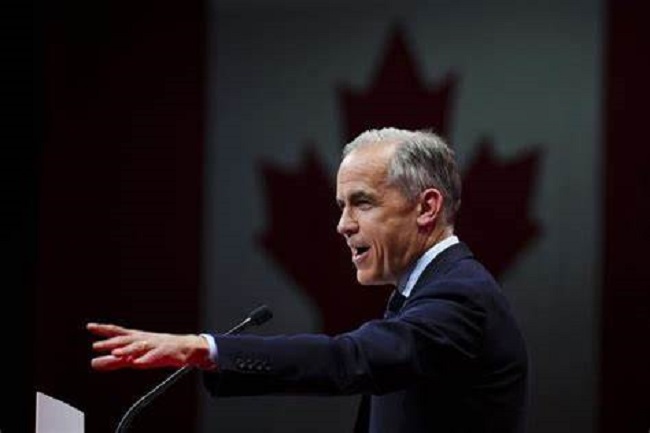
Addressing global investors at the summit, Carney announced plans to bring private investors into the operation of Toronto Pearson, Montreal-Trudeau, Calgary and Vancouver international airports, while the federal government would retain ownership of the underlying land.
The Prime Minister reportedly presented the proposal as a means of redirecting federal operational spending towards smaller regional airports and improving affordability.
But protest organisers rejected the justification, arguing that transferring the operation of major public gateways to private investors could increase passenger fees and other user costs while putting pressure on service quality and working conditions.
“Yesterday, Canadians took to the streets to state clearly that Canada is not for sale,” the organisers said. “Mark Carney responded by deploying heavy police forces to shield billionaires inside, and then turned around today to hand those exact billionaires the keys to our essential public infrastructure alongside massive tax breaks.”
They described the airport plan as a “corporate asset grab”, arguing that the proposed arrangement could leave the public carrying financial, environmental and operational risks while private investors benefit from the resulting profits.
The groups also criticised Carney’s announcement of a permanent “Productivity Mega Deduction”, which they said would significantly reduce corporate tax obligations on new investments.
Under the measure, immediate 100 per cent tax write-offs would be expanded from 15 per cent to more than 65 per cent of capital assets, including software, pipelines, rail tracks and mining properties, according to the organisers.
They said the measure would reduce Canada’s marginal effective tax rate on new business investment from 13 per cent to 6.4 per cent, potentially resulting in significant reductions in public revenue.
The groups argued that the tax incentives would disproportionately benefit corporations and private shareholders at a time when Canadians are facing high living costs, housing shortages and pressure on public services.
“Lowering corporate tax obligations does not trickle down to working people,” the organisers said, arguing that the policy would instead leave taxpayers subsidising companies benefiting from the commercialisation of essential services.
The campaigners further rejected the argument that Canada needs to offer extensive incentives to attract investment, pointing to an estimated $2.6 trillion held by Canadian pension funds and more than $1 trillion in cash held by domestic corporations.


They argued that the central challenge was not a shortage of capital but how capital is directed and deployed.
“The fundamental issue remains an economic model designed to prioritise the financial returns of global investors over public need,” the organisers said.
The groups warned that the proposed airport transactions and other investment projects emerging from the summit could face sustained opposition from labour, Indigenous, environmental and community organisations.
They also pointed to previous disputes over infrastructure development, including the stalled expansion of Toronto’s Billy Bishop Airport, as evidence that organised communities can challenge major infrastructure projects.
The protests, organisers said, demonstrated growing opposition to the government’s investment agenda and marked the end of what they described as Carney’s political honeymoon.
“The Carney political honeymoon is officially over,” they said, arguing that the large turnout demonstrated that public infrastructure and national development priorities could not be determined solely by governments and corporate investors.
The organisers said the protests brought together workers, students, Indigenous land defenders and community activists who were prepared to continue mobilising against policies they believe prioritise corporate profits over public needs.
They vowed to maintain pressure on the government, saying any attempt to commercialise public infrastructure or pursue development without community consent would face continued resistance across Canada.