

Education
Coalition says court ruling challenges TotalEnergies’ African oil expansion – EnviroNews


– Advertisement –
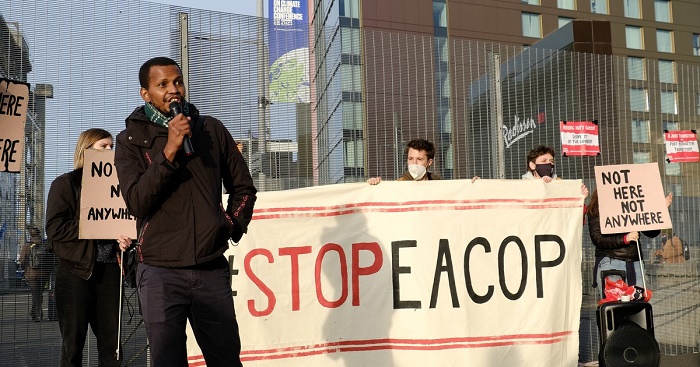
The StopEACOP Coalition says it welcomes a landmark ruling from the Paris Judicial Court: TotalEnergies failed its climate vigilance duties under France’s Duty of Vigilance Law. This decision, says the group, significantly increases legal pressure on the company’s ongoing fossil fuel projects, including the East African Crude Oil Pipeline (EACOP).
The court stated TotalEnergies’ legal duty goes beyond emissions from its own operations. It must include greenhouse gas emissions released when the oil and gas it produces are eventually burned by consumers, commonly known as Scope 3 emissions. The company now has six months to improve its climate vigilance plan, assessing climate risks better and taking stronger action to reduce them.
Crucially, the judgment linked oil extraction directly to emissions from burning that oil. It shot down the argument that only consumers are responsible for these emissions. The court also ordered TotalEnergies to assess climate risks from continued hydrocarbon extraction and new oil and gas fields, including the risk of carbon lock-in and using up the world’s remaining carbon budget.
For the StopEACOP Campaign, these findings matter far beyond France.
Zaki Mamdoo, Campaign Coordinator for StopEACOP, said the ruling proves what EACOP-affected communities have said for years.
“Communities in Uganda and Tanzania have lost their land, livelihoods, and futures to Total’s East African Crude Oil Pipeline. This ruling shows the company’s reckless expansion won’t go unchecked forever. We’ve always argued that TotalEnergies’ business model, drilling while displacing thousands of families and locking East Africa into decades of carbon-intensive extraction, is fundamentally incompatible with a livable planet. Now, a court agrees. This has to be the start of the end for projects like EACOP, not just a win confined to French courtrooms.”
While the court didn’t order TotalEnergies to stop new oil developments, it did establish that the company must legally identify and address climate risks from the fossil fuels it extracts and sells. These legal principles have major implications for big projects like EACOP, which plans to move crude oil from western Uganda to Tanzania’s coast for export.
The ruling comes as governments and corporations push a new wave of fossil fuel expansion across Africa, from oil development in Uganda to major LNG projects in Mozambique and new exploration across the continent.
This judgment, according to observers, reinforces the principle that these projects cannot be assessed solely on their promised economic benefits – which often do not materialize for local communities in African countries – while ignoring their full climate costs.
Rachael Tugume, a farmer from Hoima whose land was taken for EACOP and now a grassroots organiser, said communities have lived with the consequences long before the oil started flowing.
“When they took my land, I lost more than property. I lost the means to feed my family, and any hope that tomorrow would be better. For years, they told our communities these sacrifices were for development. This judgment reminds the world that companies must also answer for the harm their decisions cause. We hope it marks a turning point where affected communities’ voices matter as much as corporate profits.”
The landmark judgment strengthens the growing international expectation that fossil fuel companies must account for the full climate impact of their business decisions, including emissions generated after oil and gas leave the wellhead.
Diana Nabiruma of AFIEGO Uganda noted that the judgment confirms a company’s climate responsibility doesn’t stop at the refinery. “TotalEnergies must now demonstrate that its vigilance plan genuinely addresses the risks created by its continued fossil fuel expansion. This sets an important precedent, not just for France, but for communities worldwide dealing with multinational corporations’ projects.”

Reacting to the judgement, TotalEnergies says it’ll update its vigilance plan and assess next steps. Meanwhile it maintains that customer choices play a role in downstream emissions, but the court disagreed, saying TotalEnergies can influence those emissions through its investment decisions and the composition of its energy portfolio, reinforcing the company’s responsibility for the climate impacts of the fossil fuels it develops and sells.
The StopEACOP Campaign is calling on TotalEnergies to use the six months the court granted to fundamentally rethink new fossil fuel investments, including EACOP and align its business strategy with climate science, human rights standards, and the interests of communities already bearing the costs of climate change.
The coalition is also urging governments and financial institutions backing new fossil fuel infrastructure in Africa to recognise that the legal landscape is changing. As courts increasingly acknowledge the connection between extraction and downstream emissions, projects expanding oil and gas production face growing legal, financial, and reputational risks, on top of their environmental and social impacts.



