Education
Countries to review first progress report on 2022’s global biodiversity targets, negotiate recommendations for COP17 – EnviroNews
– Advertisement –
Parties to the Convention on Biological Diversity begin two weeks of deliberations on Monday, July 27, 2026, to consider key findings of the first global assessment of progress against the 23 targets of the Kunming-Montreal Global Biodiversity Framework (KMGBF) and to identify ways to accelerate implementation.
The assessment is part of a wide-ranging agenda in Nairobi focused on scientific, technical, and implementation matters leading to recommendations for the 2026 UN Biodiversity Conference, including the 17th meeting of the Conference of the Parties (COP17) and meetings of the Nagoya and Cartagena Protocols (MOPs 6 and 12, respectively), taking place in Yerevan, Armenia, in October.

Halfway through the implementation of the KMGBF targets, unanimously agreed in 2022 for achievement by 2030, Parties will consider a comprehensive draft progress report to provide evidence for the Global Review taking place at COP17. The report on the Framework’s implementation progress, known as the “State of Biodiversity Action”, shows that while the Framework has generated record global engagement for nature, current efforts are not yet enough.
Parties in Nairobi will consider the report’s key findings as they negotiate recommendations for COP17. The final version of the report that will be considered at COP17 will be made public shortly after the Nairobi meetings.
The negotiations are taking place through two of the Convention’s Subsidiary Bodies: One on Scientific, Technical, and Technological Advice (SBSTTA), and the other on Implementation of the Convention (SBI). Together, these meetings lay the groundwork for COP17, reviewing the evidence, identifying implementation challenges, and developing recommendations that will shape negotiations and decisions in Yerevan.
SBSTTA-28 will consider the scientific and technical evidence that will underpin decisions at COP 17 and help determine where global biodiversity action needs strengthening. Alongside negotiations on the Global Report, Parties will develop recommendations on issues including marine and coastal biodiversity, protected and conserved areas, sustainable wildlife management, synthetic biology, and the application of scientific knowledge to decision-making under the Convention, such as through the “Business and Biodiversity Assessment” published by the Intergovernmental Science-Policy Platform on Biodiversity and Ecosystem Services (IPBES) earlier this year.
Building on these scientific recommendations, SBI-7 will negotiate the policies, finance, and other implementation measures needed to accelerate progress. Recommendations will be developed on issues such as resource mobilisation, digital sequence information on genetic resources (DSI), capacity-building, biodiversity mainstreaming, and implementation of the Cartagena and Nagoya Protocols.
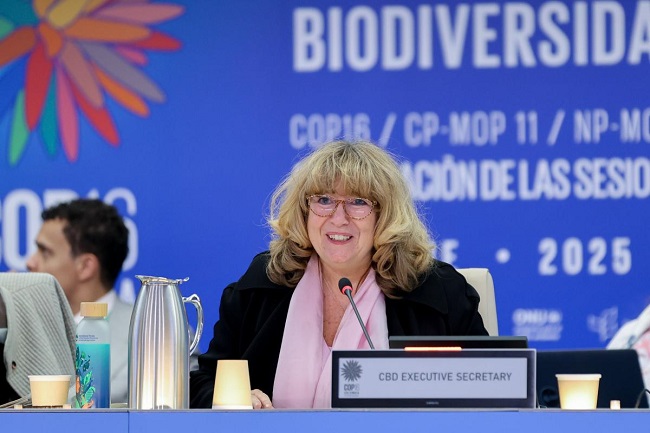
Says Astrid Schomaker, Executive Secretary of the Convention on Biological Diversity: “The Kunming-Montreal Global Biodiversity Framework has generated unprecedented worldwide engagement for biodiversity. We now have, for the first time with the Global Report, a shared evidence base on how we are doing in implementing the Framework, but evidence is only valuable if it informs action. The negotiations beginning today are an opportunity for Parties to consider this evidence as they build consensus on the first Global Review and the decisions that will need to be taken to increase ambition, accelerate and scale up action for biodiversity at CO17.”
SBSSTA-28 Chair, Jean Bruno Mikissa of Gabon, notes: “The recommendations negotiated at SBSTTA provide the essential bridge between scientific evidence and political decision-making. Our responsibility is to ensure that informational inputs and recommendations are scientifically robust, technically sound, and responsive to the needs of Parties as they prepare for COP17.”
SBI-7 Chair, Clarissa Souza Della Nina of Brazil, says: “SBI-7 is a critical milestone on the road to COP17. Parties will consider a set of agenda items that have the potential to shape the global biodiversity agenda through 2030 and beyond. These include how to use the findings of the Global Review to accelerate implementation of the Kunming-Montreal Global Biodiversity Framework, address financing gaps and harmful incentives, mainstream biodiversity across economic sectors and all levels of government, advance a global plan for biodiversity education, and review progress in implementing the Protocols and strengthening capacity-building efforts. The decisions taken at SBI-7 will help define the level of ambition we can expect at COP17 and will be instrumental in accelerating collective action for biodiversity worldwide.”

