Education
EU’s Russian gas exit opens new LNG opportunity for Central, Eastern Europe – EnviroNews
– Advertisement –
The European Union’s plan to end imports of Russian natural gas by the fourth quarter of 2027 is set to reshape gas supply patterns across Central and Eastern Europe, creating new opportunities for LNG suppliers while placing greater pressure on the region to strengthen infrastructure and diversify procurement.
In a commentary published on September 15, 2026, Gergely Molnar, Energy Analyst – Natural Gas at the International Energy Agency (IEA), said the EU’s phase-out would bring an end to more than five decades of reliance on Russia for a substantial share of the bloc’s gas supplies.

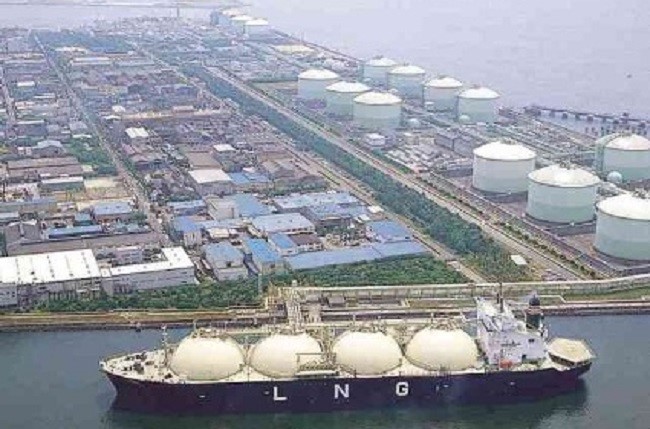
Under EU legislation adopted in December 2025, imports of Russian LNG under short-term contracts have been prohibited since late April, while similar restrictions on Russian pipeline gas took effect in mid-June. Russian LNG imports are scheduled to end completely by January 1, 2027, with remaining pipeline gas imports to cease no later than November 1, 2027.
The measures are expected to reduce Russian pipeline gas and LNG deliveries to the EU by about 33 billion cubic metres (bcm) annually between 2025 and 2028.
Molnar said part of the supply gap could be absorbed through lower gas consumption resulting from energy efficiency and continued electrification, but non-Russian suppliers would need to fill a significant portion of the remaining market, particularly in Central and Eastern Europe.
The region remains more exposed to Russian pipeline gas than Western Europe. Russian pipeline supplies accounted for about 60 per cent of Central and Eastern Europe’s primary gas supply in 2021. Although imports fell from 55 bcm that year to just over 15 bcm in 2025, they still met around 20 per cent of regional gas demand.
The shift comes as the global LNG market enters a period of unprecedented supply growth, driven largely by new liquefaction projects in North America.
According to the IEA, more than 350 bcm per year of new LNG export capacity is expected to come online globally by the early 2030s based on current project plans, with the United States and Qatar expected to account for more than 70 per cent of the expansion.
Molnar said the expected increase in LNG supply could ease tight market conditions and put downward pressure on gas prices over the medium term, providing Central and Eastern Europe with an opportunity to replace Russian pipeline gas with more diversified supplies.
However, he warned that infrastructure development would be critical to translating this opportunity into greater supply security.
Central and Eastern Europe’s LNG import capacity has increased by about 15 bcm per year since the end of 2021, reaching nearly 35 bcm by the end of 2025, equivalent to more than 40 per cent of regional gas demand.
The expansion has included upgrades to Poland’s Świnoujście LNG Terminal, the launch of Finland’s and Estonia’s Inkoo LNG regasification terminal, the Alexandroupolis LNG terminal in Greece and the expansion of Croatia’s Krk LNG facility.
The region has also strengthened cross-border pipeline connections, including the Poland-Slovakia interconnector, the Greece-Bulgaria interconnector and upgrades linking Hungary with Slovakia and Romania.


The IEA analyst noted that further expansion of south-to-north pipeline capacity would be important to distribute LNG more efficiently across the region. The proposed Vertical Gas Corridor could facilitate flows of regasified LNG from Greece through the Balkans towards Moldova and Ukraine, with potential transmission capacity of around 10 bcm per year.
The infrastructure could also support Ukraine’s gas security as Russian attacks continue to disrupt its gas system.
Despite these developments, Molnar stressed that infrastructure alone would not be sufficient. Central and Eastern European countries would also need more flexible and diversified procurement strategies as Russian pipeline supplies disappear.
Since 2022, European buyers have signed contracts for more than 45 bcm per year of LNG imports, according to the IEA’s LNG contract database. Buyers from Central and Eastern Europe, however, accounted for less than one-fifth of these volumes.
Existing contracts are expected to provide Central and Eastern European buyers with only around 5 bcm per year of LNG supply by 2028—equivalent to just 5 per cent of the region’s current gas demand.
Without additional contracts, the region could become significantly more exposed to the global spot market, which, while increasingly liquid, remains vulnerable to price volatility.
Molnar therefore highlighted the importance of a diversified procurement portfolio combining long-term LNG contracts with access to flexible supplies.
He said long-term contracts could provide greater visibility over future supplies and help limit exposure to short-term price volatility, while destination-flexible contracts could offer European buyers greater commercial flexibility without creating long-term supply lock-in.
The transition is taking place against a backdrop of continuing volatility in global gas markets. Disruptions to LNG shipments through the Strait of Hormuz following the war in the Middle East resulted in a major supply shock, with LNG exports from Qatar and the United Arab Emirates falling by 43 bcm year-on-year between March and July.
However, increased production elsewhere helped cushion the impact. LNG output outside the Persian Gulf rose by almost 16 per cent, or more than 30 bcm, during the same period, offsetting about 70 per cent of the decline in Gulf deliveries. The increase was driven mainly by new projects in North America and Africa, alongside improved feedgas availability from established producers in Africa and Asia.
For Central and Eastern Europe, the IEA assessment points to a major restructuring of the region’s gas supply system as Russian imports decline. The combination of growing global LNG availability, expanded regional infrastructure and more diversified procurement could provide alternatives to Russian pipeline gas.
The challenge, however, will be ensuring that new supply routes, infrastructure and contracts are developed quickly enough to maintain affordability and security as the EU moves towards ending Russian gas imports by 2027.