

Health
FG, Gavi renew commitment to immunise zero-dose children

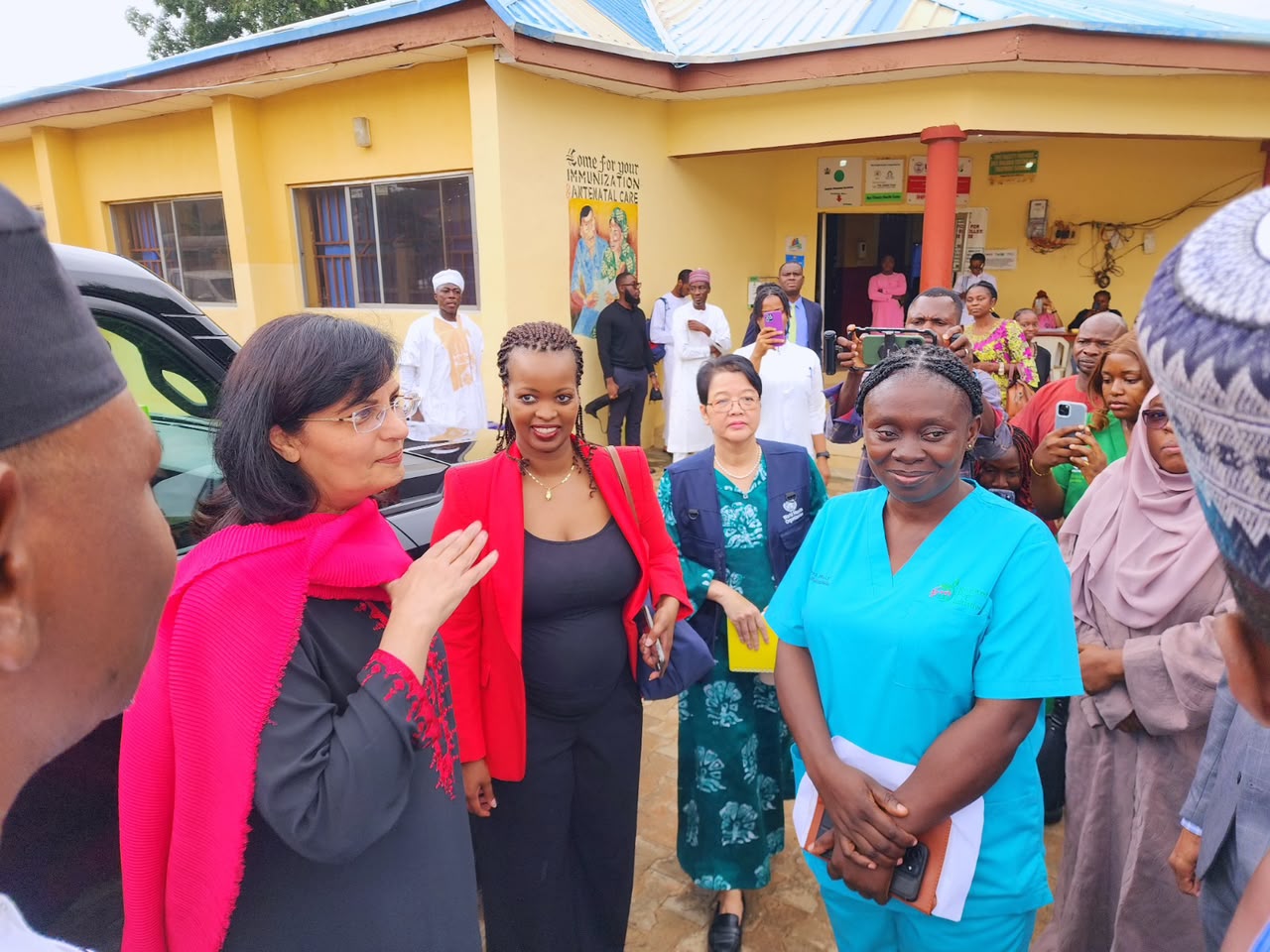
The Federal Government has renewed its commitment to ensuring that every Nigerian child has access to life-saving vaccines, strengthening its partnership with Gavi, the Vaccine Alliance, to expand primary healthcare services and reach children who have never received routine immunisation.
The renewed commitment was reinforced during a high-level visit by Gavi Chief Executive Officer, Dr. Sania Nishtar, alongside the leadership of the National Primary Health Care Development Agency, development partners and civil society organisations to the Apo Resettlement Primary Healthcare Centre in Abuja on Friday.
The visit formed part of efforts to assess the impact of ongoing investments in primary healthcare, vaccine delivery and routine immunisation, particularly among vulnerable and underserved communities.
Speaking during the visit, the Executive Director and Chief Executive Officer of the NPHCDA, Dr. Muyi Aina, expressed appreciation for Gavi and other development partners, describing their support as critical to improving access to quality basic healthcare services across Nigeria.
“We remain very appreciative of the partnership that we have with Gavi in particular, but also a lot of our partners that work with us as we strive to improve the access and quality of basic health services to all Nigerians,” Aina said.
He described the Apo Resettlement Primary Healthcare Centre as a practical example of how collaboration among the Federal Government, local governments and development partners can strengthen healthcare delivery.
“This Apo Primary Health Centre is one facility that is reflective of the collaboration. The facility is built and operated by the local government. It is funded through the Basic Healthcare Provision Fund by the Federal Government.
“Gavi supports the facility with vaccine commodities in collaboration with the Federal Government, but at the same time Gavi supported us to solarise the facility, and that is why you see this beautiful and successful output.”
Aina said the partnership has strengthened health infrastructure, improved vaccine storage and delivery, and demonstrated a sustainable model that should be replicated across the country.
“For us, that kind of partnership is what will really drive sustainability. The state governments and the local governments are being asked to step up more, to emulate this and reproduce this in areas where we don’t already have access.
“We know that we can count on having our partners by our sides, at least for the next five years as we strive to continue this,” he added.
Also speaking, the Chief Executive Officer of the Vaccine Network for Disease Control, Chika Offor, said ending the burden of zero-dose children requires coordinated efforts by governments, development partners, civil society organisations and communities.
“It is very important that partnership is key. So now Gavi comes in to support this facility with a solar system to improve the facility so that when CSOs and other partners go to the communities to get people who have zero-dose children, they can come to a facility that is ready.

“So everything has to come together. The facility has to be ready. If one side is not working, then the other side won’t work properly,” Offor said.
She noted that Gavi’s support reflects confidence in civil society organisations to mobilise families, government to provide an enabling environment and communities to embrace routine immunisation.
“This message is, Gavi is saying, we trust CSOs to support us in this. We trust government alignment. We trust that the community will bring their children and save their lives by allowing them to take the life-saving vaccines.
“So that at the end of the day, zero-dose will be a thing of the past.”
The partnership between Nigeria and Gavi has continued to strengthen primary healthcare delivery by expanding access to life-saving vaccines, improving community health systems and supporting routine immunisation services across the country. Through sustained investments in health infrastructure, cold chain systems, vaccine logistics and frontline health workers, the collaboration is helping to ensure that quality healthcare reaches underserved communities while advancing the goal of leaving no child behind.
During the visit, Nishtar assessed health facility infrastructure, vaccine delivery systems and the quality of services provided to vulnerable populations, reaffirming the shared commitment of the Federal Government, Gavi and other stakeholders to strengthening primary healthcare, improving health outcomes and reaching every zero-dose child with life-saving vaccines.
The visit also featured interactions with caregivers and frontline health workers, who welcomed the impact of the investments in bringing quality healthcare closer to their communities and called for sustained support to consolidate the gains.
Nigeria has one of the world’s largest populations of zero-dose children—those who have not received a single dose of routine vaccines. To address the challenge, the Federal Government, through the NPHCDA, has strengthened collaboration with Gavi, the Vaccine Alliance, the World Health Organization, UNICEF, and other partners to expand routine immunisation, improve vaccine cold chain systems, upgrade primary healthcare facilities, and build the capacity of frontline health workers.
The collaboration aligns with the Tinubu administration’s Nigeria Health Sector Renewal Investment Initiative and Sector-Wide Approach, which prioritise revitalising primary healthcare, expanding access to essential health services, increasing immunisation coverage and achieving universal health coverage by ensuring that no child is left behind.
Copyright PUNCH
All rights reserved. This material, and other digital content on this website, may not be reproduced, published, broadcast, rewritten, or redistributed in whole or in part without prior express written permission from PUNCH.
Contact: health_wise@punchng.



