Education
FSU chemistry professor develops artificial intelligence songs to help students learn complex concepts

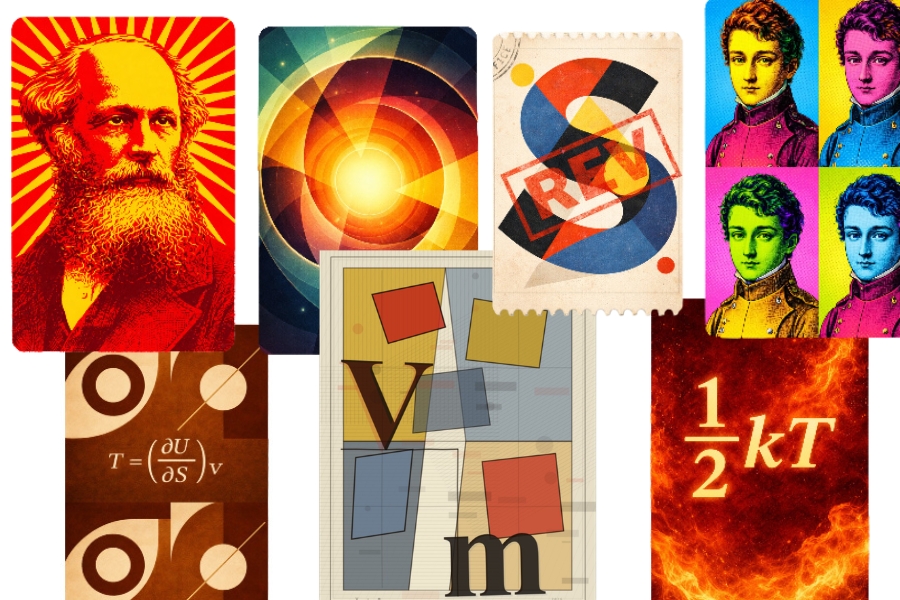
Children learning their “ABCs” or high school students studying the periodic table can turn to songs to help remember foundational educational concepts. A Florida State University professor is applying the method to chemistry class, using artificial intelligence to create new musical learning aids that help students succeed.


Oliver Steinbock, Cottrell Family Professor in the Department of Chemistry and Biochemistry, has previously used AI in his laboratory research to identify chemical compositions of dried salts from images. He is now exploring educational endeavors with the technology through AI-generated songs that explain core chemistry concepts, like thermodynamics and compression, and break down dense equations such as the van der Waals equation.
“I created these chemistry songs as a resource to teach concepts in a different way and create some new interest in the subject matter,” Steinbock said. “These songs can be used by students as at-home study tools, or lecturers could ask students to make their own songs about a topic as an in-class activity and have the students fact-check their songs. It’s just one tool in the toolbox of teaching.”
Steinbock’s 16-song playlist focuses on thermodynamics — the branch of physical chemistry covering interactions among heat, work, temperature and energy — and is available on Suno, a generative AI platform that creates songs based on user prompts. Through different musical genres, Steinbock’s songs teach the laws of thermodynamics, the essential rules of nature that define how energy operates in the universe, which are key foundations for physics and chemistry research.
“Physical chemistry is known as one of the hardest chemistry subjects to learn,” said Wei Yang, chair of the Department of Chemistry and Biochemistry and a professor of biochemistry. “Many students have a love-hate relationship with thermodynamics due to many key equations and concepts that they must comprehend and memorize.”


In addition to serving as mnemonic devices that aid memorization through rhythm and repetition, learning songs helps students of all levels feel more comfortable in the classroom and reduce anxiety, according to research from the University of Washington published by the American Society for Cell Biology.
“These songs can have huge benefits for students with different learning styles, especially those who want to reinforce key concepts in their free time,” said Andrew Fredericks, a student in the Department of Chemistry and Biochemistry and an undergraduate researcher in Steinbock’s laboratory. “Many people are curious — and maybe a little nervous — about how AI will continue to impact education and society, but it’s exciting to see technology being used in creative ways to help students learn.”
The country-inspired song “Temperature” helps students understand how temperature is affected by the first law of thermodynamics, which states that energy cannot be created or destroyed, while the K-pop inspired song “Z One” teaches the ideal gas law by describing the relationship among pressure, volume, temperature and amount of a substance in a gas.


To develop these songs, Steinbock input sections of his own research papers into large-language models like ChatGPT and Claude and turned the text into lyrics. He then checked the lyrics for factual errors and adjusted prompts as needed before putting the final lyrics and choice of musical genre into Suno. The result was a series of short, catchy songs highlighting core concepts that students sometimes struggle to learn through traditional lectures and reading.
“This project is a really cool example of how AI can be used in education,” Fredericks said. “By combining the chemistry content with music, the songs make the material feel more approachable and enjoyable.”
Steinbock hopes his students use these songs as an additional learning aid to support their studies while highlighting the importance of ethical and responsible AI use.
“In a project like this, I had to check the facts while also considering how much freedom the AI can take to stretch the concepts or mix in cheesy words,” Steinbock said. “AI has the potential to be a useful learning tool, but it still makes mistakes. We must learn to use it safely and constructively.”
Visit the Department of Chemistry and Biochemistry website to learn more about Steinbock’s work and research in the department.