

Education
FSU computational scientist earns National Science Foundation grant to improve nighttime thunderstorm forecasts


Key Points
- Computational scientist Hristo Chipilski received a $422,645 grant from the National Science Foundation to develop more accurate forecasts of nighttime thunderstorms by combining advanced computational methods with detailed atmospheric observations.
- Better nighttime storm predictions could provide earlier, more reliable warnings for hazards such as tornadoes, flash flooding, hail and damaging winds, giving communities more time to prepare.
A Florida State University scientist has received a nearly half-million-dollar grant from the National Science Foundation (NSF) to improve nighttime thunderstorm forecasts, research that will help forecasters and communities better prepare for dangerous weather.
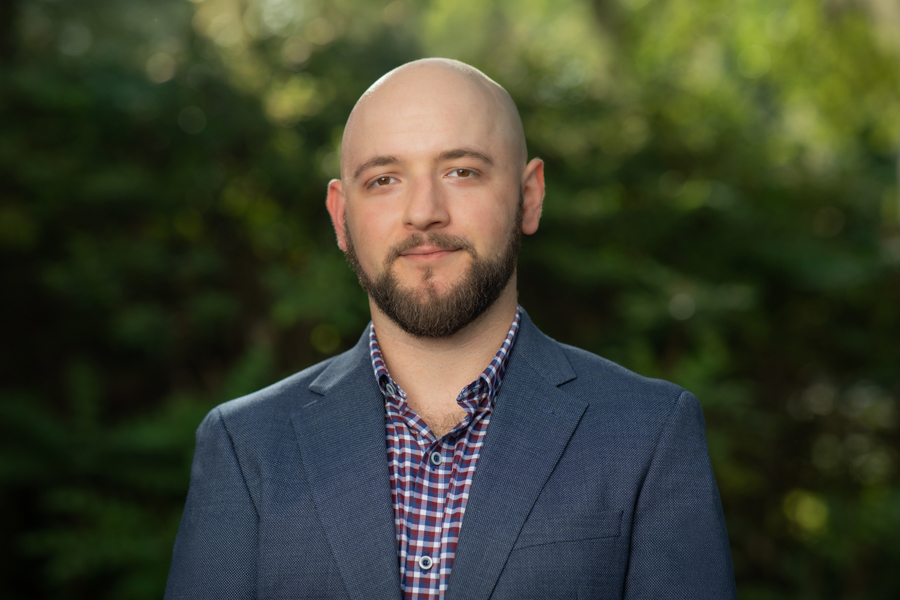
Assistant Professor of Scientific Computing Hristo Chipilski will use the $422,645 grant to lead a three-year project combining computational methods with atmospheric observations to accurately model nighttime thunderstorms, which often depend on complex atmospheric conditions that are more difficult for weather models to predict than daytime storms.
“This project is not simply testing a new algorithm or instrument in isolation,” Chipilski said. “Its central question is how advanced computational methods and observations can work together to improve forecasts of one of the atmosphere’s most difficult phenomena.”
All thunderstorms are difficult to predict because small differences in temperature, humidity or wind can affect when and where a storm develops. During the day, sunlight heats the ground, helping warm air rise to form clouds and rain. After sunset, that source of energy for thunderstorms disappears.
Nighttime storms instead depend on conditions including warm, moist air above the Earth’s surface; fast-moving air in the lower atmosphere; fronts; gravity waves or atmospheric disturbances; and outflows, or cool air spreading from earlier storms. Small errors made when inputting these storm conditions can cause a predictive model to estimate the wrong timing, location, amount of rainfall or miss the storm altogether, which can lead to devastating impacts in significant weather events, particularly when nighttime storms spawn tornadoes.
Chipilski will collaborate with researchers at the NSF National Center for Atmospheric Research and the National Oceanic and Atmospheric Administration’s National Severe Storms Laboratory. His team will use a technique called data assimilation, which blends observations with weather models to estimate current conditions and provide a starting point for forecasts. Using ground-based remote sensing profilers, which are instruments that measure temperature, moisture and wind at different heights, researchers will observe atmospheric changes just before storms form to combine with the data assimilation techniques.
“Getting that starting point is especially important for nighttime thunderstorms because their nonlinear physics can magnify a small initial error very quickly,” Chipilski said. “By combining measurements with advanced data assimilation techniques, we hope to give the model a more accurate picture of the atmosphere and a better starting point for predicting storms.”
The project will test specific data assimilation methods called quantile-conserving ensemble filters, which preserve more information about possible atmospheric conditions than standard methods. While standard methods often simplify calculations by assuming uncertainty follows a Gaussian, or bell-shaped, pattern, quantile-conserving ensemble filters account for more complex conditions. The team will test whether using this method improves predictions of when and where nighttime storms develop.
This work could lead to earlier, more reliable forecasts of nighttime thunderstorms and hazards including flash flooding, hail, damaging winds and tornadoes. Improved forecasts give communities more time to prepare for weather events while benefiting agriculture, aviation and transportation.
“I did not think about a difference between night and day storms before, but Hristo’s project made it clear to me that there is considerable uncertainty in forecasting and issuing warnings for severe nighttime storms, particularly tornadoes and flash floods,” said Peter Beerli, chair of the Department of Scientific Computing. “Hristo’s research will open new ways to analyze and improve existing data using tools that don’t rely on the usual bell-curve assumptions.”
The grant will also support one of Chipilski’s doctoral students, Stephen Asare, who will contribute to the research by conducting numerical experiments on supercomputers while combining research in scientific computing, atmospheric science and applied mathematics.
“The unanswered questions surrounding nighttime thunderstorms continue to motivate me, and I hope this project will make meaningful contributions in this direction,” Chipilski said. “That understanding can help guide future observing networks and forecasting methods well beyond nighttime thunderstorms.”
To learn more about research conducted in the Department of Scientific Computing, visit sc.fsu.edu.




