Education
FSU computer scientist earns NSF CAREER Award to advance collaborative artificial intelligence systems

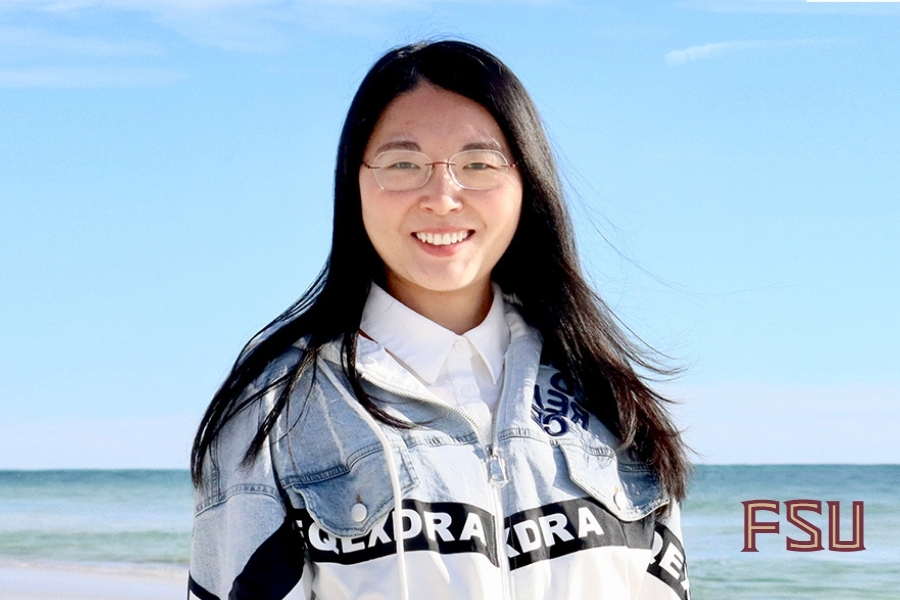
A Florida State University computer scientist has earned one of the most prestigious awards available to early career faculty for exploring how wireless networks can help devices collaborate to run advanced artificial intelligence applications more efficiently and reliably without relying on cloud computing, supporting the next generation of AI technologies.
Assistant Professor of Computer Science Xiaonan Zhang is a recipient of a 2026 Faculty Early Career Development Award, or CAREER Award, from the National Science Foundation for her work developing frameworks that allow devices connected through wireless networks to collaborate and execute complex AI applications closer to where data is generated.
The CAREER Awards Program offers the NSF’s most significant awards in support of early career faculty who have the potential to serve as academic leaders in research and education. The award provides five years of funding to support research, student training and educational outreach activities while helping faculty pursue long-term scientific goals.
“Receiving this was a reminder that persistence matters and good ideas often take time to develop,” said Zhang, who earned her doctorate from Clemson University in 2020 and joined FSU’s faculty that same year. “Earning a CAREER Award after years of proposal writing, revision and resubmission made the recognition especially meaningful, both personally and professionally.”
The use of AI is increasing in areas of society like healthcare, transportation, environmental modeling and emergency response, requiring more reliable, efficient wireless networks to move massive amounts of data and coordinate real-time decisions. A wearable health monitor or tablet used by a paramedic could use AI to quickly analyze a patient’s condition, for example, but many advanced AI models require more computing power and memory than a single device can provide. While cloud computing data centers help process these tasks, relying entirely on distant infrastructure can introduce delays, consume network resources and create challenges when internet connectivity is limited.
Zhang’s research explores how wireless networks can allow nearby devices to collaborate and jointly run AI applications such as analyzing medical data, helping autonomous vehicles make real-time driving decisions and improving emergency response during disasters. Rather than serving solely as a pathway for transmitting data, these networks can help coordinate where AI computations occur, how resources are shared among devices and how systems adapt when conditions change.
“My goal is to rethink the role of wireless networks in the age of AI,” Zhang said. “I believe future AI-integrated wireless networks will not only connect devices but also help them work together more effectively.”
By exploring how devices work together while remaining reliable in changing network environments, the research could make these advanced technologies more accessible in areas with unreliable cloud connectivity while also expanding the range of devices capable of running them.
“Dr. Zhang’s work addresses increasingly important challenges as AI becomes more integrated into everyday life,” said Weikuan Yu, Department of Computer Science chair. “Rather than viewing wireless networks solely as a way to transmit data between devices, her research explores how devices can work together and share resources to make AI systems more efficient, reliable and resilient. This award recognizes both the significance of this research and Dr. Zhang’s innovative vision for bringing together wireless networking, distributed computing and AI.”
Zhang’s award will also support educational initiatives like establishment of new courses and research opportunities designed to help students deepen their understanding of AI and recognize that the field involves more than just creating intelligent algorithms; the algorithms need to run efficiently across multiple devices and networks for practical use in real-world systems. Zhang will also continue mentoring undergraduate students through the FSU Career Center’s InternFSU Program and engaging K-12 students through FSU’s Young Scholars Program.
“As AI becomes increasingly incorporated into the physical world, scientists need to design communication, computing, and intelligence together so AI can operate more efficiently, reliably, and securely across connected devices instead of relying on distant cloud data centers,” Zhang said.
To learn more about research conducted in the Department of Computer Science, visit the department’s website.

