

Education
Gender activists demand a feminist just transition at COP31 – EnviroNews


– Advertisement –
The climate crisis is not gender-neutral. It is rooted in unequal economic systems, resource exploitation and concentrated political and financial power. Women and girls in vulnerable communities bear disproportionate consequences.
At COP31 in Antalya, UN Women and partner organisations presented evidence in various sessions that link climate change, gender inequality and economic injustice.
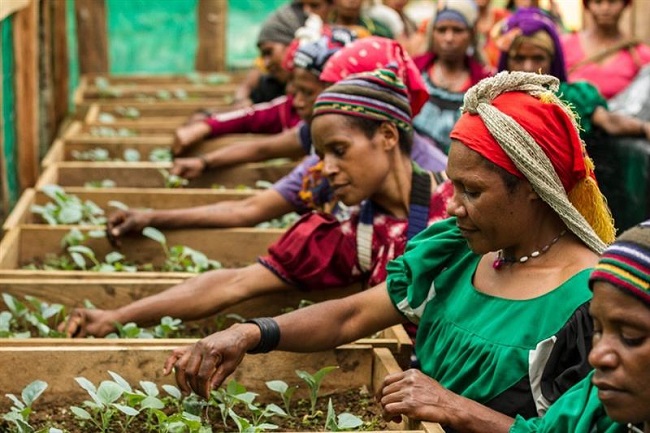
Approximately 1.5 billion women and girls live in climate hotspots where extreme hazards intersect with precarious livelihoods and entrenched gender inequalities, according to UN Women. The fact sheet says a 1% increase in average temperatures is associated with women losing 34% more income than men. It estimates that up to 185 million additional women and girls could face hunger by 2050.
For Shine Collab, the findings show how systems that prioritise profit exploit nature and oppress women.
Sarah Henrys, UN Women’s Director of Policy, Programme and Intergovernmental Division, said climate change was deepening inequalities, undermining women’s economic security and increasing unpaid care responsibilities and risks of violence.
Women dependent on small-scale farming and natural resources face lost harvests and income, with limited access to land and finance making recovery harder.
“For grassroots women, climate change is therefore not an abstract discussion about rising temperatures. It is about the loss of productive land, declining agricultural yields, disappearing water sources, food insecurity and the growing struggle to sustain families and communities,” said Dr Melania Chiponda, climate activist and executive director of Shine Collab, a global feminist network and systemic catalyst focused on women-led renewable energy, climate justice, and economic empowerment in the Global South, particularly across Africa.
The hidden cost of care
Climate change is also increasing women’s unpaid care work. UN Women estimates that 1.8 billion people worldwide lack water on their premises, with women primarily responsible for collecting water in approximately two-thirds of affected households. Time spent collecting water could rise by up to 30% by 2050 under a high-emissions scenario.
As water sources become scarce, women absorb more work to secure water, food and care. Shine Collab says this exposes an economy that extracts from nature while relying on women’s undervalued labour.
UN Women called for investment in healthcare, social protection, water and sanitation as essential climate infrastructure.
A green transition must redistribute power
The shift to low-carbon economies will not automatically deliver equality. UN Women modelling across 70 countries indicates that women would receive less than 2% of new net green jobs without deliberate policy interventions.

Investing in care, social protection, education and skills alongside decarbonisation could generate nearly 104 million net jobs by 2035, with women potentially securing 68 million. Returns could reach US$4.7 trillion by 2050.
The figures raise a question: who controls and benefits from the green economy?
A transition that replaces fossil fuels but reproduces land dispossession, resource extraction and exclusion from decision-making is not just. Especially rural and grassroots women must shape decisions about their territories and energy systems.
Climate finance and protection for women defenders
UN Women reported that international climate finance for developing countries reached approximately US$137 billion in 2024, while almost 70% was provided through loans. Debt obligations can restrict governments’ ability to fund essential services.
High government debt repayments were associated with approximately 55 million women’s jobs lost and a 32.5% increase in maternal mortality, the briefing said.
An ecofeminist approach demands accessible, grant-based finance for women-led initiatives, community adaptation, ecological restoration and food sovereignty.
The briefing highlighted threats to women environmental defenders. Between 2015 and 2025, the United Nations documented nearly 6,000 killings of human rights defenders across 123 countries, including 751 women. Killings of women defenders rose by 66%.
Women defending forests, land and water face intimidation and violence when challenging powerful interests. Their protection is inseparable from environmental justice and communities’ rights over their resources.
UN Women outlined four COP31 priorities: a gender-responsive just transition mechanism; full financing of the Belém Gender Action Plan; accessible gender-responsive climate finance; and women’s equal participation in climate decisions. Globally, women hold only 12% of energy minister positions.
Henry noted that women participation must mean more than consultation: grassroots women and feminist movements need decision-making power over the green economy.
“Climate justice cannot exist without gender justice. Nor can a transition be just if it continues to exploit women, communities and nature,” agreed Dr Chiponda.



