Education
Green economy institute urges data collaboration, inclusive funding for NDC 3.0 implementation – EnviroNews
– Advertisement –
The Africa Green Economy and Sustainability Institute (AGESI) has underscored the need for inclusive implementation and stronger data collaboration, among other things, to achieve Nigeria’s third Nationally Determined Contribution (NDC 3.0).
The was the subject of discourse on the second day of a high-level webinar organised by AGESI in collaboration with the United Nations Environment Programme (UNEP) to commemorate World Environment Day 2026.
Speaking during a panel session, Mr. Maximus Ugwuoke, Country Director of CarbonCraft, said that just as no stakeholder was excluded during the development of the NDC 3.0 document, the same approach should guide its implementation.

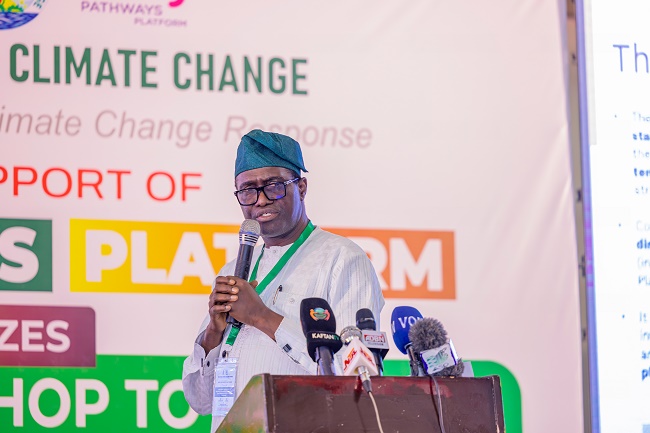
“During implementation, nobody should be left behind,” he said.
Also speaking, Mr. Moses Braimah, a Technology and Communications Consultant with the African Development Bank (AfDB), said Nigeria’s NDC implementation framework envisaged funding from both domestic and international sources.
According to him, about 20 per cent of the required financing is expected to come from domestic sources, while 80 per cent will be sourced externally.
Braimah stressed the need to strengthen national capacity to access international climate finance and maximise available funding opportunities.
To support this effort, AGESI announced plans to launch a free training programme on climate finance assessment and access, adding that details of the programme would be released soon.
Mr. Michael Bankole, an Environmental Manager with the Lagos State Ministry of Environment and Water Resources, disclosed that a customised data collection template was being developed to support climate reporting and implementation.
He said the template would be shared with relevant institutions, including sub-national actors, to improve data gathering and accountability.
Bankole emphasised the importance of making the template accessible to all stakeholders, describing data as critical for monitoring progress and tracking NDC targets.
The webinar also highlighted growing alignment between federal and state governments on NDC implementation, a development participants described as encouraging.
AGESI said the webinar series formed part of its broader mandate to promote evidence-based climate action and sustainable development across Africa.


Similarly, experts during the virtual event attributed Nigeria’s inability to attract significant climate finance to poor coordination among institutions pursuing similar climate-related goals.
The experts said Nigeria was missing opportunities to access billions of dollars in climate funding because relevant institutions were operating independently rather than adopting a coordinated approach.
The session focused on strategies for financing and implementing Nigeria’s Nationally Determined Contribution (NDC) 3.0, the country’s updated commitment under the Paris Agreement to address climate change.
Mr. Gerald Esambe Njume, Regional Principal Climate Change and Green Growth Officer at the African Development Bank (AfDB), said inadequate institutional coordination remained a major challenge.
According to him, major institutions seeking climate finance accreditation and funding are pursuing separate agendas without a common framework.
“Nigeria is critically missing coordination and institutional governance.
”We have the GCF that wants to be accredited, the World Bank wanting to be accredited. It is better for them to come together as one and have a solid framework,” he said.
Njume cited Morocco and Gabon as examples of African countries that had developed effective climate finance systems through strong institutional collaboration.
He said Nigeria had too many stakeholders pursuing similar objectives without adequate cooperation and yet expecting the same result.
Njume also expressed concern that many climate-related projects submitted for funding were not sufficiently aligned with the priorities outlined in NDC 3.0, thereby limiting their chances of attracting support.
Also speaking, Ms. Amandla Uzoka-Jarrett, an investment adviser, said there was a growing disconnect between major financial institutions and the small businesses expected to drive climate action.
“There is no alignment. There is a large distance between institutions and cities.
”Climate finance is being driven by different sources. Banking institutions are not reflecting the needs of MSMEs. There is a lack of coordination,” she said.
Uzoka-Jarrett said climate action in Nigeria remained largely dependent on the commitment of individual corporate leaders rather than being embedded in institutional systems.
She added that the absence of clear market incentives for environmental protection discouraged businesses from investing in sustainability initiatives.
She cautioned that blended finance mechanisms, which combine public and private capital, could expose smaller cities to excessive financial risks if not properly designed.
In his remarks, Dr Eugene Itua, Ambassador of the Circular Economy Institute and moderator of the event, unveiled a framework developed by AGESI to address the coordination challenge.
The framework, known as FIPRI – Function, Impacts, Prosperity, Resilience and Equity – provides an integrated approach to assessing the suitability of development projects for funding.
According to Itua, the framework evaluates projects not only on profitability but also on their social impact, resilience, and equitable distribution of benefits.
He said FIPRI integrates climate, governance, risk, and finance considerations into a single assessment system.
“FIPRI is the missing link between policy and project, between ambition and implementation, between innovation and finance, and between small businesses and development finance institutions,” he said.
By Damilola Charles