Education
How methane emissions fuel Nigeria’s food crisis – EnviroNews
– Advertisement –
Gazing at the spotted leaves of her cocoyam plant, Victoria Tamuno of Ayamabele community in Bayelsa State feels a familiar fear – the warning signs of another low harvest.
This situation has recurred for more than a decade on plants in the community. However, the issue is not limited to her cocoyam farm; the cassava and yam crops are not doing any better.

“They either rotted in the soil or the tubers were so tiny, while some species went extinct. This was not the case in the past.”
The mother of nine, in her 60s battling with a sick husband, says she is struggling and burdened by the situation.
“Even with the improved cassava stem cuttings given to them by various interventions, the result is similar,” she sighed.
In Ikarama community, another small holder farmer, Gold Moses, a widow and mother of five, said for more than a decade, she watched her harvest shrink.
“The yams harvests are small and spoil much more quickly in storage than they used to.
“In time past, we can store it for one year, now it can’t even last for five months.”
She takes plantain to Zaramamarket, the biggest market in Yenagoa Local Government Area (LGA), where buyers from Rivers, Imo and Delta states and other parts of the country come to get food crops both for consumption and retail.
However, the prices buyers want are mostly not favourable to many famers.
She says this is due to the cost of cultivating the farmland which is not commensurate to the amount often generated from most sales in addition to their low yield.
“We suffer to plant, but we don’t see anything to harvest,” she lamented.
In distraught, she says, the land in the region is no longer productive as even fishermen face similar situation and mostly return home with low fish catches.


Many fish species, she observes, have become scarce or probably extinct.
In all these development, the farmers believe activities of oil and gas companies have taken a toll on their rivers and farmlands which have been their source of livelihood for generations.
Their experiences are not isolated. Across other oil-producing communities in the Niger-Delta, farmers and fishermen also lament.
In Akwa Ibom and Rivers states, community members and civil society organisations (CSOs) working in oil-producing areas report similar patterns of declining agricultural productivity and livelihoods.
In Akwa Ibom, Emem Edoho, Executive Director of the Network Advancement Programme for Poverty and Disaster Risk Reduction (NAPPDRR), says the organisation has observed significant changes in the farming and fishing communities of EsitEket, Ibeno and Mbo over the past five years.
A similar picture emerges in Rivers, where farmers from the Nvakohia-Rumuekpe cluster, comprising Ovelle, Imogu, Ogale and Ekwutche communities in Emohua Local Government Area, say their crops no longer grow properly on their land.
The Healthy Life Development Initiative (HELDi) working in oil-producing communities in Rivers to promote environmental sustainability, public health and community resilience, particularly for vulnerable groups confirmed the situation.
HELDi’s Coordinator, Dr MfonUtin, said the organisation had observed declining productivity of economic tree crops, including oil palm, coconut, mango, citrus and other fruit trees that had traditionally served as important sources of household income and food security.
Utin said one of the devastating socio-economic consequences included migration, particularly among women and young people who depended heavily on farming and fishing for their livelihoods.
Analysts say the impact of declining agricultural productivity extends beyond the Niger Delta, contributing to the loss of livelihoods, deepening poverty and increasing vulnerability to health challenges.
They note that the situation is further compounded by rising food prices, economic hardship and insecurity, particularly in northern Nigeria, the country’s major food-producing region, where many farmers are unable to access their farmlands or risk being kidnapped.
According to SBM Intelligence, farmers in parts of the region are also subjected to multiple taxation by bandit groups operating in rural communities.
The worsening conditions are reflected in food security projections.
The Cadre Harmonisé estimated that about 33.1 million Nigerians would face acute food insecurity during the 2025 lean season, an increase of about seven million people compared with the previous lean season.
The number is expected to rise further, with nearly 35 million people projected to experience acute and severe food insecurity during the 2026 lean season.
UNICEF also estimates that about two million children in Nigeria suffer from severe acute malnutrition.
Methane, a silent but dangerous driver of food crisis in Niger-Delta
While insecurity, economic shocks, climate hazards and structural weaknesses remain the major drivers of Nigeria’s food crisis, analysts say another less visible factor is also intensifying the challenge.
Methane (CH₄), a colourless and odourless gas, is increasingly being linked to worsening food insecurity.
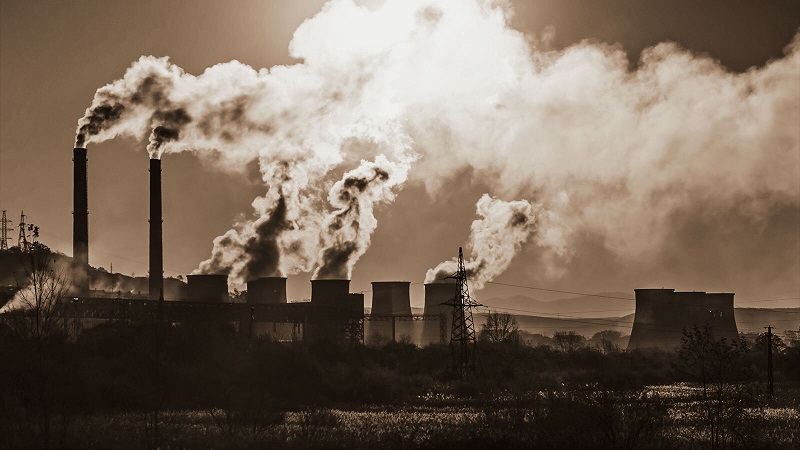
Emitted primarily from the energy, agriculture and waste sectors, methane is a potent greenhouse gas that accelerates global warming and contributes to the formation of ground-level ozone, which can damage ecosystems and reduce crop yields.
Although methane remains in the atmosphere for a much shorter period than carbon dioxide, it is far more powerful in trapping heat.
According to the United Nations Environment Programme, methane has a global warming potential about 86 times greater than carbon dioxide over a 20-year period, making it one of the most significant drivers of near-term climate change.
In Nigeria, the oil and gas sector is the largest source of methane emissions, accounting for about 60 per cent of the country’s total methane output.
According to the International Energy Agency (IEA), methane emissions from oil and gas operations occur through both intentional releases, such as venting and unintentional leaks, commonly known as fugitive emissions, from equipment, pipelines and other infrastructure.
In the Niger Delta, where much of Nigeria’s oil and gas activities are concentrated, methane emissions have been linked to environmental degradation, including air and land pollution and disruptions to local livelihoods dependent on farming and fishing.
These impacts also undermine efforts to achieve Sustainable Development Goal (SDG) 2 on ending hunger, improving food security and nutrition and promoting sustainable agriculture, while hindering progress toward SDG 13 on climate action.
According to data from the Emission Monitoring and Accountability Tool (EMAT), Mobil recorded the highest level of emissions in 2023, with more than 256 million units.
Heirs Energies Limited and Shell Petroleum Development Company of Nigeria Limited (SPDC) now Renaissance Africa Energy Company Limited followed with 217 million and 135 million units respectively.
Nigeria is a signatory to the Global Methane Pledge (GMP), unveiled at COP26.
Under the pledge, countries committed to contributing to a collective global effort to reduce methane emissions by at least 30 per cent from 2020 levels by 2030.
In addition, Nigeria’s revised Nationally Determined Contribution (NDC) under the Paris Agreement includes a commitment to reduce fugitive methane emissions from oil and gas operations by 60 per cent by 2031.
As part of efforts to advance methane reduction, the Federal Government signed a Memorandum of Understanding with the IEA in February to strengthen cooperation on methane emissions reduction, gas development, clean cooking access and technical support.
The agreement provides a framework for policy coordination, technical support and data sharing on methane action.
However, despite these commitments, methane emissions and gas flaring remain challenges in Nigeria’s oil-producing regions.
Methane emissions and climate impact on agriculture
According to the World Bank, Nigeria ranks among the 10 most exposed countries to climate change, with nearly six per cent of its land susceptible to extreme weather conditions.
Studies have shown that climate change has significantly disrupted agricultural productivity in Nigeria leading to reduced crop yields, increased pest and disease outbreaks alongside accelerated land degradation.
Crop production which accounts for approximately 94 per cent of Nigeria’s agricultural sector is increasingly under threat from climate change.
In some regions, the growing season has already shortened by about 20 per cent, affecting agricultural productivity.
Vulnerable crops such as maize, cassava and rice have been particularly affected.
Prof. Olugbenga AdeOluwa of the Department of Soil Resources Management, University of Ibadan, said that erratic rainfall, rising temperatures and flooding could stress cassava plants and increase disease incidence.
The professor of Soil Fertility in the Faculty of Agriculture said root crops rotting shortly after harvest could be linked to poor soil nutrition, particularly deficiencies in potassium, calcium and boron, which weaken storage roots.
He added that higher temperatures accelerate respiration, moisture loss and microbial growth, while excessive rainfall before harvest increases water content, cracking and microbial infection, causing the roots to deteriorate more rapidly.
According to him, adverse soil conditions before harvest can accelerate post-harvest physiological deterioration, weaken plant defence systems, increase susceptibility to pathogens and shorten the shelf life of root crops.
Amid these challenges, some non-governmental organisations such as Action Aid Nigeria and Oxfam Nigeria say climate shocks fall heaviest on smallholder farmers, especially women, who form much of Nigeria’s agricultural workforce.
Agreeing to this, Taye Ojo, the Programme Manager of Development and Educational Action Network (DEAN), noted that repeated crop losses and rising production costs have left many women smallholder farmers struggling to recover from climate-related shocks.
To address these challenges, he advocated the adoption of climate-smart agricultural practices, including the use of improved crop varieties that can enhance farmers’ resilience to changing weather conditions.
Conversely, experts caution that such interventions may not yield the desired results in all parts of Nigeria due to differences in environmental conditions and human activities affecting ecosystems.
Supporting this view, the Woman Leader of Ikarama community in Bayelsa State, Chief Warder Ayibakuro, said that despite planting improved cassava stems, farmers in the community continue to experience poor yields.
Prof. Olugbenga AdeOluwa explained that improved planting materials alone may not overcome severe environmental constraints.
He noted that factors such as soil degradation, environmental contamination, climate variability, pests, diseases and declining soil fertility were collectively reducing crop productivity in oil-producing and neighbouring communities.
Beyond crop losses, Dr Benson Fasanya, Founder and Executive Director of Centre For Earth Works (CFEW), said concerted efforts are required to build resilience and reduce contributors to global warming, including methane emissions.
Fasanya called for increased research by academia to address knowledge gaps and greater advocacy by CSOs for communities affected by environmental degradation linked to oil and gas activities.
Dr Veronica Akpasoh, Chief Executive Officer of Tovero Energy Ltd., said methane emissions from landfills, poorly managed waste and the burning of agricultural waste also contributed significantly to global warming, including in the Niger Delta.
Mining deepens environmental and food security challenges
Compounding these challenges, environmental degradation linked to mining activities is placing additional pressure on agricultural production in Northern Nigeria, threatening farmland, livelihoods and food security.
Illegal and poorly regulated mining operations have contributed to land degradation, soil erosion, abandoned mine pits and pollution of water sources in mineral-producing states, including Plateau, Zamfara, Nasarawa, Kaduna and Niger.
These impacts have been documented in environmental impact studies and mining assessments conducted across the affected regions, highlighting the growing pressure on agricultural land and rural livelihoods.
A 2020 NEITI study on the social impacts of mining in Nigeria found that many mining host communities were concerned about the loss of agricultural land.
It noted that mining and farming compete for land, often leaving farmers disadvantaged when mining rights are granted.
In Plateau State, where tin mining has occurred for decades, researchers have documented the long-term environmental consequences of mining, including land degradation, abandoned mine sites and the need for reclamation and restoration of affected areas.
The study revealed that about 316km2 of arable land was devastated in the 100 years of tin mining on the Jos Plateau out of which only 13km2 has been reclaimed.
Another study on illegal gold mining in Yauri, Kebbi State, found that mining activities damaged farmland, reduced soil fertility, displaced farming and contributed to food insecurity in affected communities.
For many Nigerian farmers already grappling with insecurity, climate shocks and soaring production costs, the loss of productive farmland further erodes their ability to produce food and sustain household incomes.
FAO identifies conflict, climate variability and economic hardship as among the key drivers of worsening food insecurity in the country.
Experts and advocacy groups argue that responsible mining practices, environmental restoration and effective regulation are essential to ensuring that mineral extraction does not undermine food security and rural livelihoods.
Food insecurity and rising food prices
Food insecurity remains a major challenge in Nigeria, with millions of people facing difficulty accessing sufficient and nutritious food due to rising prices, climate shocks, insecurity and economic pressures.
In response to worsening concerns, President Bola Tinubu declared a state of emergency on food security on July 13, 2023, directing immediate, medium- and long-term measures to improve food availability, affordability and agricultural productivity.
Since the declaration, government has continued to promote agricultural support programmes, including increased access to inputs, dry-season farming, irrigation expansion and measures aimed at boosting domestic food production.
Albeit, stakeholders say the impact of these interventions remains limited, as many households continue to struggle with high food prices, while farmers face rising production costs, insecurity and climate-related disruptions.
Data from the National Bureau of Statistics (NBS) show that food inflation remains a major contributor to Nigeria’s cost-of-living crisis, reflecting persistent increases in staple food prices.
Food inflation stood at 17.52 per cent year-on-year in June 2026, lower than the 25.41 per cent recorded in June 2025.
However on a month on month basis, food inflation increased by 3.75 per cent from 2.98 per cent in May.
Similarly, the National Average Cost of a Healthy Diet (CoHD) per adult per day stood at N1,541 in March 2026, a 1.89 per cent increase from the N1,513 recorded in February 2026, driven by rising prices across all food groups.
Economists say Nigeria’s rising food inflation reflects a combination of structural and economic pressures, including high agricultural input costs, exchange-rate depreciation, insecurity in farming communities, rising transportation expenses and weaknesses in food supply chains.
Similarly, Agricultural experts and CSOs, argue that increasing production alone may not resolve the crisis without addressing deeper challenges such as insecurity, poor infrastructure, limited financing and environmental degradation.
They warn that methane emissions and other impacts associated with oil and gas activities are adding pressure to food systems by degrading farmlands, reducing crop yields and affecting fisheries.
They caution that unless climate-related risks are addressed alongside agricultural and security interventions, efforts to improve food security and reduce food prices may remain constrained.
Bridging the gap between policy and action
While official documents set ambitious methane reduction targets and deadlines for ending routine gas flaring, many communities still report leaking pipelines, wellheads and flare stacks burning continuously over farms and fishing waters.
Experts and civil society organisations say the gap between policy and reality remains wide, with weak implementation undermining Nigeria’s climate and environmental commitments.
The Natural Resource Governance Institute (NRGI) has consistently argued that although Nigeria has adopted important methane reduction policies, weak governance, limited transparency and inadequate enforcement continue to hinder progress.
The organisation says accurate measurement and public disclosure of methane emissions are essential for effective regulation, stronger accountability and informed public oversight.
Analysts also argue that methane oversight remains fragmented across several institutions, leaving no single agency fully accountable for regulating methane emissions.
Community leaders in the Niger Delta say reports submitted repeatedly to regulatory agencies, particularly the National Oil Spills Detection and Response Agency (NOSDRA) and the Nigerian Upstream Petroleum Regulatory Commission (NUPRC), often receive little or no response.
In Bayelsa, Zion Kientei, Chairman of the Council of Chiefs in Lasukugbene Community, Southern Ijaw Local Government Area, said the lack of regulatory action had become discouraging.
Kientei alleged that an indigenous oil company commenced operations in his community after conducting only an Environmental Baseline Survey, which he said was a preliminary study used to inform a full Environmental Impact Assessment (EIA).
He said the community expected the company to conduct a full Environmental Impact Assessment (EIA) and develop an Environmental Management Plan (EMP) outlining measures to prevent, monitor and manage potential environmental impacts throughout the project’s lifecycle.
He said the community later took the matter to court after efforts to resolve it through the relevant regulatory authorities failed.
Amid these concerns, Kientei said Lasukugbene had begun developing community-led monitoring initiatives to complement official environmental oversight and safeguard public health.
The community, he said, recently partnered with the Media Awareness and Justice Initiative (MAJI) to install AirNodes air quality monitoring device to detect changes in air quality.
Similar concerns have been raised by some CSOs, which attribute gaps in environmental oversight partly to inadequate funding, limited technical capacity and resource constraints affecting agencies responsible for regulation.
Chima Williams, Executive Director of the Environmental Defenders of Nigeria (EDEN), said regulatory authorities, particularly NOSDRA, should be better equipped with adequate funding, personnel and technical resources to effectively discharge their oversight responsibilities.
Williams alleged that the agency sometimes relied on logistical support from oil companies during inspections and investigations, a situation he argued could create real or perceived conflicts of interest.
He said such arrangements could undermine public confidence in regulatory oversight and weaken the agency’s ability to independently enforce environmental standards.
Amid these concerns, the NUPRC in February directed all upstream oil and gas operators to adopt standardised, measurement-based methane and greenhouse gas (GHG) reporting templates.
The directive requires operators to transition from IPCC Tier 1 to Tier 2 and Tier 3 monitoring methodologies submit Greenhouse Gas Emissions Management Plans and emissions inventories and comply with phased implementation beginning in the fourth quarter of 2026.
Nonetheless, analysts say Nigeria must cut methane, fix damaged land, build climate strength, and boost smart farming to reach food and growth goals.
By Martha Agas, News Agency of Nigeria (NAN)