Politics
HRF changes Nigeria to hybrid authoritarian after ICIR report

THE Human Rights Foundation (HRF) has changed Nigeria’s classification on its Tyranny Tracker from “fully authoritarian” to “hybrid authoritarian,” after The ICIR reported the categorisation.
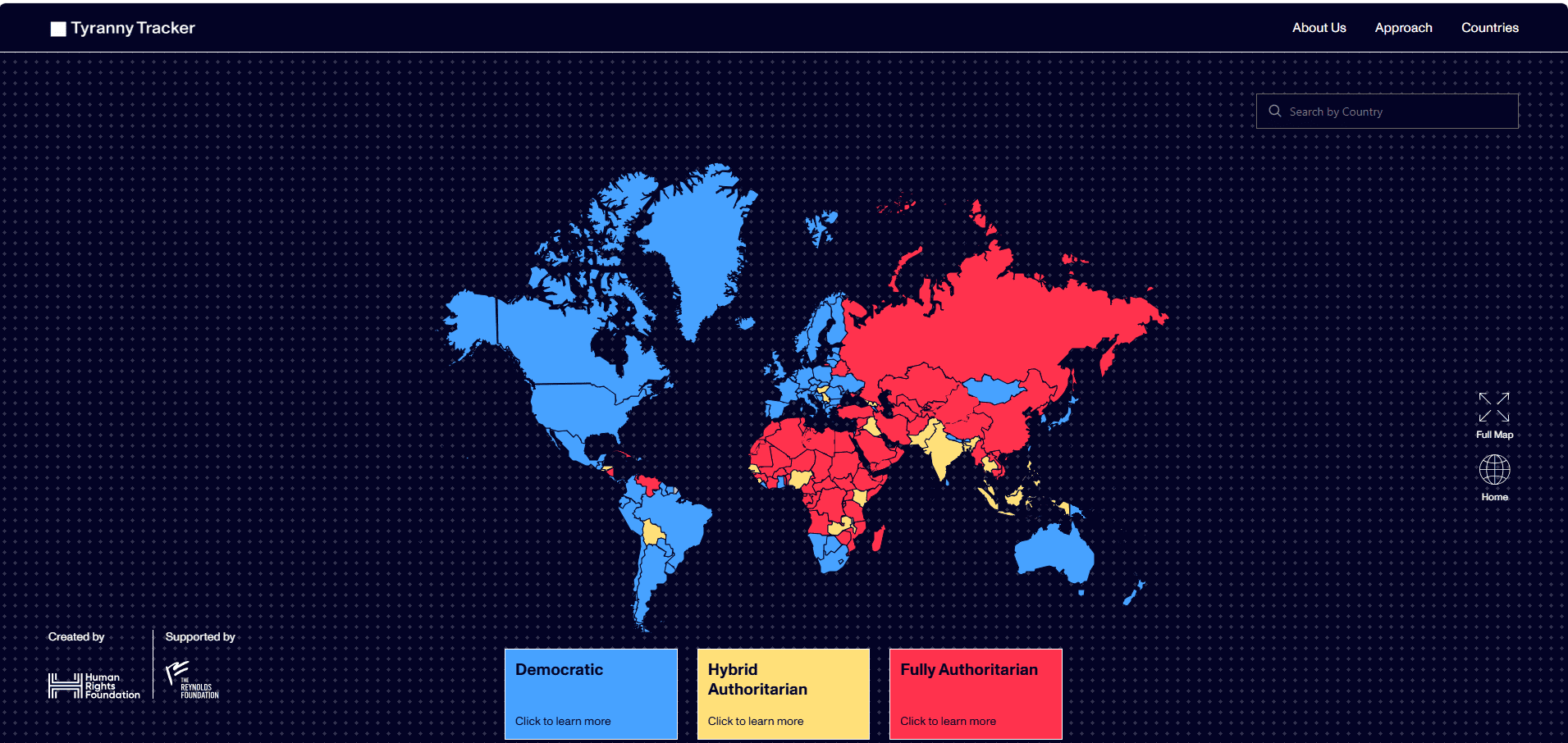
The change came to light after The ICIR published a report on August 6 titled “Nigeria Under Fully Authoritarian Regime – Report,” based on Nigeria’s classification as displayed on HRF’s Tyranny Tracker website.
Four days after the publication, on August 10, an HRF staff member, Femi Longe, contacted The ICIR reporter on LinkedIn and said Nigeria was actually classified as hybrid authoritarian on the Tracker. He requested that this organisation correct the report.
“Nigeria is actually ranked as Hybrid Authoritarian on the Tracker, not Fully Authoritarian. Please correct this as it needs to represent what was actually published,” Longe wrote.
Meanwhile, the Tyranny Tracker website actually classified Nigeria as fully authoritarian on August 6, when the report was published. A screenshot of the website on August 4 – two days before the report was published – shows that HRF captured Nigeria as fully authoritarian.
The ICIR reviewed the Tyranny Tracker page using the Internet Archive’s Wayback Machine and other archived records to examine historical versions of the page. The review showed that Nigeria had been classified as fully Authoritarian on the page since April 2026, with no correction or change to the classification reflected on the website.
Nigeria’s classification as “Hybrid Authoritarian” now shows on the page, following The ICIR’s report.

HRF attributes authoritarian classification to website glitch
This reporter contacted Longe to confirm whether he was affiliated with HRF and whether he could facilitate a response from the organisation. He confirmed that he is an HRF staff member.
“Yes, I work at the Human Rights Foundation, and indeed, we did have Nigeria initially as Fully Authoritarian but updated the tracker months ago, well before the date of your article,” he said.
The ICIR sent an email to Mohammed Keita, the official Longe said works as Senior Policy Officer and regional expert for Africa at HRF, to seek clarification on when the classification was changed.
The message also sought to know why the change was made, why the earlier fully authoritarian classification remained publicly visible on the Tracker shortly before The ICIR published its report, and why the change was not accompanied by an update note or revision history.
Responding, Keita said The ICIR’s concerns were fair. He noted that HRF decided to update Nigeria’s classification in May, following further consultations and discussions after the initial launch of the report.
“Like with every country, HRF follows a rigorous methodology with 45 indicators across three pillars to reach its assessment. Each pillar’s assessment contributes to the overall assessment. In addition, HRF consults and considers insights and feedback from individuals with expertise on the country, including academics, analysts, journalists and others living in the country.
“In this case, Nigeria’s Freedom of Dissent pillar presented nuances and complexities that generated ongoing internal discussions and external consultations before and after the initial launch of the report. After further discussions and consultations post-launch, HRF decided to update that pillar’s classification, which impacted the country classification. HRF made this change in May 2026,” he said.


Keita explained that the revision subsequently affected Nigeria’s overall classification. He also attributed the continued appearance of the fully authoritarian classification on the website to a technical problem.
“HRF was made aware that a recent technical glitch on the website caused the map to inexplicably revert to its earlier version,” he noted.
Keita described the adjustments as neither unique to Nigeria nor unusual.
“These types of adjustments were neither limited to Nigeria nor uncommon in the context of launching the first version of the map,” he said, adding that HRF planned to provide more information about the classifications and methodology in the next iteration of the Tracker.
How Tyranny Tracker classifies countries
The ICIR’s review of the Tyranny Tracker showed that the organisation assesses countries across three pillars, which include electoral competition, freedom of dissent and institutional accountability, with a framework that uses 45 indicators to examine conditions on the ground, including the fairness of elections, restrictions on opposition and dissent, and the independence of courts, legislatures and other institutions.
It assesses the indicators and assigns each pillar one of three thresholds, largely present, weak or absent, which are reviewed by HRF’s regional heads, methodology and research experts and senior policy, legal and advocacy officials, with external experts consulted in close cases.
The three pillars are then used to place a country into one of three regime categories: democracy, hybrid authoritarian and fully authoritarian.
Under HRF’s framework, a fully authoritarian regime is characterised by the suppression of meaningful electoral competition, freedom of dissent and institutional checks on power. A hybrid authoritarian regime retains some democratic features, such as elections or limited political pluralism, but has significantly weakened dissent and/or institutional accountability.
A Democratic system, by contrast, is characterised by free and fair elections, protection of fundamental freedoms, the freedom to openly dissent and independent institutions capable of holding the government accountable.
According to HRF, its methodology is intended to capture not only formal government actions but also the role of non-state actors with ties to governing authorities when they contribute to restricting opposition, suppressing dissent or undermining institutional accountability.


Nanji is an investigative journalist with the ICIR. She has years of experience in reporting and broadcasting human angle stories, gender inequalities, minority stories, and human rights issues. She has documented sexual war crimes in armed conflict, sex for grades in Nigerian Universities, harmful traditional practices and human trafficking.