

Education
IEA warns of deepening global oil market disruptions as Hormuz crisis tightens supplies – EnviroNews


– Advertisement –
Global oil demand is set for its steepest contraction in 2026 in the face of prolonged disruptions to crude supplies, elevated fuel prices and the continuing closure of the Strait of Hormuz, the International Energy Agency (IEA) has said in its August 2026 Oil Market Report (OMR).
The agency revised down its 2026 global oil demand forecast by 510,000 barrels per day (b/d) from its previous estimate, projecting a contraction of 1.6 million barrels per day (mb/d) for the year.
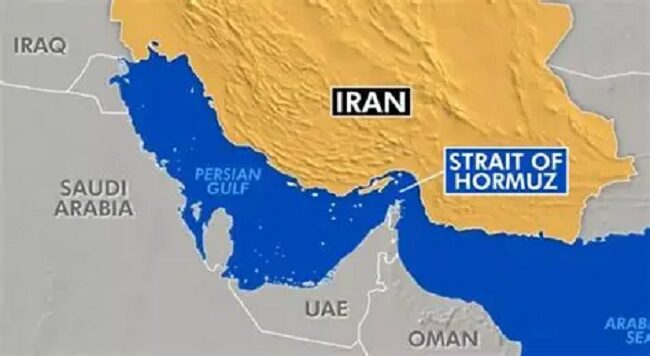
According to the report, the decline reflects the combined impact of disruptions to international supply chains caused by the prolonged closure of the Strait of Hormuz and higher fuel prices, which are weighing heavily on consumption.
The IEA, however, expects the contraction to moderate as the year progresses. Annual demand declines are projected to ease from 4.9 mb/d in the second quarter of 2026 to 2.8 mb/d in the third quarter, before the market returns to growth in the final quarter, when demand is forecast to increase by about 580,000 b/d.
For 2027, global oil demand is projected to rebound strongly, expanding by 2.4 mb/d.
Oil supply hit by renewed disruptions
The supply outlook has deteriorated sharply amid renewed hostilities and maritime disruptions affecting major oil-producing and exporting regions.
Global oil supply increased by 2.4 mb/d in July to 101.5 mb/d, but remained 6.3 mb/d below levels recorded a year earlier. Production in the Gulf was still constrained, with about 8.3 mb/d of output shut in.
The IEA said the renewed disruptions undermined efforts to restore production, prompting it to cut its estimate for third-quarter 2026 oil supply by 1.7 mb/dcompared with its July report.
Global oil supply is now expected to decline by an average of 4.3 mb/d in 2026, before rebounding by 8.3 mb/d in 2027 to 110.3 mb/d.
The Americas are expected to provide some support, with production growth of about 1.4 mb/d in 2026, but this will only partly compensate for losses in the Middle East and Russia.
The agency said Gulf production rose by a further 2.5 mb/d in July to 23.9 mb/d, following a 3.7 mb/d increase in June. Despite the recovery, production remained 8.3 mb/d below pre-war levels.
Regional exports, including supplies using alternative routes to bypass Hormuz, fell by 2.1 mb/d in July to 15 mb/d, after the strategic waterway was effectively closed again in early July.

Oil loadings reportedly peaked at around 20 mb/d at the beginning of July before falling to approximately 12 mb/d later in the month as oil infrastructure and tankers came under attack.
The IEA warned that the absence of an agreement to reopen the Strait of Hormuz and ensure unhindered transit through the Bab el-Mandeb Strait has forced another downward revision to its supply outlook for the remainder of the year.
Refining markets under severe pressure
Refinery activity has also been hit by the supply disruptions.
Global refinery crude throughputs rose by 1.8 mb/d in July to 80.9 mb/d, but remained almost 5 mb/d below year-earlier levels.
The IEA said continuing disruptions to Middle East product exports and attacks on Russian refineries prompted it to cut its estimate for third-quarter refinery runs by a further 370,000 b/d.
For the full year, global refinery throughputs are expected to decline by 2.5 mb/d in 2026, before recovering by 3.5 mb/d in 2027.
The resulting tightness in refined-product markets has pushed refining margins to unprecedented levels in the Atlantic Basin.
Diesel, jet fuel and gasoline cracks surged in July amid seasonal demand, supply shortages and depleted inventories, driving refining margins to all-time highs.
The IEA said seaborne product trade declined by 3.8 mb/d year-on-year, despite a 700,000 b/d increase in US exports.
Diesel exports from Russia, the Middle East and Asia fell by 1.3 mb/d year-on-year – equivalent to roughly 20 per cent of global seaborne diesel trade – while jet-fuel exports from the same regions dropped by about 670,000 b/d, representing approximately 34 per cent of global trade.
Global oil stocks plunge
One of the clearest indications of the market’s growing vulnerability is the sharp decline in global oil inventories.
Observed global oil inventories plunged by 69 million barrels in July, with the decline driven largely by falling volumes of oil in transit following renewed disruptions to exports from the Gulf and Caspian Sea.
Onshore inventories declined by a more modest six million barrels, as the pace of emergency stock releases by IEA member countries slowed, despite continued withdrawals from Chinese crude oil stocks.
Total observed inventories stood at just below 7.9 billion barrels at the end of July, representing a decline of 410 million barrels since the start of the war, equivalent to an average draw of about 2.7 mb/d.
The IEA warned that the depletion of inventories is reducing the buffers available to cushion further supply shocks.
Oil prices swing by almost $40 a barrel
Oil prices experienced exceptional volatility in July as markets reacted to rapidly changing geopolitical developments.
Benchmark crude prices moved through an unusually wide range of almost $40 per barrel, with diplomatic developments, supply disruptions and tightening crude and refined-product markets driving abrupt price movements.
North Sea Dated crude rose by $25.67 per barrel during July, ending the month at $96.80/bbl. It subsequently eased to around $92/bbl at the time of the IEA’s report.
Prices surged to as high as $105/bbl on July 23 following renewed hostilities after the breakdown of the mid-June Iran-US ceasefire agreement.
The IEA noted that expectations of diplomatic progress had previously triggered sharp price declines in June and early July, highlighting the extraordinary sensitivity of oil markets to geopolitical developments.
At the same time, prompt differentials for WTI and Brent futures returned to backwardation, a market structure generally associated with tighter near-term supplies.
Oil market deficit widens
The combination of falling production, supply-chain disruptions, depleted inventories and resilient pockets of product demand has significantly tightened the global oil balance.
The IEA now expects the global oil market to record a deficit of 1.8 mb/d in the third quarter of 2026, more than twice its previous estimate of about 800,000 b/d.
The agency said the sharp deterioration followed a brief respite in June, when inventories temporarily stabilised.
By the end of July, observed stocks had fallen below 7.9 billion barrels for the first time since April 2025. Cumulative stock withdrawals between the end of February and the end of July reached 410 million barrels, equivalent to an average drawdown of 2.7 mb/d.
Although the market is expected to return to surplus towards the end of 2026, the IEA cautioned that significant risks remain.
Hormuz reopening becomes increasingly urgent
The central message from the August report is that the global oil market’s ability to absorb further disruption is rapidly weakening.
The IEA said the urgency of reopening the Strait of Hormuz has increased as previously available inventory buffers are rapidly depleted.
The strategic waterway is critical to global energy trade, and prolonged restrictions on its use are affecting not only crude oil supplies but also refined-product availability, shipping routes, refinery operations and international supply chains.
With global oil demand expected to contract sharply in 2026 while supply falls even more substantially, the market is entering a period in which geopolitical developments, shipping disruptions and inventory levels could exert an outsized influence on prices and energy security.
The IEA’s projections point to a highly volatile market through the remainder of 2026, even as the anticipated recovery in supply and demand growth in 2027 offers the prospect of greater stability.



