Education
Investors warned of legal, financial risks in Canada’s fossil fuel expansion drive – EnviroNews
– Advertisement –
A coalition of climate and social justice campaigners has warned global investors against committing capital to major fossil fuel projects in Canada, citing potential cost overruns, legal disputes, Indigenous rights challenges and the growing risk of stranded assets.
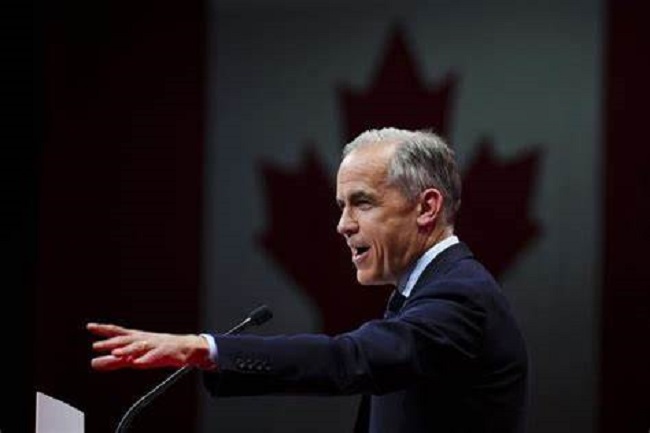
The warning was contained in the fifth dossier released by the Many vs. The Money Network as part of its campaign aimed at scrutinising the real-world implications of Canadian Prime Minister Mark Carney’s planned Canada Investment Summit.

The network accused the Canadian government of presenting the country as a stable and low-risk destination for large-scale energy investments, including pipeline infrastructure, liquefied natural gas (LNG) terminals and expanded fossil fuel export corridors.
According to the campaigners, however, the historical experience of major energy infrastructure projects in Canada tells a different story, marked by escalating costs, regulatory delays, litigation and sustained opposition from Indigenous communities and environmental groups.
The dossier argued that efforts to develop pipelines and LNG corridors through Indigenous territories without securing Free, Prior and Informed Consent (FPIC) could expose investors to constitutional litigation, injunctions and direct community resistance.
It cited opposition associated with projects such as the Coastal GasLink pipeline and proposed LNG expansions as evidence that government efforts to fast-track approvals cannot necessarily eliminate legal or community challenges.
The group also pointed to the financial records of recent major pipeline projects as a warning to potential investors.
The Trans Mountain Expansion project, initially estimated at about $5.4 billion, eventually cost more than $34 billion, while the Coastal GasLink pipeline reportedly saw its projected cost rise from $6.2 billion to approximately $14.5 billion.
According to the network, such developments demonstrate the potential for significant cost inflation, construction delays and financial losses in major fossil fuel infrastructure projects.
Beyond construction costs, the campaigners warned that long-term investments in fossil fuel infrastructure could create reputational and financial liabilities for institutional investors.
They argued that declining renewable energy costs, tightening climate commitments and the global transition towards cleaner energy sources could leave long-lived fossil fuel projects vulnerable to becoming stranded assets.
Institutional investors promoting environmental, social and governance commitments, the group said, could face increasing scrutiny if they simultaneously commit substantial funds to new fossil fuel infrastructure.
The dossier further highlighted physical risks associated with climate change, noting that energy corridors crossing mountainous regions, wetlands and other environmentally sensitive areas could be increasingly exposed to wildfires, mudslides and extreme weather events.


It said attempts to weaken or bypass environmental assessments in order to accelerate project development could also trigger opposition from municipal authorities, environmental organisations and local communities.
“Mark Carney can sell the promise of fast-tracked energy corridors in Toronto conference rooms, but he cannot sell the outcome on the ground,” organisers of the campaign said.
“From Trans Mountain’s multi-billion-dollar cost overruns to front-line blockades along pipeline routes, history has proven that forcing unconsented fossil fuel megaprojects through Indigenous homelands is a recipe for stranded capital and continuous conflict.”
The organisers warned that investors who accept assurances of seamless project delivery could instead face prolonged litigation, public opposition and mounting financial liabilities.
“Global investors buying into Carney’s fossil fuel pitch are purchasing years of litigation, public backlash, and compounding financial liabilities,” they added.
The Many vs. The Money Network maintained that capital flowing into Canadian LNG and pipeline projects should not be viewed as entering a risk-free investment environment.
Rather, the group said, prospective investors must reckon with an increasingly complex landscape shaped by Indigenous rights disputes, environmental concerns, climate risks, regulatory uncertainty and organised community opposition.
As Canada seeks to attract global capital for major energy infrastructure, the campaigners insisted that the economic and environmental realities surrounding fossil fuel expansion must be fully considered.
“Prime Minister Mark Carney can sell the opportunity, but he cannot sell the outcome,” the group said, warning that investors in Canadian LNG and pipeline projects could face years of legal challenges, financial volatility and sustained resistance from affected communities.