Education
IPCC suspends 65th Plenary Session over delays, seeks inclusive decision-making – EnviroNews
– Advertisement –
The Intergovernmental Panel on Climate Change (IPCC) has suspended its 65th Plenary Session in Addis Ababa, Ethiopia, following prolonged deliberations that extended beyond the meeting’s scheduled duration and forced many delegations from least developed countries (LDCs) and Small Island Developing States (SIDS) to leave.
The IPCC Chair, Jim Skea, announced the suspension late on Friday, October 16, 2026, stressing the need to safeguard inclusive participation in the Panel’s decision-making process.

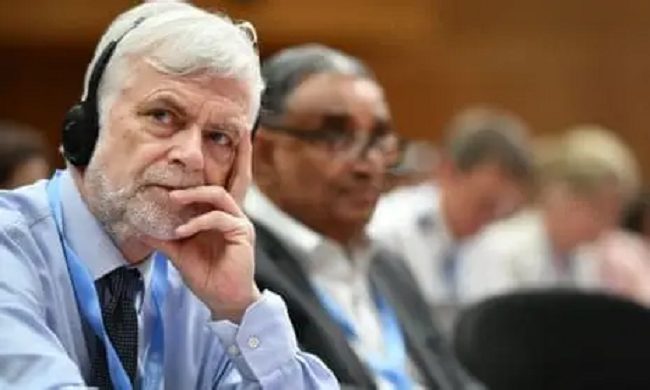
The suspension comes as delegates continue discussions on key agenda items, including the timelines for the three Working Group contributions to the IPCC’s Seventh Assessment Report (AR7) and the organisation’s budget.
According to the IPCC, both issues remain unresolved and will be considered when the plenary resumes at the earliest opportunity.
The Chair’s decision is intended to uphold the principle of inclusivity in IPCC plenaries, where governments make major decisions through consensus. The participation of all delegations is particularly important because the Panel’s assessments inform international climate policy and negotiations.
The IPCC is the United Nations body responsible for assessing the scientific evidence on climate change, its impacts and risks, and options for mitigation and adaptation. Established in 1988 by the World Meteorological Organization (WMO) and the United Nations Environment Programme (UNEP), the Panel provides policymakers with regular scientific assessments to support climate-related decision-making.
Its reports draw on the work of scientists worldwide and assess published research on the causes and consequences of climate change, as well as possible responses. The IPCC does not conduct its own research but evaluates existing scientific literature to provide governments with a comprehensive understanding of the state of climate science.
The Panel’s Seventh Assessment Report is expected to provide updated scientific evidence on climate change, including its impacts, vulnerabilities, adaptation measures and mitigation options. Its three Working Groups focus on the physical science basis of climate change; climate change impacts, adaptation and vulnerability; and climate change mitigation.
The timelines for these Working Group contributions are important because they help determine when the scientific assessments will be completed and made available to policymakers. The IPCC’s budget, meanwhile, supports the coordination and delivery of its scientific work.
The suspension of the 65th Plenary Session highlights the importance of ensuring that all member governments, particularly those facing acute climate vulnerabilities and limited negotiating resources, can participate fully in decisions that shape the Panel’s work.
Least developed countries and Small Island Developing States are among the groups most exposed to climate-related risks, including rising sea levels, extreme weather events, droughts and threats to food and water security. Their participation in international climate science and policymaking processes is therefore vital to ensuring that their circumstances and priorities are adequately reflected.
The IPCC said the plenary and deliberations on the outstanding agenda items would resume at the earliest opportunity.
Until the meeting reconvenes, decisions on the timelines for the three Working Group contributions to the Seventh Assessment Report and the Panel’s budget remain pending.

