

Health
Lagos exclusive breastfeeding rate hits 57.4%

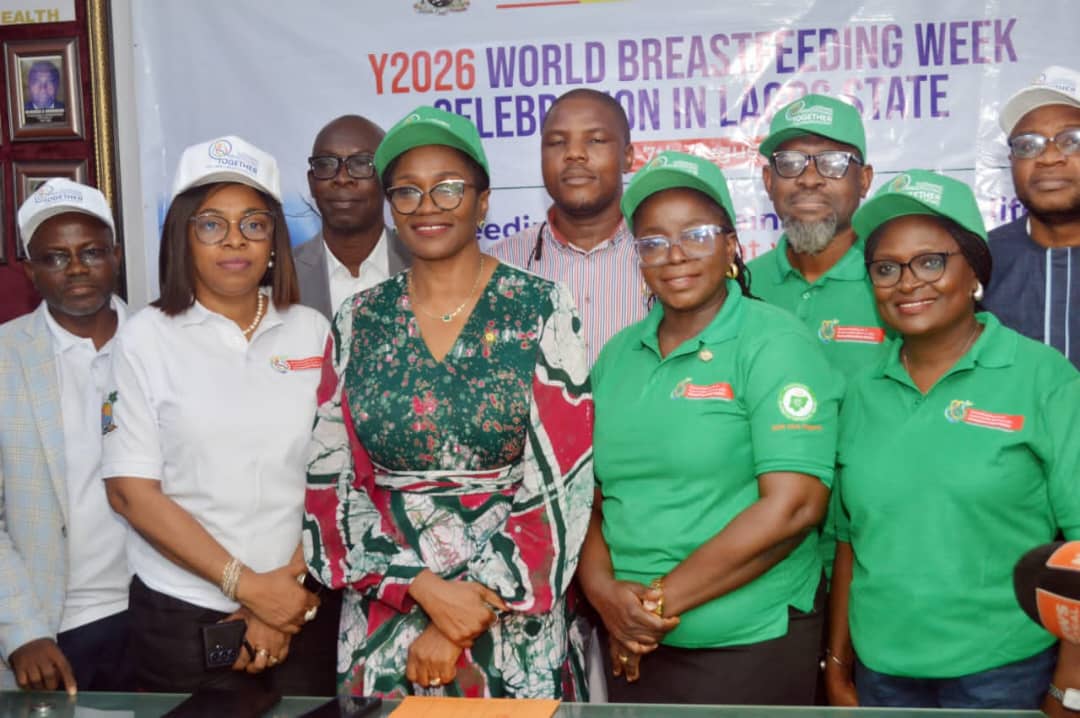
Lagos State has recorded an Exclusive Breastfeeding rate of 57.4 per cent, surpassing the global target of 50 per cent set for 2025.
This is as the state renewed its commitment to strengthening proven interventions that improve infant nutrition and child survival during the 2026 World Breastfeeding Week celebration.
As of 2024, nearly half (48%) of infants under six months were exclusively breastfed, bringing the world close to the 50% target set for 2025, according to the World Health Organisation.
Building on this progress, the WHO Member States at the 78th World Health Assembly passed a resolution to raise the target to 60% and extend the timeline to 2030.
But speaking at a press briefing held on Tuesday at the Conference Room of the Lagos State Ministry of Health, Alausa, the Special Adviser to the Governor on Health, Dr. Kemi Ogunyemi, said although Lagos had made significant progress in exclusive breastfeeding, there was a need to improve the early initiation of breastfeeding, which currently stands at just 14 per cent.
Addressing journalists on the theme, ‘Breastfeeding for a Sustainable Start in Life: Strengthen What Works’, Ogunyemi described breastfeeding as one of the most effective child survival strategies.
She stressed that breast milk remains the safest, most nutritious and most affordable source of infant nutrition.
She explained that exclusive breastfeeding for the first six months of life, followed by continued breastfeeding alongside appropriate complementary feeding up to two years, guarantees optimal cognitive, physical, and mental development for children while significantly reducing infant illnesses and deaths.
“The importance of breastfeeding as a child survival strategy, especially in the first six months of life, cannot be overemphasised. Breast milk is free, nutrient-dense, readily available, and creates healthier children while promoting stronger bonding between mother and child,” she said.
The special adviser noted that this year’s global theme, declared by the World Alliance for Breastfeeding Action, was particularly relevant in the face of prevailing economic realities.
She added that breastfeeding offers families a sustainable and cost-effective means of ensuring optimal nutrition for infants.
She called on husbands, grandparents, employers, healthcare workers, religious leaders, community leaders, and other caregivers to provide the enabling environment nursing mothers require to successfully breastfeed.
She said breastfeeding thrives where mothers receive adequate family and social support.

Ogunyemi disclosed that Lagos State had continued to strengthen Maternal, Infant and Young Child Nutrition strategies through healthcare worker training, skilled breastfeeding counselling, enforcement of the International Code of Marketing of Breast-milk Substitutes and sustained nutrition education across health facilities.
She added that all 334 Primary Health Centres, 29 secondary health facilities and one tertiary facility in the state currently implement the MIYCN strategy with an effective referral system.
She, however, expressed concern over the low rate of breastfeeding within the first hour of birth, attributing it partly to misconceptions surrounding colostrum, the first yellowish breast milk, despite its proven protective benefits for newborns.
“Midwives in both public and private health facilities are being trained to initiate breastfeeding within one hour after delivery,” she said.
Responding to questions from journalists, Ogunyemi dismissed the notion that mothers who deliver through caesarean section cannot breastfeed immediately, insisting that surgical delivery should never delay breastfeeding.
“A caesarean section is not a barrier to breastfeeding. Whether a mother delivers vaginally or through surgery, breastfeeding should begin as soon as possible, ideally within the first hour after birth,” she said.
She further warned against the use of breast-milk substitutes and pre-lacteal feeds such as glucose water and herbal mixtures, describing the practice as harmful to both the physical and cognitive development of infants.
She urged families and healthcare providers to support exclusive breastfeeding and adhere strictly to recommended infant feeding practices.
Highlighting government support for breastfeeding-friendly policies, Ogunyemi recalled that Lagos approved six months of maternity leave and two weeks of paternity leave for public servants over a decade ago to encourage exclusive breastfeeding and improve child health outcomes.
Earlier, the Permanent Secretary, Lagos State Ministry of Health, Dr. Dayo Lajide, urged the media to amplify breastfeeding messages beyond the commemorative week.
She said healthier children, stronger families, and improved national development could only be achieved through sustained collective action.
Lajide said the ministry would continue to strengthen collaboration with healthcare professionals, development partners, and the media to sustain the gains recorded in maternal, newborn, and child health.
She noted that breastfeeding remains one of the most cost-effective public health interventions for reducing infant mortality and promoting healthy childhood development.
She stressed that every stakeholder has a role to play in ensuring mothers receive the support they need to exclusively breastfeed their babies.
The PS urged families, employers and communities to create breastfeeding-friendly environments that enable mothers to practice exclusive breastfeeding without discrimination or undue pressure.
“Imagine a society where every child is exclusively breastfed, properly nourished and given the best start in life. That is the future we are working towards, and it can only be achieved through our collective efforts,” she said.
In his goodwill message, Lagos State Coordinator of the Civil Society Scaling Up Nutrition in Nigeria, Akinyode Samuel, commended the state for implementing family-friendly policies and called for sustained investment in interventions that have consistently improved breastfeeding outcomes.
He called on governments, employers and communities to continue investing in evidence-based nutrition programmes and support systems that empower mothers to give every child the healthiest possible start in life.
Copyright PUNCH
All rights reserved. This material, and other digital content on this website, may not be reproduced, published, broadcast, rewritten, or redistributed in whole or in part without prior express written permission from PUNCH.
Contact: health_wise@punchng.



