

Foreign News
Nepal Foreign Minister: Dont See India Through Distorted Lens


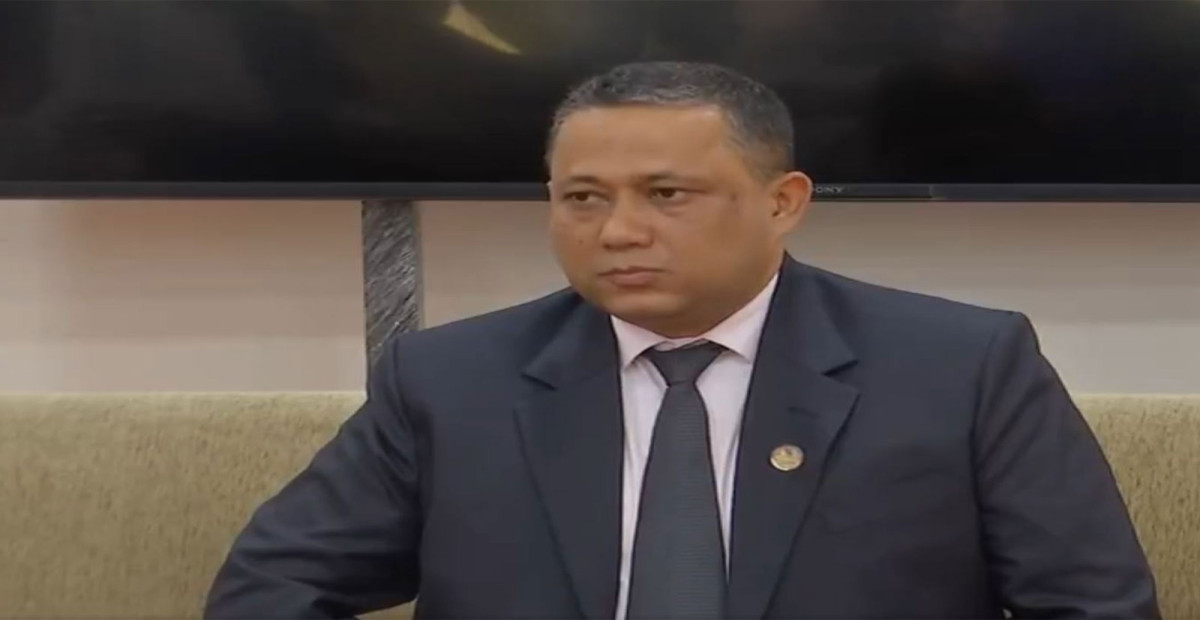
“I represent a completely new political reality in Nepal,” Shishir Khanal, foreign minister of that country told journalists on Sunday morning in Delhi during a briefing at the embassy. “We don’t refer to India through the distorted hyper sensitive lens of 21st century geopolitics.”
Khanal’s remarks came at the end of his three-day visit to India, the first by a representative of the new Rashtria Swatantra Party (RSP) government of Prime Minister Balen Shah.
“When we look across the border, we see a Rising India – an India that has fundamentally and beautifully redefined itself on the global stage as a dynamic, fast-growing tech and economic powerhouse,” he said.
“We want to engage with this India of intense aspiration and cutting-edge technology. In turn, we bring the energy of an Aspiring Nepal.”
“Our focus is clear, we need to engage India with open eyes, close the door on missed opportunities and past promises. Rather than engage in hyper grandstanding, we need to resolve challenges in good faith.”
“No problem is too large and no boundary too complex when we sit down with an open heart,” Khanal said
He confirmed that field survey teams of both countries were surveying the 1800-plus kilometres of border between the two countries. This was not just about Nepal’s claims to Kalapani but other parts where there were issues over land lying in India or Nepal but owned by people of the other country. But Nepal had no doubts about its claim to Kalapani.
“We want to solve this dispute between the two countries based on evidence and facts, especially historical facts, and because this dispute arises in 1814-1816, when there was a war between then Gurkhali Nepal and East India Company and Nepal’s current boundary is largely set by that,” he said.
“We potentially might need some historical document and reference certain documents that we know also exist in England in the old archives and the library, so we wanted to get access to that.”
This was not about seeking a third party to resolve a bilateral issue. All disputes would be resolved through “existing bilateral mechanisms, based on evidence and facts”.
He dismissed the suggestion that Prime Minister Balen Shah was deliberately avoiding foreign travel. The government, he pointed out, had not even completed 100 days in office and there was much work to be done at home.




