

Foreign News
Pentagon Flags Alibaba, Baidu and BYD Over PLA Links


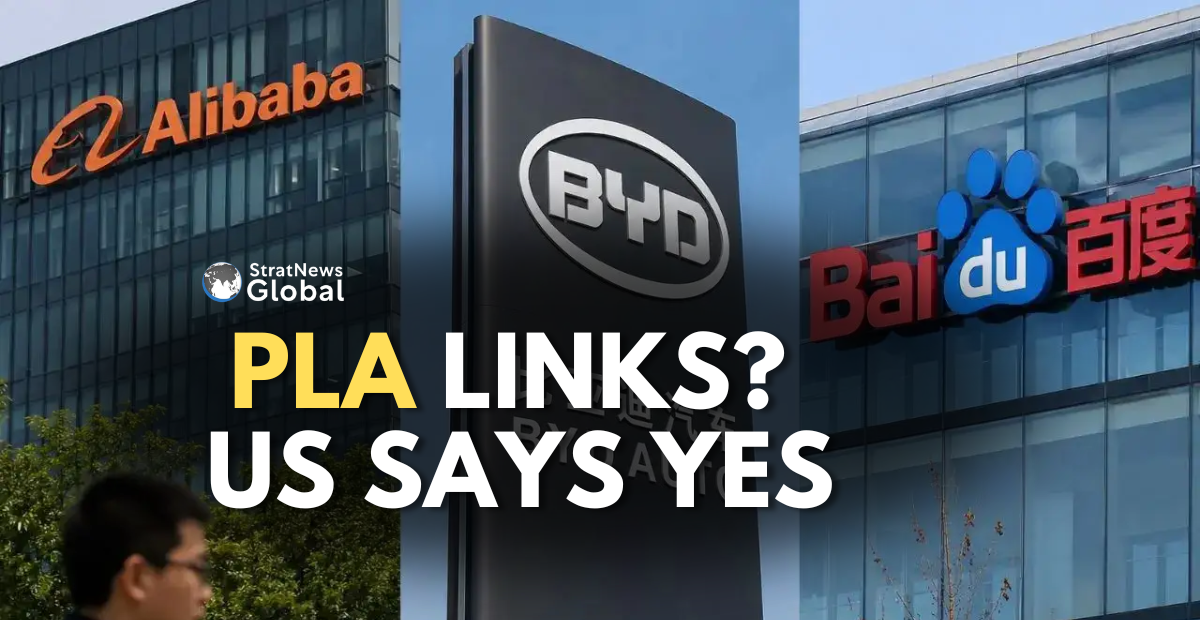
The United States has added some of China’s biggest corporate names, including Alibaba, Baidu and electric vehicle giant BYD, to a Pentagon list of companies it believes are linked to or supporting China’s military.
The updated list, released on Monday, comes less than a month after U.S. President Donald Trump met Chinese President Xi Jinping in Beijing, highlighting how strategic competition continues despite efforts to stabilise ties.
The revised Section 1260H list includes a broad range of Chinese companies involved in advanced technologies considered critical to Beijing’s future military and industrial capabilities.
New additions include memory chipmakers CXMT and YMTC, biotechnology giant WuXi AppTec, robotics company Unitree and lidar manufacturer RoboSense.
The inclusion of major technology firms such as Alibaba and Baidu signals Washington’s growing concern over the role of China’s commercial sector in supporting national strategic objectives, particularly in artificial intelligence, semiconductors and advanced manufacturing.
Why The List Matters
While inclusion on the list does not automatically trigger sanctions, it carries significant consequences.
Starting later this month, the U.S. Department of Defense will be barred from contracting directly with companies on the list. From 2027, restrictions will extend to products and services acquired through third-party suppliers.
The designation also serves as a warning to U.S. government agencies, defence contractors and private firms that Washington considers these companies part of China’s broader military-industrial ecosystem.
Chinese Firms Push Back
Several companies quickly rejected the Pentagon’s allegations.
Alibaba said there was “no basis” for its inclusion and insisted it was neither a military company nor part of any military-civil fusion strategy. Baidu called the designation “entirely baseless” and said it would pursue all available legal options to challenge the decision.
WuXi AppTec also described its inclusion as incorrect and pledged to seek removal from the list.
Beijing Accuses Washington Of Discrimination
China condemned the move, accusing the United States of unfairly targeting Chinese businesses.
A spokesperson for the Chinese Embassy in Washington said Beijing opposed the use of discriminatory lists against Chinese companies and urged the U.S. to provide a fair and non-discriminatory business environment.
The embassy argued that Chinese firms operating overseas comply with local laws and regulations and should not be subjected to politically motivated restrictions.

Beyond Trade: A Battle Over Technology
The latest update reflects a broader shift in U.S. strategy toward China.
Rather than viewing individual companies in isolation, Washington increasingly sees China’s technology sector as closely linked to national security and military modernisation efforts.
Analysts say the expanded list demonstrates how artificial intelligence, semiconductors, robotics, biotechnology and data infrastructure have become key battlegrounds in the intensifying rivalry between the world’s two largest economies.
A Post-Trump-Xi Reality Check
The timing of the announcement is particularly notable.
Coming shortly after Trump’s visit to Beijing and efforts to maintain a trade truce, the Pentagon’s move serves as a reminder that economic engagement and strategic competition are now unfolding simultaneously.
As both countries compete for leadership in emerging technologies, the battle is increasingly being fought not just through tariffs and trade restrictions, but through control of the companies shaping the future global technology landscape.
(with inputs from Reuters)



