

Education
REEEA-A seeks stronger partnerships to accelerate clean energy access – EnviroNews


– Advertisement –
The Renewable Energy and Energy Efficiency Associations-Alliance (REEEA-A) has called for stronger partnerships, investment and coordinated action to accelerate clean and affordable energy access in Nigeria.
The call was made at the fifth International Conference of REEEA-A on Wednesday, August 19, 2026, in Lagos, where stakeholders urged a shift from policy discussions to practical implementation.
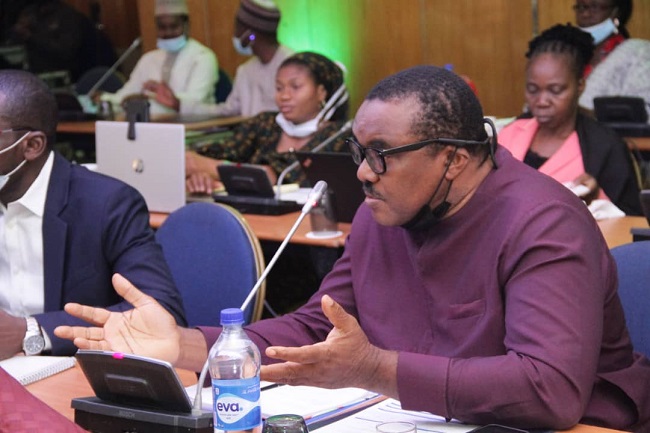
The conference has the theme: “Accelerating Collective Action and Strategic Partnerships for Equitable Clean Energy Access.”
It brought together government officials, investors, development partners, researchers and energy professionals.
The Chairman, Conference Planning Committee, Mr. Ayodeji Dada, said energy challenges were too complex for any single institution, sector or country to address alone.
Dada said governments, private sector operators, financial institutions, academia, civil society and communities must work together to expand clean energy access.
He said governments had a critical role in creating enabling policies and regulatory frameworks, while the private sector must innovate, invest and develop practical solutions.
According to him, financial institutions must develop instruments capable of addressing risks associated with emerging clean energy markets.
Dada said academia and research institutions must generate knowledge and technologies that responded to local needs.
He also called for meaningful participation of women, young people and underserved communities in the energy transition.
“We must move from conversation to collaboration, from collaboration to implementation, and from implementation to measurable impact,” Dada said.
Dada said the alliance would deepen engagement with governments, development partners, investors, industry, academia, civil society and the media.
He said the organisation would promote knowledge exchange, capacity development and stronger regional cooperation across Africa and beyond.

Dada urged participants to approach the conference as partners in a shared mission rather than merely as delegates.
He encouraged them to challenge conventional thinking, share experiences and identify practical opportunities for collaboration.
He also urged stakeholders to make commitments capable of producing measurable outcomes beyond the conference.
The outgoing Chairman of REEEA-A, Prof. Magnus Onuoha, also urged stakeholders to strengthen collaboration to advance renewable energy and energy efficiency.
Onuoha said the conference provided an important platform for stakeholders to exchange ideas and develop strategies for expanding clean energy access.
He said the energy transition required sustained engagement among government, private sector operators, development partners, financial institutions, academia and professional associations.
The Chairman, Board of Trustees (BOT), REEEA-A, Prof. Abubakar Sambo, said stronger partnerships were essential to addressing Nigeria’s energy challenges.
Sambo said energy was fundamental to economic development, job creation, healthcare, education and improved quality of life.
“Yet, millions of Nigerians still lack reliable and affordable access to modern energy services.
“Energy is too large for any single institution, sector or stakeholder to solve alone. It demands concerted action,” he said.
He said government must provide appropriate policies, regulations and investment frameworks, while the private sector should provide innovation, capital and efficient business models.
Sambo added that tertiary institutions should contribute through research, innovation and knowledge development.
He said development partners could support capacity building, financing and technical assistance, while civil society and communities should ensure energy solutions reflected local needs.
The BOT chairman said REEEA-A had an opportunity to bring together diverse organisations and professionals working across the renewable energy and energy efficiency space.
He said such collaboration could create stronger platforms for knowledge sharing, advocacy, investment and policy development.
Sambo stressed that affordable access must remain at the centre of Nigeria’s clean energy transition.
“Clean energy should not be a privilege for those who can afford it. We must develop solutions that reach rural communities, small businesses, women, young people and underserved populations,” he said.
He also emphasised the importance of energy efficiency, saying reducing energy waste could lower costs, improve productivity and reduce pressure on existing infrastructure.
“The cheapest energy is often the energy we do not waste,” he said.
Sambo challenged REEEA-A to work with government and development partners towards achieving 178,000 megawatts of electricity generation from renewable energy sources by 2050.
He said the target was contained in the Renewable Energy Roadmap for Nigeria, developed by the Energy Commission of Nigeria and the International Renewable Energy Agency.
Sambo said Nigeria’s vast renewable energy resources provided an opportunity to achieve the target if stakeholders worked together.
He urged REEEA-A to collaborate with relevant agencies, including the Nigerian Electricity Management Services Agency, Energy Commission of Nigeria and the Federal Ministry of Power.
He said stakeholders should develop clear plans for increasing electricity generation capacity and track the contributions of companies and organisations towards achieving national targets.
Sambo also called for increased local manufacturing of renewable energy components, particularly solar equipment.
He said local production would make renewable energy components cheaper and more readily available, while creating jobs and reducing dependence on imports.
He further proposed innovative financing mechanisms to attract investment into renewable energy projects.
Sambo cited South Africa’s Renewable Energy Independent Power Producer Procurement Programme as a model Nigeria could consider.
According to him, the auction-based programme helped South Africa procure renewable electricity competitively and expand generation capacity.
Sambo also called for stronger testing and quality-control mechanisms to prevent counterfeit and substandard renewable energy products from entering the Nigerian market.
He urged power aggregators and private operators to establish stronger partnerships with state governments to expand electricity generation and distribution.
Sambo said the constitutional amendment allowing states to participate more actively in electricity generation and distribution provided an opportunity to expand access.
He said about 17 states had already taken steps towards participating in the electricity market.
He urged stakeholders to develop a national renewable energy and power development plan to provide a clear roadmap for the sector.
Sambo also called for greater investment in manpower development and specialised capacity building in renewable energy.
He said Nigeria needed to strengthen education and training programmes to develop the skilled workforce required to drive the country’s energy transition.
The BOT chairman stressed the need to distinguish between electricity access and electricity availability.
He said connecting consumers to the grid did not necessarily mean adequate electricity was available for productive use.
Sambo said Nigeria’s electricity consumption per capita remained significantly below African and global averages.
He put Nigeria’s average electricity consumption at about 180 kilowatt-hours per capita annually, compared with African and global averages of about 600 and 3,600 kilowatt-hours, respectively.
He said the figures demonstrated the scale of Nigeria’s electricity deficit and the urgent need to increase generation, transmission and distribution capacity.
Sambo commended the support of development partners, particularly GIZ, towards organising the conference.
He thanked speakers, partners, members and participants for their contributions to advancing renewable energy and energy efficiency in Nigeria.
He expressed confidence that stronger collaboration would help build an energy future that was cleaner, more reliable, affordable and inclusive.
By Fabian Ekeruche



