

Education
Rising floods, vanishing mangroves: SRADeV seeks stronger enforcement to protect declining ecosystems – EnviroNews


– Advertisement –
As Nigeria marks World Mangrove Day, observed yearly on July 26, the Sustainable Research and Action for Environmental Development (SRADeV Nigeria) is calling for urgent and strengthened enforcement measures to halt the rapid decline of the country’s mangrove ecosystems, warning that their loss is directly linked to increasing flood risks across coastal communities.
Nigeria hosts one of the largest mangrove ecosystems in the world, covering approximately 504,800 hectares in the Niger Delta and an additional 95,000 hectares in Cross River State. Together, these form the largest mangrove system in Africa and the third largest globally, supporting biodiversity and sustaining millions of people who depend on coastal resources for their livelihoods.
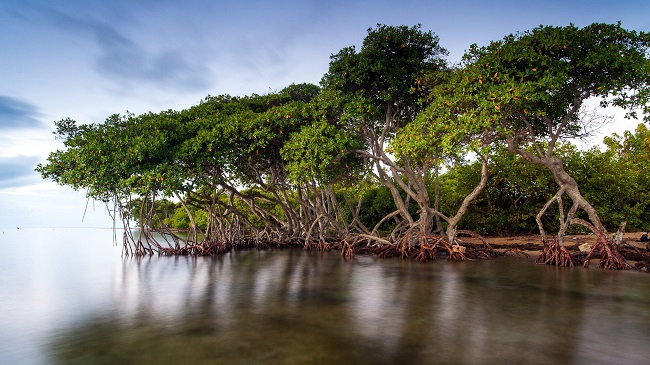
In coastal Nigeria, flooding is no longer an occasional disruption. Areas that previously experienced flooding only during extreme rainfall now flood regularly, disrupting livelihoods, damaging property, and placing increasing strain on urban infrastructure. A key but often overlooked driver of this crisis is the steady degradation of mangrove forests, which have historically served as natural buffers against coastal flooding.
Mangroves provide critical ecosystem services. They protect shorelines by reducing storm surges and coastal erosion. In addition, mangroves act as significant carbon sinks, contributing to climate change mitigation, while also supporting eco-tourism and local economic development.
Despite their importance, Nigeria’s mangroves are under severe pressure. Coastal industrialisation, particularly in Lagos and Port Harcourt, combined with rapid urban expansion, sand dredging, and land reclamation, continues to drive widespread habitat loss. The impacts are increasingly evident in more frequent flooding, declining fish stocks, disrupted livelihoods, and mounting pressure on drainage systems and public infrastructure.
“Mangrove deterioration remains one of the most serious environmental challenges facing coastal communities, where recurrent flooding is now a direct consequence,” said Dr. Leslie Adogame, Executive Director of SRADeV Nigeria.
Across the Niger Delta, mangrove degradation is further intensified by pollution from industrial and agricultural activities, overharvesting for fuelwood, invasive species such as nipa palm, and weak enforcement of environmental regulations. The cumulative effect is reduced ecosystem resilience, heightened flood vulnerability, and growing economic hardship for coastal communities. However, implementation remains a significant challenge.
The National Wetland Policy has remained in draft form since 2001, limiting coordinated national action. In Lagos State, while policy frameworks exist, they have not been fully translated into enforceable instruments. Weak monitoring systems, overlapping institutional responsibilities, and limited sanctions have enabled continued unauthorised dredging and land reclamation.
“The solutions are not out of reach – stronger enforcement, coordinated monitoring, and Ramsar recognition for our remaining wetlands can reverse this trend,” said Mr. Victor Fabunmi, Programmes Manager at SRADeV Nigeria.
SRADeV Nigeria is urging the Nigeria government to strengthen mangrove protection by converting existing policies into enforceable regulations and establishing robust implementation mechanisms. We recommend urgent actions that include deploying technology-driven monitoring systems, enforcing stricter permitting processes for dredging and land reclamation, improving inter-agency coordination, and applying clear penalties for environmental violations.
The organisation also calls for the designation of Lagos wetlands under the Ramsar Convention to enhance protection. At the federal level, SRADeV Nigeria calls for the immediate finalisation and operationalisation of the National Wetland Policy, supported by a coordinated national implementation strategy with clear targets and strengthened enforcement capacity.
As the global community commemorates World Mangrove Day, SRADeV Nigeria urges government institutions, the private sector, and communities to take decisive action. Protecting mangroves is not only an environmental necessity but also a critical investment in flood resilience, food security, economic stability, and the long-term sustainability of Nigeria’s coastal cities.




