Education
Stiell urges climate action, finance delivery as UNFCCC Climate Week opens in Baku – EnviroNews
– Advertisement –
United Nations Climate Change Executive Secretary, Simon Stiell, has called on governments, businesses, investors, cities and civil society to move faster from climate commitments to concrete projects, investments and solutions that deliver tangible benefits for communities.
Stiell made the call on Wednesday, September 9, 2026, in a video message delivered during the high-level opening of the fourth UNFCCC Climate Week in Baku, Azerbaijan.

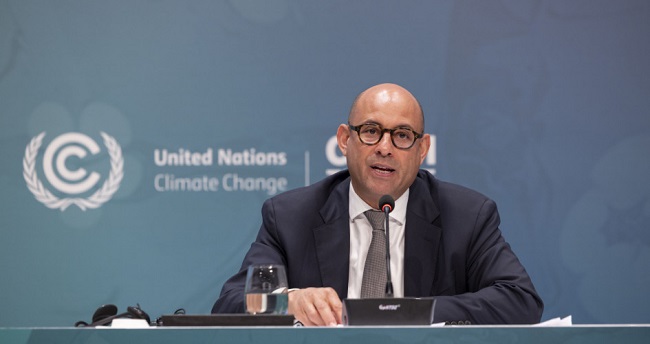
He said Baku, which hosted COP29 in 2024, remained an important reference point for international climate cooperation, particularly on climate finance, but stressed that the focus must now shift from promises to implementation.
“At COP29, countries agreed a new global climate finance goal of $300 billion a year by 2035 and called on all actors to work together to scale up climate finance from public and private sources to at least $1.3 trillion a year by 2035,” Stiell said.
He noted that the Baku to Belém Roadmap had subsequently advanced efforts to translate those commitments into practical measures capable of directing finance to where it is most needed.
“For me, returning to Baku goes beyond symbolism. It is a reference point for delivery,” he said.
Stiell challenged governments and other stakeholders to demonstrate that commitments reached in international negotiating rooms were being translated into projects, investments and real protection for people facing the impacts of climate change.
According to him, international climate cooperation was producing results, noting that without such cooperation the world would be heading towards catastrophic levels of warming.
“We know climate cooperation is working. Without it, humanity would be heading towards catastrophic levels of heating. With it, we are still in the fight,” he said.
He pointed to developments in the global energy system as evidence of the accelerating transition, saying clean-energy investment had surpassed $2 trillion annually, while renewable energy had overtaken coal as the world’s leading source of electricity.
“The transition to clean energy is irreversible,” Stiell declared.
However, he warned that the impacts of climate change were advancing rapidly, with communities and economies across all regions increasingly exposed to heatwaves, floods, droughts, wildfires and food insecurity.
“Every region is being hit harder by heat, floods, drought, fires and food insecurity. And every economy is exposed. So every fraction of a degree matters,” he said.


The UN climate chief said the period leading to COP31 and beyond must therefore be used to accelerate implementation of the Paris Agreement, with particular attention to putting people and communities at the centre of the transition.
He also highlighted the role of the UNFCCC Action Agenda in connecting governments with businesses, investors, cities, regions and civil society to develop partnerships, secure investment and turn climate plans into projects.
Stiell said the Climate Week’s Implementation Forum was designed to help identify investable solutions, remove bottlenecks and accelerate action on the ground.
“Implementation happens in boardrooms as well as cabinet rooms; in cities, industries and communities too,” he said.
He identified electrification, including expansion of power grids and energy storage, zero waste, food security, methane reduction, resilient and efficient cities, and stronger action to address climate-related health risks among the immediate priorities.
Stiell stressed that these issues should not be treated as abstract climate policy themes, but as measures capable of producing practical benefits for citizens and economies.
“They are about clean, reliable power; lower costs; safer homes; stronger food systems; healthier communities; and more secure economies – results that people can see and feel,” he said.
He urged participants to use the Climate Week to advance implementation and demonstrate that the international community was prepared to deliver on its climate commitments.
“Let us use these days well – moving decisively towards implementation; and once again in Baku showing that the world chooses delivery over delay,” Stiell said.