Education
Strengthening state, local climate action key to Nigeria’s Net-Zero ambition – Alo – EnviroNews
– Advertisement –
Nigeria must urgently strengthen climate governance at the state and local government levels, raise climate awareness among citizens, and empower communities to lead adaptation efforts if it is to achieve its 2060 net-zero emissions target.
Prof. Babajide Alo, Professor of Chemistry and Former Deputy Vice Chancellor (Academics & Research), University of Lagos, said this during a Nigerian Academy of Science (NAS) Media Roundtable on Thursday, July 9, 2026.

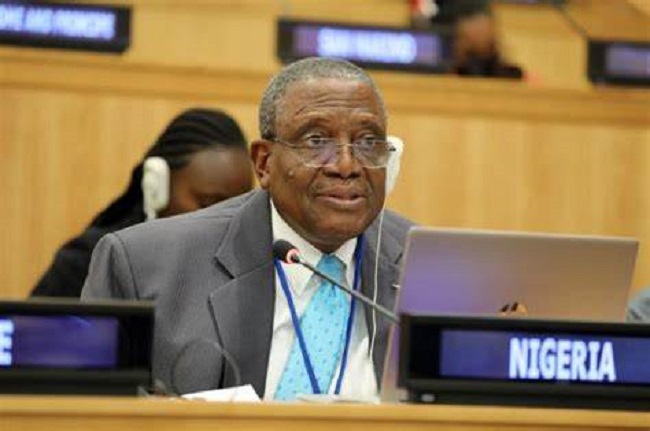
He spoke on a topic titled, “Climate Change, Health and the Nigerian Reality: Securing Our Climate Future for A Resilient Nigeria.”
Alo said that while the Federal Government had established a National Climate Change Policy, submitted its Nationally Determined Contributions (NDCs), and inaugurated initiatives such as the Great Green Wall and the Nigeria Erosion and Watershed Management Project (NEWMAP), climate action remained heavily concentrated at the federal level.
Alo lamented that states and local governments where the impacts of climate change were most directly felt, had received comparatively little attention in terms of policy development, institutional capacity, financing, and implementation.
“This is a significant gap considering that the impacts of climate change are mostly borne by states and that policies and actions at the subnational level are critical to addressing climate change and attaining Nigeria’s net-zero target,” he said.
According to him, most Nigerian states have yet to develop comprehensive climate change policies or action plans, while dedicated budgetary allocations for climate programmes remain largely absent.
He also identified low climate literacy among state officials, weak public awareness, limited cross-sectoral collaboration and poor alignment between state initiatives and national climate priorities.
Alo warned that these institutional and governance weaknesses could undermine Nigeria’s climate commitments unless urgent reforms are undertaken to build stronger climate institutions at the subnational level.
Consequently, the professor called for a harmonised national framework to strengthen state and local climate governance through improved policy coordination, enhanced technical capacity, dedicated financing and sustained public awareness campaigns.
He stressed that increasing climate knowledge among policymakers, local governments and communities is essential to mobilising nationwide action towards climate resilience, sustainable lifestyles and green economic opportunities.
Alo argued that climate education should become a central pillar of Nigeria’s climate strategy, particularly at the grassroots, where communities face the immediate consequences of floods, droughts, desertification, coastal erosion and other climate-induced disasters.
He also highlighted the growing public health implications of climate change, describing the situation as “a crisis within a crisis.”


Alo noted that vulnerable groups including older persons, people living with disabilities, women, children and homeless populations were disproportionately affected by climate-related disasters because they often lack the resources needed to prepare, respond and recover from extreme weather events.
To secure Nigeria’s climate future, he advocated a shift away from predominantly top-down, technocratic approaches toward Locally Led Adaptation (LLA), where communities actively define, design and implement climate solutions.
He argued that local communities possessed valuable indigenous knowledge and practical experience that could complement scientific innovations in addressing climate risks.
According to him, empowering communities to take ownership of climate initiatives not only improves the sustainability of interventions but also promotes social cohesion, strengthens peacebuilding efforts in conflict-prone areas and ensures more efficient use of limited resources.
He recommends greater recognition of traditional knowledge systems, including indigenous weather forecasting, rainwater harvesting and climate-smart agricultural practices that have enabled many African communities to adapt successfully to changing environmental conditions.
He emphasised the importance of inclusive decision-making by ensuring that women, young people, persons with disabilities and other marginalised groups are actively involved in planning and implementing climate programmes.
Building the capacity of local governments, civil society organisations and community institutions was identified as another critical requirement for strengthening resilience across Nigeria.
In spite of growing recognition of community-led adaptation globally, he noted that inadequate financing remains one of the biggest obstacles to effective local climate action.
He estimated that less than 10 per cent of international climate finance currently reached local communities directly and called for reforms that would channel significantly more resources to community-based institutions.
Among his recommendations were direct financing for local adaptation projects, stronger planning and budgeting capacity for local governments, expanded technical support and greater accountability in implementing climate programmes.
He urged governments to promote climate-resilient livelihoods through sustainable agriculture, renewable energy, eco-tourism and other green enterprises capable of reducing vulnerability while creating employment opportunities.
He also advocated scaling up successful community-based adaptation initiatives, including locally managed disaster risk reduction programmes, ecosystem restoration projects and community-led early warning systems to reduce the loss of lives and property during climate emergencies.
Alo emphasised that achieving Nigeria’s climate ambitions would require significantly stronger investment in subnational climate governance.
He called for dedicated climate budget lines in state governments, increased climate education and awareness, stronger collaboration among federal, state and local institutions.
Others were continuous monitoring of climate impacts and regular review of climate policies to reflect local realities.
He stressed that policies designed with the active participation of local communities were more likely to succeed because they foster ownership, accountability and long-term sustainability.
“Empowering communities is not only a strategy for survival; it is a proactive way to build a more equitable and sustainable world, ensuring that, as the climate changes, livelihoods and ecosystems are secured for future generations,” Alo said.
Similarly, Prof. Chinedum Babalola, Public Affairs Secretary, NAS, said the roundtable was one of the key ways the Academy publicised the impact of science on daily lives.
She added that science must not remain in journals and laboratories, but must speak to policy, to business, and to the Nigerian people, stressing that the media is the bridge that translates evidence into action.
Babalola noted that the theme was timely as the impact was currently being felt – flooding leading to cholera outbreaks, heatwaves worsening cardiovascular disease, changing rainfall patterns affecting food and nutrition, and air pollution driving respiratory illness.
Commenting, Mr Wale Fatade, Executive Director, Media Support Centre, noted that the media acts as the critical bridge between complex scientific research and the everyday lives of the general public.
Fatade said media coverage of the climate-health nexus shaped how society perceived, prioritised, and responded to both crises, urging the media to distill complex scientific terms into simpler languages to deepen public understanding and impact.
By Oluwafunke Ishola