

Education
Turtle travels: FSU researchers uncover different migration strategies among male green sea turtles


Different migration strategies
The team researched the same group of adult male green sea turtles during late spring into early summer from 2019 to 2022 off the coast of Brazil to identify movement patterns and areas of high turtle density during and after the breeding season. Brazil’s coastal waters are an important foraging ground for adult green sea turtles, the most abundant turtle species around Brazil, and the location also supports nesting and breeding areas.
Researchers observed two distinct strategies: After breeding, about 80 percent of tagged turtles migrated 300 to 1,000 kilometers to different foraging grounds, while 20 percent stayed in the same breeding area year-round.
“Assessing the overlap between key habitats, such as migratory corridors and areas of high turtle density, and anthropogenic — human-made or -connected — threats is crucial for redefining conservation strategies in the region and can minimize the mismatch in important areas for sea turtles and marine protected areas in Brazil,” said Professor of Oceanography and Environmental Science Mariana Fuentes, another co-author and leader of the Marine Turtle Research, Ecology and Conservation Group.
Satellite tags also collected data on turtles’ vertical movement like dive frequency, depth and duration. Turtles that stayed in the breeding area made frequent, short daytime dives and long nighttime dives while migrating turtles exhibited a variety of dives, likely to minimize risk of detection by predators and to reduce wave drag and energy cost of migration.
“Understanding the three-dimensional use of the environment gives us more details about how susceptible turtles might be to certain fishing gear or vessel strikes, for example,” Santos said. “With different fishing gear used at the water’s surface, in the middle water, and at the bottom of the ocean, we need to know how turtles’ use of the area overlaps with these layers. This can inform strategies that harmonize the use of environment between humans and turtles, including enhancing the effectiveness of the marine protected areas that currently cover more than a quarter of Brazil’s waters.”
Temperature affects sea turtle sex
Sea turtles are also subject to temperature-dependent sex determination. Cooler incubation temperatures produce male hatchlings while warmer temperatures produce females. As temperatures rise around the globe, more females are hatching, altering the population balance.
Male turtles play essential roles in maintaining genetic diversity, population connectivity, and reproductive success. Unlike females, they rarely return to land after hatching and making their way to the sea.
“We’re interested in understanding how many female turtles one male can breed with and how males’ behavior can buffer these environmental changes,” Santos said. “Knowing how many males are needed for a population to be resilient is important information that’s hard to obtain since males aren’t easily accessible for study.”
Collaboration: FSU Academic Diving Program and outreach to local schools
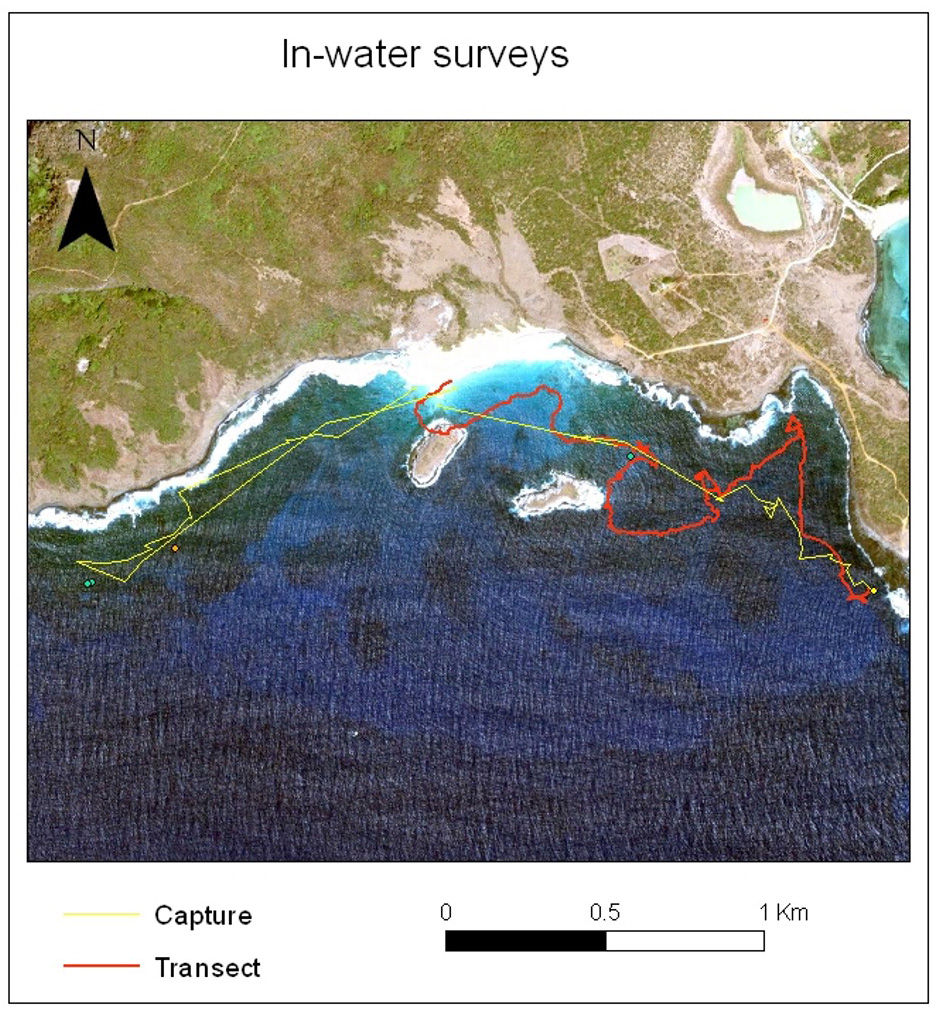
The team, which received training through FSU’s Academic Diving Program hosted through the FSU Coastal and Marine Laboratory, completed more than 230 free dives in Fernando de Noronha, an archipelago of 21 islands and islets about 350 kilometers off Brazil’s coast. Researchers located, tagged and observed male sea turtles, which are generally smaller than females but can still grow to 5 feet long and weigh more than 500 pounds.
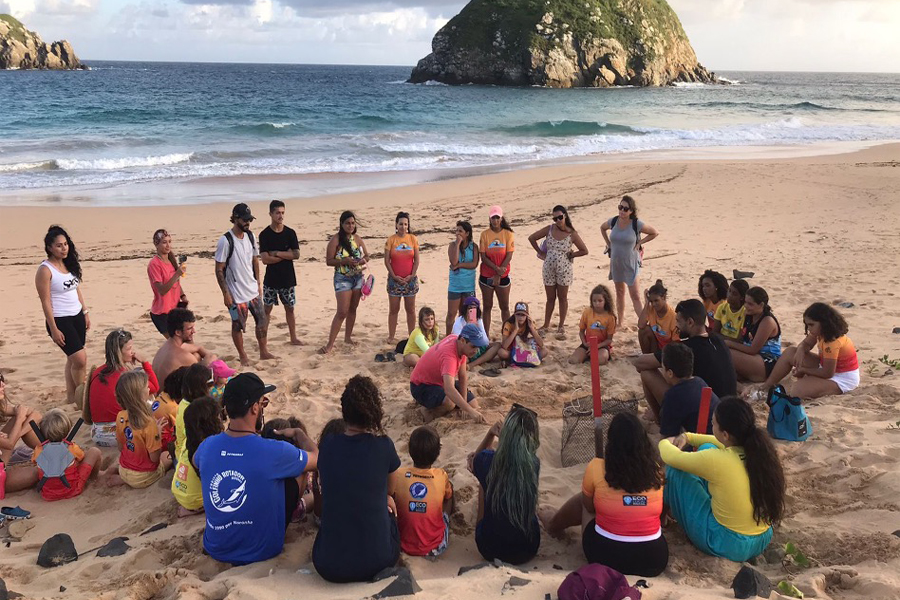
Children from local schools in Brazil — Escola Arquipélago de Fernando de Noronha and Escola de Surf Alma Solar — helped name the tracked male turtles as part of the project’s outreach efforts. Students could follow the turtles’ journeys through satellite-tracking data, creating a personal connection with the animals and the research.
The National Science Foundation funded the research. Additional contributors were from the University of California Santa Cruz; the University of Massachusetts Amherst; Oregon State University; and Projeto Tamar, a nonprofit organization in Brazil dedicated to the protection of sea turtles.
Visit the Department of Earth, Ocean, and Atmospheric Science website to learn more about FSU research.
###
All activities were conducted under specific permits – Scientific diving activities were approved and supported by the Florida State University Academic Diving Program (Dive Plan #042923). Research was conducted under FSU IACUC #1803 and the biodiversity authorization and information system (SISBio) license #69389.




