Education
UN Biodiversity Conference opens in Armenia as report warns of slow progress towards 2030 targets – EnviroNews
– Advertisement –
The 2026 United Nations Biodiversity Conference has opened in Yerevan, Armenia, with governments and stakeholders urged to accelerate action to address biodiversity loss as a new global report warns that progress towards the world’s 2030 biodiversity targets remains insufficient.
The conference, which runs from October 19 to 30, 2026, brings together government representatives, Indigenous Peoples, local communities, scientists, businesses and other stakeholders to assess progress and strengthen efforts to protect and restore nature.

The conference comprises the 17th meeting of the Conference of the Parties to the Convention on Biological Diversity (COP17), the 12th meeting of the Parties to the Cartagena Protocol on Biosafety (CP-MOP12) and the sixth meeting of the Parties to the Nagoya Protocol on Access and Benefit-sharing (NP-MOP6).
The gathering comes four years after the adoption of the Kunming-Montreal Global Biodiversity Framework (KMGBF) in 2022, which established an ambitious set of interconnected targets to halt and reverse biodiversity loss by 2030.
According to the newly released State of Biodiversity Action report, nearly 90 per cent of parties to the Convention on Biological Diversity have established national biodiversity targets, while more than 70 per cent have submitted national reports.
The report also indicates that action is underway across all 23 targets of the global framework. However, implementation remains inadequate, with fewer than half of the national targets assessed by countries considered to be on track.
The findings have placed accelerating implementation at the centre of discussions in Yerevan, where governments are expected to review collective progress and identify measures to close existing gaps before the 2030 deadline.
H.E. Mr. Hambardzum Matevosyan, President of COP17 and Armenia’s Minister of Environment, said the conference represented a critical opportunity for countries to renew their commitments to protecting nature and strengthen efforts to achieve the global biodiversity goals.
“Four years ago, we agreed an ambitious global agreement for nature. In Yerevan, halfway between the adoption of the Kunming-Montreal Global Biodiversity Framework and 2030, we must renew our collective commitment and focus on its delivery,” Matevosyan said.
He welcomed delegates to Armenia and expressed confidence that inclusive and constructive cooperation would enable parties to find common ground and deliver meaningful outcomes for nature and people worldwide.
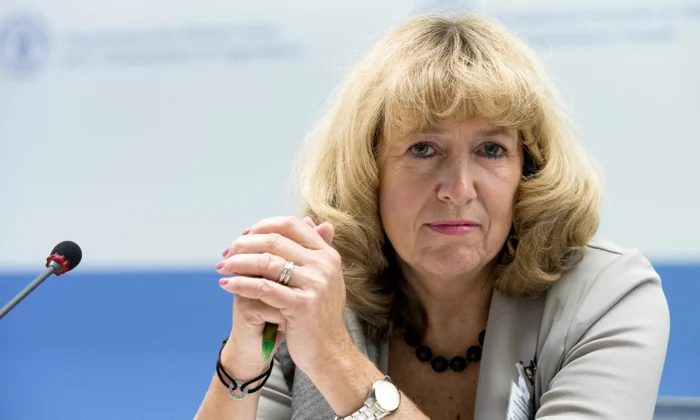
Astrid Schomaker, Executive Secretary of the Convention on Biological Diversity, said the conference must serve as a turning point in efforts to meet the 2030 biodiversity targets.
“Yerevan is about accelerating action to protect nature,” Schomaker said, emphasising that biodiversity protection was closely linked to economic stability and human wellbeing.
She noted that food production, water security, public health and livelihoods all depend on healthy ecosystems, warning that the world was not moving quickly enough to achieve the goals agreed upon in 2022.


“Four years on, we know where we are, where the gaps are and that we are not moving fast enough,” she said, calling for a faster path towards meeting the biodiversity targets and achieving the global vision of living in harmony with nature.
Key Priorities for the Conference
At COP17, governments will undertake the first global review of collective progress under the Kunming-Montreal Global Biodiversity Framework.
The review is expected to inform decisions on biodiversity conservation, sustainable use of biological resources and measures to address the underlying drivers of biodiversity loss.
Delegates will also consider ways to accelerate implementation through increased financing, capacity-building and international cooperation.
Strengthening the role and participation of Indigenous Peoples and local communities in biodiversity conservation is another major priority, alongside efforts to improve scientific and policy guidance for implementing the framework.
The conference will also address the financial and economic conditions influencing biodiversity outcomes, recognising the importance of mobilising resources and creating enabling conditions for countries to deliver on their commitments.
Biosafety and Benefit-Sharing on the Agenda
Beyond COP17, the meetings of the parties to the Cartagena and Nagoya Protocols will address issues central to the safe use of biotechnology and the equitable sharing of benefits derived from genetic resources.
The 12th meeting of the parties to the Cartagena Protocol on Biosafety will focus on strengthening implementation of the agreement, including updating guidance on risk assessment and risk management and improving countries’ capacity to make informed biosafety decisions.
The sixth meeting of the parties to the Nagoya Protocol will advance implementation of rules governing access to genetic resources and the fair and equitable sharing of benefits arising from their utilisation.
Discussions will cover monitoring, capacity-building, cooperation and institutional effectiveness.
Together, the three meetings are expected to advance the objectives of the Convention on Biological Diversity and its protocols, strengthening international efforts to halt and reverse biodiversity loss by 2030 and beyond.
Wider Stakeholder Participation
Beyond formal negotiations, the conference will convene stakeholders from science, finance, business, cities, Indigenous Peoples and local communities, and youth organisations to exchange ideas and promote practical solutions.
High-level meetings and other initiatives will provide opportunities to strengthen partnerships, mobilise resources and encourage coordinated action across society.
The emphasis on broader participation reflects growing recognition that governments cannot achieve global biodiversity goals without contributions from communities, businesses, researchers, financial institutions and other non-state actors.
As countries enter the second half of the implementation period for the Kunming-Montreal Global Biodiversity Framework, the Yerevan conference is expected to help determine how international commitments can translate into faster and more effective action on the ground.
With fewer than four years remaining until the 2030 deadline, the challenge facing delegates is to turn the progress made in establishing national targets into measurable results for ecosystems, wildlife and the communities that depend on them.