

Education
COP31: Countries, financial institutions mobilise billions to bridge global climate finance gap – EnviroNews


– Advertisement –
Governments, financial institutions and businesses have stepped up efforts to address the global climate finance gap, with new initiatives launched at the ongoing 31st United Nations Climate Change Conference (COP31) in Antalya, Türkiye, to translate climate commitments into concrete investments and projects.
The initiatives were announced during Finance and Trade Day, held alongside the COP31 Business Forum, which focused on mobilising additional funding and directing existing financial resources towards countries and projects requiring urgent climate action.
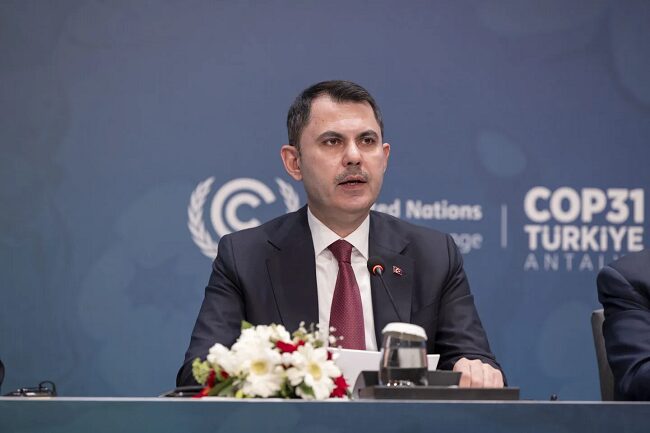
A major development was the announcement that Chile, Lebanon, Mexico and Zambia had joined the COP31 Presidency’s Climate Implementation Bridge (BRIDGE), a platform designed to help countries translate their climate commitments into practical implementation and investment opportunities.
The four countries join Ethiopia, Fiji, Indonesia, Pakistan and Uzbekistan, which formed the first cohort announced during the 81st United Nations General Assembly High-Level Week in New York.
Together, the participating countries represent diverse climate and development challenges, with investment opportunities spanning climate mitigation, adaptation and resilience.
The BRIDGE initiative leverages the United Nations Development Programme’s (UNDP) Climate Promise: Forward framework to help governments identify implementation bottlenecks, strengthen institutional capacity and connect national climate priorities with technical, financial and delivery partners.
As part of the initiative, Türkiye’s Ministry of Treasury and Finance, Ministry of Environment, Urbanisation and Climate Change, and UNDP signed a Memorandum of Understanding to support its implementation.
Türkiye also committed $3 million in grants towards operationalising the platform.
COP31 President, Murat Kurum, said the initiative was designed to address the gap between climate ambition and implementation by helping countries develop investment-ready projects and secure the necessary financing and partnerships.
“The critical gap we must close is between climate ambition and implementation. Through BRIDGE, we help countries turn their national priorities into investable projects and connect them with the finance, capacity and partnerships needed to deliver,” Kurum said.
He called on governments, financial institutions and businesses to support efforts to translate climate plans into tangible results.
Development Banks Strengthen Adaptation Financing
The conference also witnessed growing support from multilateral development banks (MDBs) for climate adaptation and resilience investments.

In a joint statement presenting the MDB Partnership for Adaptation and Resilience Investment, institutions including the Asian Development Bank (ADB) and the European Bank for Reconstruction and Development (EBRD) pledged to expand investments in response to growing demand from countries and mobilise additional public and private financing for adaptation.
The initiative forms part of broader efforts to improve the availability of resources for countries facing increasing climate risks.
The UN Climate Change Executive Secretary, Simon Stiell, warned that many developing countries remained trapped in a cycle of debt, climate disasters and high borrowing costs.
He said the threat of floods, wildfires, storms and droughts was increasing financial pressures on vulnerable countries even before disasters occurred.
“To tackle the problem, the world has agreed ambitious climate finance goals. Now, it’s time to deliver. To make the climate finance system simpler, and fairer – improving access,” Stiell said.
He stressed that vulnerable developing countries needed more affordable financing and faster access to resources, adding that growing climate investments must reach more countries and benefit more people.
UNDP Administrator, Alexander De Croo, said BRIDGE would connect countries with investors by transforming national climate priorities into projects that public and private partners could finance.
He said the UNDP would contribute its sustainable finance expertise and local presence in 170 countries to support the initiative.
Private Sector Mobilises for Climate Implementation
Meanwhile, the two-day COP31 Business Forum, organised by the Union of Chambers and Commodity Exchanges of Türkiye (TOBB), brought together approximately 4,000 participants and 100 speakers across 23 sessions.
The gathering, described as the largest business forum ever held at a COP conference, brought together government representatives, business leaders, investors, financial institutions and technology experts to explore practical ways of accelerating climate investments.
Discussions focused on climate finance, standards and market regulations, demand creation, institutional cooperation and implementation tools.
TOBB President, Rifat Hisarcıklıoğlu, said the forum provided an opportunity for the global business community, international organisations, development banks and public institutions to address critical issues, including financing climate investments, energy security, electrification, sustainable agriculture and urban resilience.
The organisation also released a synthesis of recommendations intended to strengthen private-sector participation in climate implementation.
New Green Banking Initiative Targets Developing Countries
Another major development was the launch of the Green Bank Accelerator by Australia’s Clean Energy Finance Corporation (CEFC), in partnership with the Natural Resources Defense Council (NRDC) and SOAS University of London.
The initiative will support developing countries in strengthening their green banking capabilities and improving access to climate finance.
The CEFC, Australia’s green bank, has mobilised more than AUD100 billion towards the country’s net-zero transition in just over a decade of operation.
COP31 President of Negotiations and Australia’s Minister for Climate Change and Energy, Chris Bowen, emphasised the importance of ensuring that climate finance reaches communities, particularly vulnerable countries.
He disclosed that only 0.2 per cent of global climate finance allocated for adaptation was reaching small island developing states.
“Climate finance only works if communities can access it. Pacific countries have been clear about the barriers they face,” Bowen said.
Urban Resilience and Agricultural Financing
The conference also advanced discussions on financing climate resilience in cities through the Sustainable Urban Resilience Financing Facility (SURFF).
The initiative, supported by international financial institutions, city networks, UN entities and multilateral development banks, including the World Bank, Asian Infrastructure Investment Bank, ADB and EBRD, is designed to help countries and cities convert urban resilience priorities into investment-ready projects.
Rather than establishing a new funding institution, SURFF will coordinate access to existing financing, technical expertise and implementation support.
The initiative builds on cooperation between international partners to strengthen urban resilience and improve the ability of cities to respond to climate impacts.
Finance and Trade Day also highlighted the need to improve access to capital for young farmers through the Back Future Farmers initiative, which brought together young people, policymakers, funders and industry representatives.
The initiative seeks to help young people transform agricultural ideas into commercially viable businesses and sustainable careers, while strengthening food security, climate resilience and rural communities.
Additionally, the conference strengthened cooperation with the Network for Greening the Financial System (NGFS) on addressing the economic and financial risks associated with climate change and the transition to a low-carbon economy.
The various initiatives reflect the COP31 Presidency’s emphasis on implementation, with growing recognition that achieving global climate targets requires stronger partnerships between governments, financial institutions, businesses and communities.
The UNDP said the success of BRIDGE would ultimately be measured by tangible improvements, including safer communities, reliable clean energy and sustainable economic growth.



