

Education
ABU, AATF unveil TELA Maize to bridge Nigeria’s 14.4m tonnes production gap – EnviroNews


– Advertisement –
Principal Investigator, TELA Maize, Institute for Agricultural Research (IAR), Ahmadu Bello University (ABU), Zaria, Prof. Rabiu Adamu, says the variety will significantly enhance maize productivity and strengthen national food security.
Adamu disclosed this at the TELA Maize Field Day organised by IAR in collaboration with the African Agricultural Technology Foundation (AATF). The event, with the theme “Eating is Believing,” held in Zaria on Sunday, August 30, 2026.
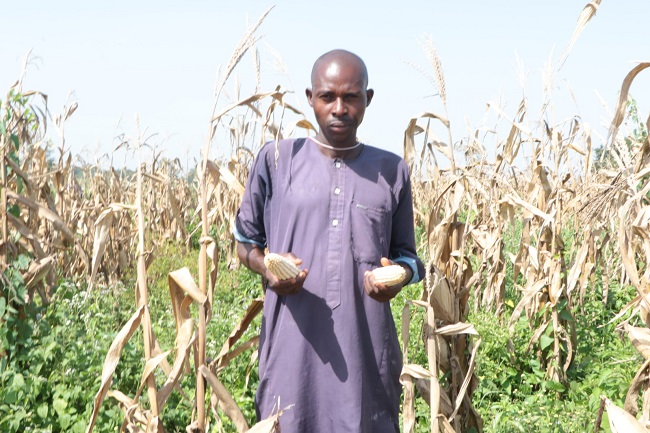
He said the event was designed to showcase TELA maize from cultivation through processing and consumption, including roasted and boiled maize, as well as maize flour-based products such as masa, a fermented maize cake, for consumers.
The principal investigator said the demonstration was aimed at dispelling myths and misconceptions surrounding TELA maize, while allowing participants to assess its products through direct observation, practical demonstrations and consumption.
Adamu said maize remained an important cereal crop in Nigeria, but current production was insufficient, with the country producing about 3.6 million metric tonnes against its annual national demand.
According to him, Nigeria requires about 18 million metric tonnes of maize annually, making the adoption of high-yielding varieties essential to closing the production and consumption gap facing the country.
He said TELA maize had attributes including high yield, improved nutrition, drought tolerance, and resistance to stem borer and fall armyworm, making it suitable for Nigerian farmers across different production environments.
“TELA maize can produce up to nine tonnes per hectare under good agronomic practices, including timely planting, effective weed control and adequate fertiliser application,” he said.
Adamu said some farmers had already harvested about seven tonnes per hectare, equivalent to approximately 70 bags of 100 kilogrammes, under favourable production conditions and good agronomic practices.
He said research and development on TELA maize commenced at IAR in 2019, while the Federal Government released SAMMAZ 72, SAMMAZ 73 and SAMMAZ 74 varieties to farmers in 2024.
Mr. Yarama Ndirpaya, AATF Programme Manager, Nigeria, said IAR was a focal partner of the foundation, adding that both organisations had jointly developed technologies positively impacting farmers across the country.
He said TELA maize was one of the technologies developed through the partnership, adding that its performance had been remarkable across Nigeria and in other locations where farmers cultivated it.
The programme manager said the field day was organised to demonstrate that TELA maize was safe for consumption, contrary to some misconceptions about genetically improved agricultural technologies and food products.

Earlier, Prof. Adamu Ahmed, Vice-Chancellor, ABU, said the event was intended to demonstrate that “TELA maize is safe for consumption, in addition to its resilience and other desirable agronomic attributes for farmers.
Ahmed, represented by Prof. Aliyu Rafin-Dadi, Deputy Vice-Chancellor, Advancement, Research and Innovation, said participants were served several products prepared from TELA maize during the practical demonstration and field event.
“We ate roasted and boiled maize, swallow and masa, among other products, underscoring the essence of the event, which was to dispel rumours and misconceptions surrounding TELA maize,” he said.
Alhaji Nuhu Aminu, Chairman, All Farmers Association of Nigeria (AFAN), Kaduna State Chapter, said TELA maize had helped farmers reduce production costs, while improving maize farming efficiency and farm profitability.
Aminu said the collaboration between IAR and AATF in developing the variety would strengthen maize production, improve farmers’ livelihoods and contribute significantly to national food security and national development.
He said TELA maize was increasingly demanded by farmers in Kaduna and neighbouring states because of its productivity, resilience and other beneficial characteristics, which were encouraging wider adoption among smallholder farmers.
Mrs. Mary Steven, a food processor, said flour produced from TELA maize was suitable for preparing traditional foods, including swallow and masa, a popular fermented maize cake consumed widely in northern Nigeria.
In line with the theme, participants were served roasted and boiled TELA maize as well as masa prepared from the variety during the exercise.
By Mustapha Yauri



