

Education
Africa’s solar boom accelerates as installations surge 45% – EnviroNews


– Advertisement –
Africa is on course for a record year of solar installations, with new analysis estimating that the continent will add 17 gigawatts (GW) of solar in 2026 – 45% more than last year.
Research findings from energy think tank Ember and the African Tech Futures Lab suggest the growth is spreading rapidly across the continent, with 36 of Africa’s 54 countries expected to install more solar this year than ever before.
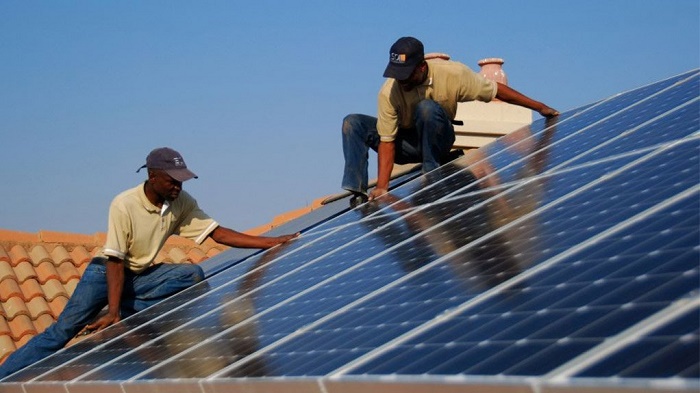
About 100,000 solar panels are being installed daily across Africa, while 19 countries are seeing annual installation growth of more than 100%.
Power Shift Africa says the figures challenge the persistent image of Africa as a continent suffering from energy poverty and show that a home-grown clean energy transformation is already underway.
Mohamed Adow, Director of Power Shift Africa, said: ‘‘Africa’s solar revolution is no longer something we’re waiting for – it’s happening right now. Across the continent, businesses and ordinary people are embracing solar at an extraordinary rate. For too long, Africa has been portrayed simply through the lens of energy poverty. These figures tell another story. Africans are taking advantage of the cheapest and fastest-growing energy technology in the world and using our abundant sunshine to generate our own power.
‘‘What’s particularly significant is that this is no longer just a South African story. Solar is taking off across the continent, including in countries that, until very recently, had barely begun to exploit their renewable energy potential. Governments and the international financial system now need to catch up with what African people and businesses are already doing. We need affordable finance, stronger grids, battery storage and policies that allow this solar boom to become the foundation of a modern African electricity system.’’
The report, The Take-off in African Solar That Official Statistics Can’t Yet See, estimates that installations rose 25% in 2024 and 51% in 2025 before the projected 45% increase this year.
Some of the fastest growth is taking place outside Africa’s traditional solar markets. The Democratic Republic of the Congo is expected to see installations rise by 544%, Zimbabwe by 282%, Egypt by 176% and Zambia by 117%.
South Africa, which has historically dominated the African solar market, is expected to account for less than 20% of installations across the continent for the first time since 2019.
Dave Jones, Chief Analyst at Ember, said: ‘‘Countries are already leapfrogging into faster, more secure, cleaner energy growth, and the governments that get ahead of it stand to gain all the benefits.’’
Much of the expansion is happening away from large utility-scale solar farms. Ember and the African Tech Futures Lab estimate that around three-quarters of the solar capacity added across Africa between 2023 and 2025 was distributed solar – predominantly smaller systems installed by households and businesses.
That means official statistics aren’t capturing much of Africa’s solar expansion. Only South Africa, Tunisia, and Tanzania currently publish solar capacity data quarterly or more frequently, while just 14 African countries had published national solar capacity figures for 2025.
The researchers estimate that Africa installed around 12 GW of solar in 2025 – roughly twice the amount captured by major international datasets.

Joel Nana, Research Director at African Tech Futures Lab, said: ‘‘Across Africa, distributed energy resources are rapidly expanding, and in many cases, overtaking grid capacity. This transition is chaotic and disruptive, and far from the orderly model planned in national strategies. Policymakers need to start responding to this shift. The choice now is whether these distributed assets remain a parallel power system that compensates for grid failure or are integrated in ways that unleash a wider range of benefits.’’
The scale of the expansion means solar is beginning to significantly contribute to meeting Africa’s growing demand for electricity.
The 17 GW expected to be installed in 2026 could generate around 23 terawatt hours (TWh) of electricity each year, equivalent to 2.3% of Africa’s current electricity generation. That is higher than the continent’s average annual electricity demand growth of 2.2% between 2014 and 2024.
In more than half of African countries, the additional electricity generated by new solar in 2026 is expected to exceed the historical rate at which electricity demand has been growing.
In 10 countries, this year’s solar installations alone could add electricity equivalent to 10% or more of current annual generation:
Country
Electricity from 2026 solar installations as a share of current annual generation
Sierra Leone
97%
Togo
24%
Somalia
21%
Djibouti
21%
Democratic Republic of the Congo
14%
Comoros
14%
Namibia
12%
Liberia
12%
Chad
11%
Lesotho
10%
Adow said Africa now needs to ensure the solar boom delivers wider economic benefits for the continent, adding:
‘‘The next step is making sure Africa captures more of the value created by this transition. Today we are importing almost all the solar panels we install. Africa should be using this rapidly growing market to build our own manufacturing, create skilled jobs and power African industries with African renewable energy. The sun is ours, the demand is ours, and the market is growing rapidly. Increasingly, the technology should be made here too.’’
Africa currently imports around 94% of the solar panels it installs from China, according to the report.
African solar panel manufacturing is expected to quadruple to around 3.5 GW in 2026 as new factories come online in Egypt and Tanzania. However, much of that production is currently destined for export rather than African markets.
Power Shift Africa said the rapid growth of solar demonstrates the opportunity for African countries to expand electricity supply without becoming locked into greater dependence on imported fossil fuels.



