

Politics
alleged use of surveillance to trail, arrest Kogi state gov critics


This ICIR investigation reveals how the Kogi State government allegedly uses security operatives and surveillance equipment that it acquired from a foreign surveillance vendor and spyware company to monitor and track critics, leading to intimidation, harassment, and arrests.
When Friday Ogungbemi, publisher of Policy and Lawmaker magazine, agreed to a caller’s request for a brief meeting at his residence on the evening of November 24, 2016, he had no idea that it was a trap that would land him in detention.
“I had a publication in 2016 titled ‘Overzealous chief of staff, acting governor extraordinary,’ which provoked the government. Because there were allegations saying the former governor (Yahaya Bello) would approve a document but the Chief of Staff, Edward Onoja, would disapprove the governor’s approval,” he explained.
Ogungbemi, a renowned political analyst in Kogi State, said an officer of the State Security Service (SSS) called him under the guise of placing an advertisement to lure him out of his house, after which over six men in two vehicles arrested him without a warrant.
“The SSS trailed me,” he said, “Invited me out of my house, and I came out. They collected my phone and deleted some messages from it.”
The political analyst said he was told that the then Chief of Staff, Edward Onoja, had ordered his arrest on the claim that he had insulted the governor in his publication.
“According to the person who came to arrest me, they were told I insulted the governor. They felt it was one-on-one, but it was after I was arrested that they even had the privilege of seeing the write-up,” he said.
Ogungbemi’s arrest would become one of multiple cases exposing a pattern of illegal monitoring, tracking, arrest and detention of political critics and journalists by the Yahaya Bello administration up to the current government of the state.
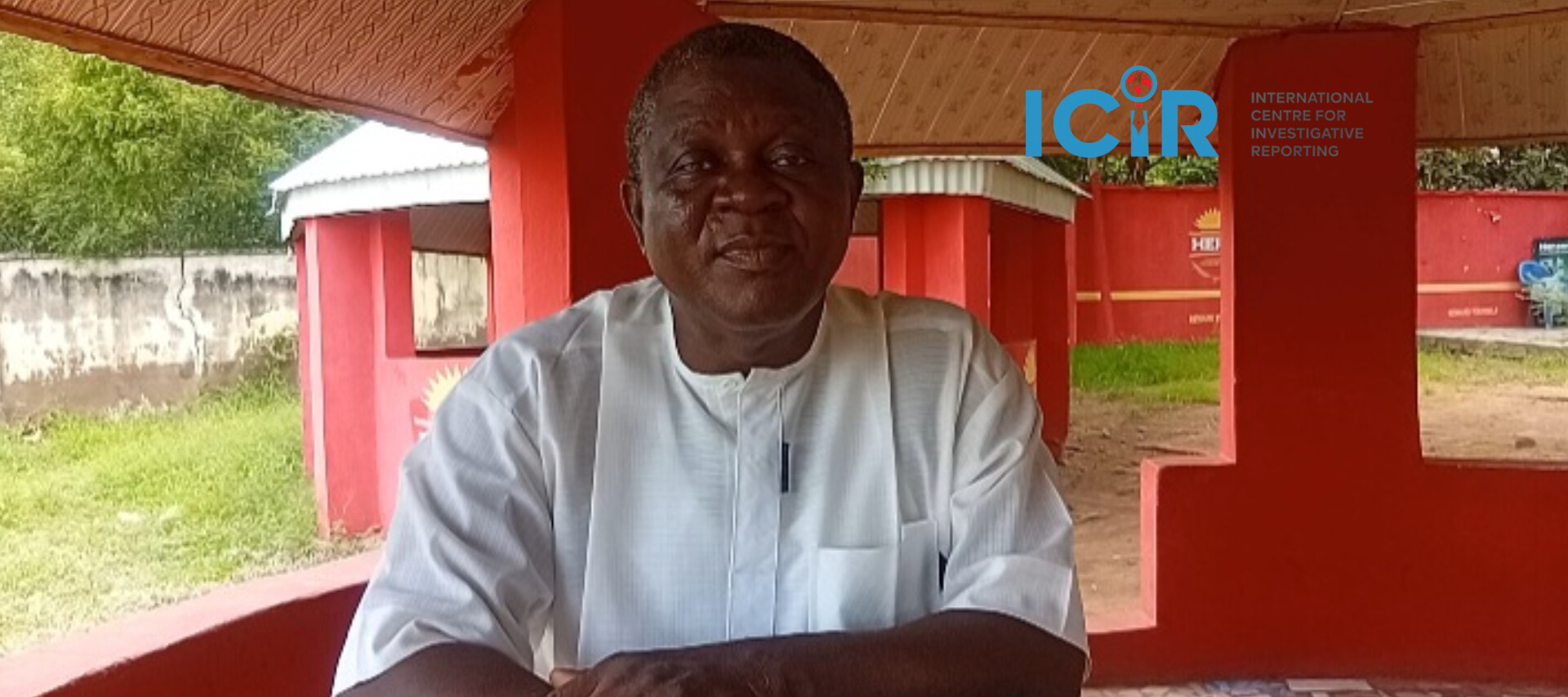
Based on media reports and field data, at least 15 journalists, bloggers, activists, and political critics were arrested, detained, re-arrested, or prosecuted during Bello’s tenure, which ran between 2016 and 2024
The most documented among them was Ogungbemi’s detention, which attracted national attention and interventions from the Nigeria Union of Journalists (NUJ) and press freedom advocates. It eventually led the NUJ to boycott government activities.
The secretary of the Kogi State chapter of NUJ, Ibrahim Obansa, confirmed Ogungbemi’s ordeal. “It was in the line of his duty. He wrote an article that the then-government felt was offensive. We followed it up. We were also able to achieve his release,” he added.
I only use a pen, not arms- Ogungbemi
Speaking to The ICIR, in Lokoja, the Kogi State capital, Ogungbemi said after his arrest, the SSS sought to influence the content of a written statement he was asked to provide.
He, however, challenged the officers by citing constitutional provisions on freedom of expression and the media’s responsibility to hold public officials accountable.
“They were dictating what I should write in my statement, but I refused because in the statement, I said I, so-so-so voluntarily wrote the statement, but when you are guiding me on what to write, it is no longer voluntary,” he said.

He explained that the SSS obtained a court order to search his house and seized all his publications, including the “contentious” edition on the chief of staff.
“They took me home and packed those items, more than 69 volumes. They searched my house for incriminating documents,” the publisher said, adding that he was later charged in a Magistrate’s Court on claims that the publication was injurious to the government and that he was trying to incite the public.
“When they took me to court, I told them they were carrying a journalist as if they were dealing with a criminal. I’m not a harmful person; my pen is the only thing I use,” he said, describing journalism as his only weapon in the pursuit of truth and accountability.
During the proceedings, he said the magistrate had questioned the strength of the case and noted that the allegations “could not fly” in their original form. He said that despite adjustments in the charges, the magistrate consequently struck out the case in 2017, stating that the “court is not a place to warehouse cases and that matters without sufficient proof could not proceed.”
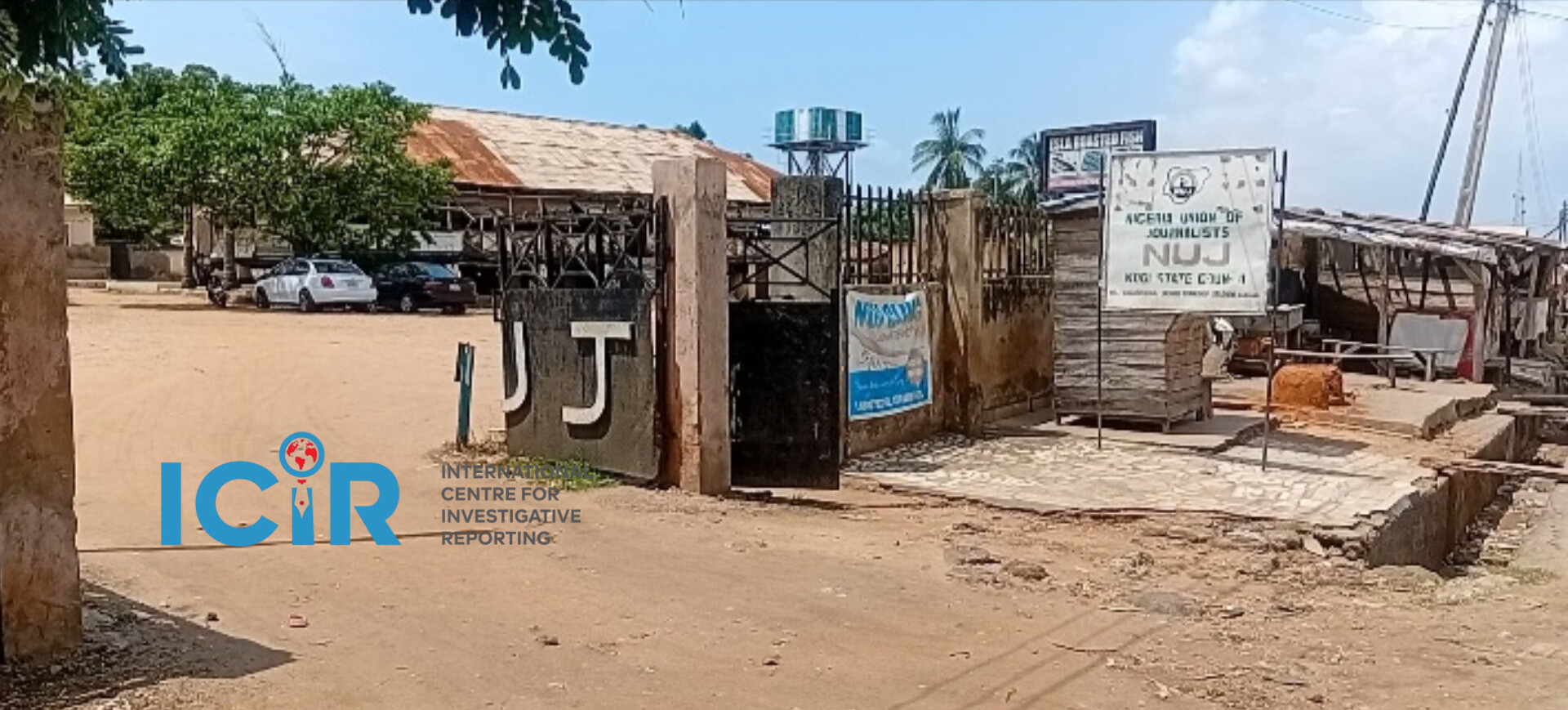
A few years after Ogungbemi’s case, a renowned activist in the state, Adebo Jonathan Smart, was tracked and monitored after a 2020 social media post.
“I love my people, and that’s how the journey of activism started. The government of Yahaya Bello was 70 or 80 per cent anti-people, so we had to rise to challenge him on social media. We’re seen as the enemies of the government,” Smart said.
He recalled how a former government official in February of 2020 tipped him off about his arrest.
“I stood to withdraw money from one ATM in Lokoja and an appointee of the government, after they had concluded their plans to arrest me, because my number was steadily on their track list, called me and said that I was standing at so so so place. He said I should leave there in one minute, if not, I’ll be arrested,” he recalled.
Smart recounted that he spent his birthday fleeing an alleged SSS hunt over a social media post warning of a possible COVID-19 threat in Kogi State at the height of the pandemic.
“The state government sternly stood their ground that there was nothing like COVID-19 in Kogi State. So, any news that was against their stand was frowned upon,” he recalled.
The activist said before the social media post, he had visited his late brother, who was receiving traditional treatment in a community in Igalamela Odolu Local Government Area (LGA), when residents became gripped by panic following reports that a woman had allegedly fled an isolation centre in Abuja and returned to the village.
“I wrote on my social media handle and warned everybody to be careful. I even intimated to the state government that someone had escaped from the isolation centre, according to reports. That there was danger in the state,” he said.
But that post had triggered an aggressive response from state authorities, as Smart said about 10 SSS operatives were allegedly dispatched to locate and arrest him. He said they went to a state-owned hospital where he had previously worked in Ayengba. “They showed them my picture. They forcefully demanded my address because I was at home. So, when they left the office to come to my house to pick me up, that was when a colleague informed me,” he added.
Again, for the second time, he evaded arrest by fleeing his residence and going into hiding in a rural community for more than a week. “That period happened to be my birthday, April 28th. So, I spent my birthday in the bush,” he said, alleging that Bello and Onoja masterminded his arrest.”
He, however, later reported to SSS officials in Abuja after tensions had subsided, and the matter was dropped after he explained what happened.
How Kogi allegedly acquired sophisticated security equipment
Kogi State has a documented history of allegations involving the deployment of security operatives, including the Nigeria Police Force, as well as surveillance equipment to monitor and track critics and political opponents, allegedly resulting in intimidation, harassment, and arrests.
In 2017, Senator Dino Melaye alleged before the Nigerian Senate that the Kogi State government had acquired sophisticated security equipment, including military-style equipment.
Recent trade data reviewed and analysed by The ICIR suggest the state government received a shipment of surveillance-related technology from InvaSys, a Czech company associated with sophisticated phone interception and spyware products.
On 27 December 2023, InvaSys delivered a shipment described as “Apple MacBook Air 13 Early-2020” to Scott Solutions Ltd, the Nigerian branch of the UK-based surveillance technology provider, Active Intelligence Group Limited (AIG). The Nigerian government reportedly contracted the AIG to establish surveillance systems for data centres in Abuja, Lagos and Minna, in Niger State.
Also, available trade data shows that on January 10, 2024, InvaSys delivered a shipment described as “TELLUS” to the SSS. While The ICIR could not determine what Tellus means, it could likely be a code name for a tool. The company both produces and sells mobile phone interception tools to governments across the world. Its products are described online as “unconventional malware” and “zero-day technology for the inner circle.”
InvaSys markets monitoring, interception and cyber-surveillance technologies directly to the SSS and relevant security agencies in Nigeria. According to company materials and previous reporting by Israeli newspaper Haaretz, its product portfolio includes Kelpie, a spyware platform compared to Pegasus and Predator, as well as Tellus, an interception system, and Luna, a man-in-the-middle module capable of monitoring and manipulating communications.
The data showed that on August 8, 2024, Czech-based InvaSys delivered a consignment described as a Luna module with the code HS code 8517.62 to the Office of the Secretary of the Kogi State Government.
OluGbenga Odeyemi, a security expert and the Chief Executive Officer of e86 described a Luna Module as part of the InvaSys Mobile360™ suite, designed as a highly sophisticated tactical mobile intelligence system.
“It operates as an active software-defined radio (SDR) base transceiver station (Software BTS). It mimics a legitimate cellular tower, tricking nearby mobile devices into registering with it. It is capable of active 2G, 3G, 4G LTE, and 5G-ready interception. It can capture voice, SMS metadata, and raw data streams directly from the air without the coordination or knowledge of telecommunications operators,” he said.
He said because it controls the local connection to the mobile device, “it can be used as a targeted ‘infection vector’ to inject payloads, trojans, or spyware implants directly into targeted devices (utilising zero-click or one-click exploits).”
According to Odeyemi, the Kogi State SSG has neither the constitutional mandate nor the operational training to make such an acquisition.
“The Office of the SSG is purely administrative. Its mandate is to coordinate cabinet policies, manage state records, and oversee general administration. It has zero constitutional mandate or operational training to conduct national security, military intelligence, or law enforcement functions. An acquisition of this nature implies that the state executive is constructing an informal, parallel intelligence capability bypassable by federal oversight,” Odeyemi said.
Unlike federal agencies such as the SSS and the National Intelligence Agency, state governments possess limited constitutional authority regarding communications interception, an area largely regulated by federal laws and national security institutions.
“In almost all democratic and rule-of-law states, the authority to run active communication interception is strictly reserved for federal/national intelligence agencies like the NSA in the US, GCHQ in the UK, while DSS and NIA in Nigeria. Subnational and provincial administrative offices are globally barred from acquiring or operating such equipment,” he added.
Nigeria has witnessed growing concerns over digital surveillance, with civic groups repeatedly warning about the absence of clear oversight mechanisms governing the use of intrusive technologies.
Reacting to mechanisms governing the use of intrusive technologies, Olumide Babalola, a human rights lawyer, warned that the procurement of sophisticated surveillance technologies must remain subject to constitutional safeguards or risk undermining citizens’ fundamental freedoms.
“The courts have repeatedly stated that the right to privacy under the Nigerian Constitution extends to online privacy, digital communications, and personal data. Interestingly, the right to privacy is intrinsically linked to other fundamental rights like dignity, freedom of expression, freedom of assembly and association, freedom of movement,” he said.
Babalola, who is the Editor-In-Chief of the Nigerian Privacy Law Report, said, “surveillance that chills free expression or deters association indirectly infringes on the enjoyment of privacy rights.” He said Section 45 of the Constitution provides for derogation from these rights, adding that the critical phrase is “reasonably justifiable in a democratic society.”
The lawyer said Nigeria has several laws regulating surveillance and data protection, pointing to the Nigeria Data Protection Act (NDPA) 2023 as the country’s principal legal framework governing the processing of personal data.
“There is the Lawful Interception of Communications Regulations 2019 as issued by the NCC. These regulations govern the interception of communications by security agencies. However, they sadly create a broad surveillance system that could allow authorities to intercept communications on grounds such as national security or economic well-being without sufficient judicial oversight,” Babalola said.
On accountability, the lawyer said individuals who discover that surveillance technologies have been deployed unlawfully against them have several legal remedies.
“The individual may commence fundamental rights action for breach of Section 37 (right to privacy). Where the surveillance violates provisions of the NDPA, the affected individual may seek damages for breach of statutory duty. The NDPA provides for penalties for non-compliance,” he added.
Babalola maintained that robust judicial oversight, transparency and accountability mechanisms remain essential to ensuring that surveillance technologies serve legitimate law enforcement purposes without eroding the constitutional rights and democratic freedoms they are intended to protect.
Security budgets hidden in vague categories
The ICIR scrutiny of the Kogi State budgets from 2020 to 2025 extracted all lines related to security gadgets, ICT equipment, security trust fund, and surveillance infrastructure.
The 2020 approved State budget contains several large security appropriations, but none explicitly mentions CCTV cameras, surveillance systems, tracking devices, drones, interception equipment, facial recognition systems, or similar technologies.
The government approved N4.186 billion for Special Security Expenses and Logistics, N8.3 billion for Security Votes, N800 million for Security Services, N100 million for Kogi Vigilante Services, N50 million for uniforms and Accoutrements for Kogi State Vigilante Services, and N30 million for Forward Operation Base, all under the Government House.
In 2021, the government approved N50,000,000 for the construction of a mini-town hall in Lokoja, including the installation of communication gadgets. N10,000,000 was approved for the provision of a Central Communication System at the House of Assembly Complex, and another N10,000,000 for the provision of a Central Communication System (Inter-Communication) at the High Court of Justice Complex.
A review of the 2022 approved budget shows that security-related allocations were largely made through the State Security Trust Fund, which received a total expenditure allocation of N997,362,483. However, the budget does not specify that these funds were earmarked for the acquisition of surveillance or tracking technologies.
In 2023, N4,000,000 was approved for the provision of CCTV and Security Devices in the College of Nursing and Midwifery, Obangede, and in 2024, the State Security Trust Fund received a total allocation of N833,150,000.
The State official 2024 Approved Budget contains a line with the code 23010132, vaguely titled: purchase of security gadgets with a total allocation of N526 million, out of which N226 million was approved for the purchase of ICT installation tools with the code 23010145, and N145.5 million was approved for the purchase of security equipment with the code 23010128.
In 2025, N10,000,000 was approved for the purchase of security devices for the Speaker’s official residence and the Deputy Speaker’s residence, including CCTV cameras.
N500,000,000 was approved for the purchase of security equipment for members of the House of Assembly to complement security services across their constituencies. It also approved N50,000,000 for the purchase and installation of security gadgets at Kogi State University, Kabba, and N20,000,000 for five operational motorcycles for security patrols.
In 2026, the Kogi State government publicly unveiled surveillance drones with real-time intelligence gathering capabilities for security operations.
They wanted me to stop writing- Advocate
Godfrey Onoja Johnson, a good governance advocate, alleged that he was arrested in 2020 after criticising Edward Onoja, a former Chief of Staff who later became the deputy governor of Kogi State, on Facebook.
“I called the former Deputy Governor, Edward Onoja, out, for a pledge he made to certain students who graduated with first class (degrees) that he had yet to fulfil. I called him out on Facebook. A few days later, the DSS (also SSS) invited me to Lokoja the following day to answer a petition against me by the former Deputy Governor,” he said.
Johnson said he contacted his lawyer, who advised him not to honour the request without a formal written invitation. Not long after, he said he began noticing what he believed was surveillance.
He said that the security agent refused to disclose the details of the petition, and he soon noticed that he was being trailed. “From Lokoja, they moved to Abuja and were trailing me. Even though I was advised to discard my phone, my SIM, and all, I couldn’t do that because of my work. Eventually, I was picked from Abuja,” he added.
Johnson said he had been lured from his workplace through an unsuspicious call from someone claiming some people from the social media community wanted to see him. He said the SSS had then arrested and moved him to Lokoja.
“The Deputy Governor eventually dropped the petition after some respected people from our community intervened. They told me that I needed to stop writing against the government,” he said.
Pattern of human right violations
Journalists who spoke to The ICIR expressed concern over what they described as a “worsening climate for freedom of expression in Kogi State,” alleging that fear has become a powerful deterrent against speaking out.
“The fear remains. It makes people think twice before criticising those in power,” one of the journalists who requested anonymity said.
Confirming these allegations, Idris Miliki, a human rights activist and Executive Director of the Conscience for Human Rights and Conflict Resolution (CHRCR) in the state, raised concerns over “continuing cases of arbitrary arrests, intimidation by security agencies and the reluctance of victims to formally report abuses,” warning that fear remains one of the biggest obstacles to protecting human rights in the state.
Miliki said that although the current administration has not been accused of the same level of intimidation that characterised previous governments, politically exposed cases involving critics and journalists continue to raise concerns about freedom of expression.
“The government may disagree with criticism, but facts should be answered with facts. Democracy works better when institutions are respected, and citizens are free to express themselves without fear,” he said.
The human rights activist whose organisation has spent 21 years providing legal referrals, counselling and human rights advocacy in the state, said many residents report harassment by security agencies, political actors and powerful individuals.
“We don’t have powers of arrest, so our responsibility is counselling, advocacy and linking victims with institutions that can intervene,” he said.
Similarly, the publisher of Kogi Reports, Opeyemi Owoeye, said that operatives of the Nigeria Security and Civil Defence Corps (NSCDC) arrested and briefly detained him on June 11, over an opinion article published on his online newspaper during the political crisis surrounding the All-Progressives Congress (APC) senatorial primary election in Kogi West.
Owoeye said he was intercepted by an officer who later identified himself as an NSCDC operative at about 3:30 p.m. on June 11 while on his way to pick up his children from school. He accused the NSCDC of detaining him for several hours following a petition allegedly submitted by lawyers representing Leke Abejide, the member representing Yagba Federal Constituency.
“He told me they were investigating me and asked me to follow him to their command. I told them that if they needed me, they could have written to me or even written through the Nigeria Union of Journalists. I am not a fugitive,” he said.
After agreeing to follow the officers to the NSCDC state command, Owoeye said he was questioned for several hours. Despite hearing the Commandant direct that he be released and report back after the public holiday, he said investigating officers later placed him in a detention cell at about 7:40 p.m.
“I was surprised when they took me into the cell. Later that night, after intervention by journalists and senior officers, I was released before 11 p.m. and instructed to return the following Monday,” he explained.
According to him, the article at the centre of the dispute was an opinion article submitted by a regular contributor, alleging that the federal lawmaker was influencing the controversy surrounding the APC Kogi West senatorial primary.
He, however, said shortly after publication, media aides to the lawmaker contacted him to express their dissatisfaction, noting that he had offered them the opportunity to respond, after which both a counter-opinion and an official rebuttal were published on the platform the same day.
However, he alleged that another aide to the lawmaker later requested a physical meeting, which he eventually declined.
The NSCDC derives its powers from the Nigeria Security and Civil Defence Corps Act, 2003, as amended by the NSCDC (Amendment) Act, 2007. The Corps is primarily mandated to protect critical national assets and infrastructure, assist in disaster management, safeguard public utilities, prevent vandalism, and support law enforcement in maintaining public order.
Although the Act grants the Corps powers to investigate and prosecute certain offences within its statutory mandate, it does not specifically assign the agency responsibility for investigating alleged defamation, libel, or disputes arising solely from journalistic publications.
The 1999 Constitution of the Federal Republic of Nigeria, as amended, guarantees freedom of expression and freedom of the press under Section 39, while Section 35 protects citizens against unlawful deprivation of personal liberty except in circumstances prescribed by law.
As of the time of filing this report, efforts to obtain responses from Leke Abejide, who represents Yagba Federal Constituency, regarding allegations of a petition linked to him proved abortive. He did not respond to several calls and messages sent to his WhatsApp.
I never asked SSS to arrest anyone- Onoja
Former Chief of Staff and later Deputy Governor under former Governor Yahaya Bello, Edward Onoja, repeatedly insisted that he never petitioned the SSS or directed security operatives to arrest any individual while serving in either official capacity.
When The ICIR contacted him for a response, Onoja said, “I have never, I repeat, either by phone call, either by text message, either by WhatsApp message, either by a written document or petition to any official of the DSS, I, Edward Onoja, never requested the arrest of any human being.”
Responding to the allegation that he ordered the arrest of Ogungbemi and others, Onoja said he was unaware of any such incident, while acknowledging that his name may have appeared in media reports concerning arrests during the period, but said he was too occupied with official duties to monitor every allegation made against him online.
“If people called my name, I didn’t see it, I didn’t know about it, and I didn’t report anybody to be arrested. If the DSS says I am the one who reached out to them before they arrested anybody, then bring out my petition or bring out my message. It is a fabricated story if you ask me. If there was an arrest, I was not part of it, I was not aware of it, and I did not order any arrest,” he insisted.
Onoja also rejected suggestions that he made promises to students which he later failed to honour. Instead, he pointed to his involvement in supporting educational initiatives in Kogi East, including fundraising efforts for first-class graduates and financial support for law students.
“I do not make promises I cannot keep,” he said.
Kogi State Government defends surveillance procurement
The ICIR contacted the Kogi State Secretary to the State Government, Folashade Ayoade Arike, whose office received the InvaSys surveillance equipment consignment, seeking comments on the procurement and deployment of the technology; she denied receipt of the consignment.
“I feel bold to tell you that no security gadget was delivered to the Office of the Secretary to the Government of Kogi State. You may direct your question to the State Security Adviser, who is the coordinating officer for security in Kogi State,” Arike said.
This reporter contacted the Chairman of the Kogi State House of Assembly Committee on Security, Major Enfola, seeking clarification on the Assembly’s oversight of the state’s surveillance-related expenditure, including the procurement and deployment of the InvaSys surveillance system, but he declined to comment.
“I don’t think I am the right person to meet. You should meet the state security adviser, or better still, meet the speaker KSHA, if it has to do with the assembly from whom I take directives,” he said.
This reporter clarified that The ICIR needed insights from the House Committee on scrutiny of the vague security allocations in the state budget, but Enfola ignored the message.
When the State Security Adviser, Jerry Omodara, was contacted for a response, he defended the acquisition of surveillance technology, insisting that any security equipment procured by the state is intended solely to combat banditry, terrorism and kidnapping, not to monitor journalists, opposition figures or political critics.
“If you know you are using a particular piece of equipment to track criminals at a time and they have devised ways of bypassing it, you go to an advanced level to begin to track them,” he said.
Omodara neither confirmed nor denied the state records indicating that a surveillance-linked technology vendor delivered a consignment described as a Luna Module to the Office of the Secretary to the Kogi State Government in August 2024, arguing that security inventories could not be publicly disclosed.
“Any equipment we acquire is for surveillance, it is for lawful intercept, it is to be ahead of the criminals,” he added.
He maintained that the state government had no interest in targeting journalists or political opponents.
“Are we buying any equipment to go after politicians or anybody? No. Anybody they track is a criminal,” he said.
Omodara repeatedly declined to discuss specific equipment allegedly acquired by the state, arguing that revealing operational capabilities would undermine security operations.
“No state will acquire any security equipment without the clearance of the National Security Adviser,” he said, adding that while the state may procure security equipment, such assets are donated to relevant federal security agencies responsible for their deployment.
“If it was acquired, any equipment in our inventory was acquired for security agencies, particularly the DSS and the Police,” he added.
Asked about the legal framework governing lawful interception, Omodara insisted that the state had the authority to procure security equipment, while operational use remained with agencies legally empowered to conduct surveillance.
He cited what he described as recent operational successes, including the killing of a notorious bandit leader known as “Batijo” and the foiling of an attempted kidnapping involving foreign nationals.
Omodara criticised suggestions that surveillance technology could have been deployed against critics, describing such claims as politically motivated. “We are fighting banditry. We are fighting terrorism. I use my life going into the bush,” he added.
NSCDC denies arrest
The Public Relations Officer of the Kogi State NSCDC Command, Abdullahi Aliyu, denied allegations that the command arrested and detained Owoeye, insisting that he was merely invited in response to a petition and was released the same day.
“When you say someone has been arrested, it has to do with going to pick him up, whether in his office or at home. But he was invited, and after that, he was released,” Aliyu said.
When asked why Owoeye was invited, Aliyu said it followed an allegation made against the publisher but declined to disclose who lodged the complaint or the nature of the allegation.
“He was not kept in a cell,” Aliyu insisted, adding that he personally witnessed Owoeye’s release later in the evening but could not immediately provide the exact time the publisher left the command’s custody.
SSS Denies allegations
When The ICIR contacted the SSS Director of the Kogi State Command on allegations of arrests, he declined to comment, directing this reporter to obtain clearance from the agency’s headquarters in Abuja.
This reporter wrote to the SSS headquarters requesting the required clearance. However, as of the time of filing this report, the agency had neither granted the clearance nor responded to the request.
Meanwhile, an official of the agency, who requested anonymity because he was not authorised to speak on the matter, denied allegations of unlawful surveillance, the tracking of government critics, and politically motivated arrests allegedly carried out under both the immediate past and current administrations in Kogi State.
“These narratives are false, exaggerated claims and unsubstantiated claims. We have always operated professionally and in the best interest of all. My DG has always and explicitly promoted civility, observation of the rule of law and respect for human rights,” he said.
The official suggested that the allegations may be driven by political grievances, alleging that individuals with personal political scores against former and current state leadership are attempting to implicate security institutions in broader political disputes.
Reacting to the allegations of illegal arrests, he insisted that the agency uses the legal requirement duly signed by a magistrate in the jurisdiction.
“If we have to arrest, we seek legal clarification because every formation has a legal officer who ensures we meet the legal requirements for the pre-Ops and post ops matters, like a detention warrant duly signed by a magistrate in the jurisdiction. We have a DG who is stricter for due process and diligence,’ the official explained.
The cost of speaking out
Since his alleged pursuit by the SSS, Adebo Jonathan Smart said the experience has left him feeling unsafe and reinforced fears of surveillance and intimidation against critical voices.
“Sometimes you cannot comfortably come into your own state. You feel you are not welcome or that you are being trailed,” he said.
His account adds to longstanding concerns raised by media rights groups over the treatment of journalists, activists and government critics during the Bello administration.
Meanwhile, Godfrey Onoja Johnson, who alleged that he was arrested in 2020 for criticising the then deputy governor on Facebook, said the pressure to stop critical reporting has extended beyond security operatives. “My mother became involved. Family members pleaded with me to stop writing because they were afraid of what could happen,” he recalled.
“I had my facts. I had my sources. But I couldn’t continue the fight,” he added, saying the incident occurred at the beginning of his journalism career when he lacked financial independence and institutional support.
“I am still trying to recover from that trauma,” he added.

Nanji is an investigative journalist with the ICIR. She has years of experience in reporting and broadcasting human angle stories, gender inequalities, minority stories, and human rights issues. She has documented sexual war crimes in armed conflict, sex for grades in Nigerian Universities, harmful traditional practices and human trafficking.



