

Education
COP31: 24 countries back Antalya Action Plan to strengthen global wildfire management – EnviroNews


– Advertisement –
Countries are stepping up action to manage extreme wildfires, with new national policies, satellite monitoring and community-led fire management among the measures highlighted at COP31 on Monday, November 16, 2026, alongside the launch of a new international action plan to accelerate progress on wildfire prevention and resilience.
The Antalya Action Plan on Integrated Fire Management, launched by the COP31 Presidency, is a voluntary initiative led by Türkiye, with co-leadership from Brazil and the Republic of Korea. Supported by 24 participating countries, the Plan aims to build a community of countries working to strengthen international cooperation, share expertise, and expand access to the technology, training, and resources needed to prevent, prepare for, respond to, and recover from wildfires.
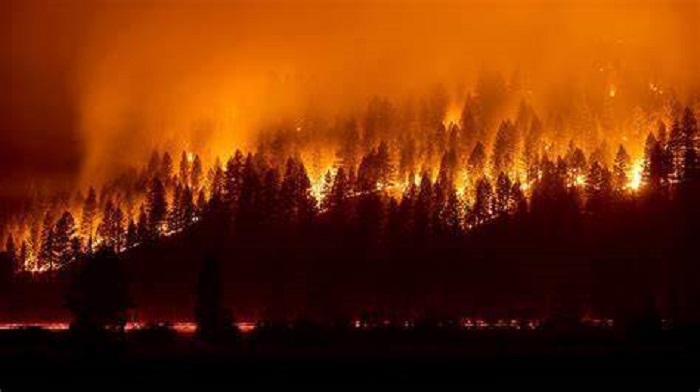
Extreme wildfires have become one of the greatest threats to the world’s forests. In 2024, it was the leading driver of tropical primary forest loss for the first time on record, while in 2025 fires accounted for 42 per cent of tree cover loss globally. Extreme wildfire events are projected to increase by up to 50 per cent by the end of the century if no action is taken, threatening progress towards the global goal of halting and reversing forest loss by 2030.
The consequences of intensifying global wildfires also pose an increasing risk to economic resilience and human health. In 2024-2025, an estimated 8 billion tonnes of CO2 was released by fires – equivalent to roughly a year of global transport emissions.
From declarations to action: critical priorities for wildfire management
The Antalya Action Plan builds on international commitments made in 2025, including the Istanbul Report on Integrated Fire Management, the Belém Call to Action on Integrated Fire Management and Wildfire Resilience at COP30, the G7 Kananaskis Wildfire Charter and a resolution on wildfire management from the 7th session of the UN Environment Assembly. The Plan provides a practical framework for countries to share proven measures, collaborate across borders, and understand progress without creating new legal, financial, or administrative burdens.
Supported by the Global Fire Management Hub Secretariat, participating countries will showcase progress, new approaches and initiatives, helping to translate international commitments into action.
The Plan focuses on four key priorities, with countries around the world already demonstrating approaches that can be shared and scaled in other countries.
- International cooperation, mutual assistance, and resource sharing
- Adaptive approaches and natural landscape management
- Data-driven risk reduction, prevention, early warning and traditional fire practices
- Expanded access to resources, training, and technology.



