

Education
WHO validates Eritrea’s elimination of trachoma, making it 11th African country to achieve milestone – EnviroNews


– Advertisement –
The World Health Organisation (WHO) has validated Eritrea’s elimination of trachoma as a public health problem, making it the 11th country in its African Region and the 34th globally to achieve the milestone.
The validation marks a major public health achievement for the East African country following more than two decades of sustained efforts to tackle the neglected tropical disease, which remains a leading infectious cause of blindness worldwide.
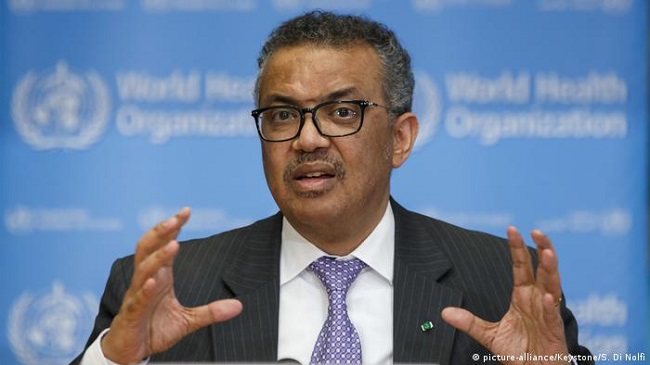
WHO Director-General, Dr. Tedros Adhanom Ghebreyesus, congratulated the Eritrean government and people on the achievement, describing it as a victory for communities most affected by the disease.
“After two decades of determined effort, Eritrea has consigned trachoma as a public health problem to history. This is a victory for the communities most affected by this devastating disease, and a powerful example of what sustained national commitment can achieve,” Ghebreyesus said.
Trachoma is an infectious eye disease caused by the bacterium Chlamydia trachomatis. Repeated infections can cause the eyelid to turn inward, making the eyelashes rub against the eyeball and potentially resulting in irreversible blindness.
The disease is commonly associated with poor living conditions, inadequate access to clean water and sanitation, and limited healthcare services.
According to WHO, many Eritreans live in remote rural communities where access to healthcare, safe water and sanitation facilities is limited, creating conditions that facilitate the transmission of the disease.
Following baseline surveys conducted across different parts of the country between 2006 and 2020, Eritrea progressively implemented WHO’s recommended SAFE strategy in communities where interventions were required.
The strategy comprises surgery to correct trachomatous trichiasis, the advanced stage of the disease that can cause blindness; antibiotics to clear infection; facial cleanliness to reduce transmission; and environmental improvements, particularly better access to water and sanitation.
WHO Regional Director for Africa, Dr. Mohamed Janabi, also commended Eritrea, saying the achievement demonstrated the importance of sustained political commitment, community leadership and effective partnerships in tackling neglected tropical diseases.
He said the country’s progress offered hope to other African nations working towards eliminating trachoma and demonstrated what could be achieved through coordinated public health interventions.
“Eritrea’s achievement brings us closer to a world free from the suffering caused by neglected tropical diseases and sends a strong message of hope to other African countries working towards trachoma elimination,” Janabi said.
He added that collective action and sustained commitment were essential to protecting community health and ensuring that vulnerable populations were not left behind.

WHO noted that Eritrea’s elimination programme adopted a community-led sanitation approach, which contributed to significant public health improvements despite limited external funding.
Health workers also deployed digital tools for data collection and mapping to identify affected communities and direct interventions and resources, including to hard-to-reach locations.
The country conducted surveys across all 58 sub-zobas, its second-level administrative areas, and expanded interventions wherever trachoma was found to be endemic.
Antibiotic treatment, predominantly oral azithromycin, was distributed through the programme, with the medication donated by Pfizer Inc. through the International Trachoma Initiative.
Beyond achieving elimination status, Eritrea has established systems for identifying and managing new cases of trachomatous trichiasis and will continue surveillance to prevent a resurgence of the disease.
WHO Representative to Eritrea, Dr. Mary Stephen, attributed the achievement to national leadership, community participation and collaboration among government institutions, development partners and health workers.
She particularly acknowledged the contributions of the Eritrean Ministry of Health, the Fred Hollows Foundation, development partners and communities across the country.
“This success belongs first and foremost to the people of Eritrea. The elimination of trachoma as a public health problem is the result of strong national leadership and ownership, and collaboration between communities, the Ministry of Health, the Fred Hollows Foundation, development partners and health workers across the country,” Stephen said.
She reaffirmed WHO’s commitment to working with the Eritrean government and its partners to sustain the achievement and protect the health gains recorded.
Eritrea’s validation adds to growing efforts across Africa to eliminate neglected tropical diseases through improved healthcare delivery, community mobilisation, access to clean water and sanitation, and sustained disease surveillance.
The milestone also reinforces the importance of integrating healthcare interventions with improvements in living conditions, particularly in rural and underserved communities where preventable infectious diseases continue to pose significant public health challenges.



