

Politics
Despite gulping N4.2bn, Damaturu’s water project lay abandoned


By Muhammad M. Ali
Mohammed Adamu is one of many residents in Damaturu, the Yobe State capital, battling water scarcity. Daily, he spends ₦2,000 from his small tea and noodle shop to buy water from vendors popularly called Mai Ruwa. Adamu’s plight could have been avoided if the multi-billion-naira water project that was shut down in his community two years ago had been functional.
Damaturu is an arid part of Yobe State where an acute and unhygienic water supply has led to the death of many people. In 2001, there were reports of thousands of people migrating from Damaturu to neighbouring Borno State due to water scarcity. However, in 2024, the federal government established a mega water facility to address the water challenges of the state capital.
When the facility was first launched in Adamu’s community of Sumsumma in Damaturu, the migration appeared to cease. Sumsumma began to develop, its population growing; then two years later, the borehole was padlocked.
“Water is life,” said one of the residents. “And without it, it becomes difficult to live.” He said many residents either migrated to the nearest community or used water vendors.
But Adamu was one of the few who chose to remain, relying on Mai Ruwa’s services. For some Nigerians, N2,000 daily may mean nothing, but for Adamu, it is half of his daily earnings of about N4,000. Inflation has eaten into his earnings, but still, he says he makes about N14,000 weekly and approximately N56,000 a month from his tea business. It is from these earnings that Adamu says he has no choice but to set aside half of it for water.

If the government-built borehole had not been padlocked, Adamu said he would have diverted those funds to other meaningful ventures, like scaling up his business, a dream he had toyed with for the last three years.
“We had no water problems when it was first built,” Adamu said. “They gave us 12 taps across the community, and we enjoyed it. Then they told us the cables were stolen, and everything died.”
The intervention in Sumsumma, along with two others, formed part of a mega Damaturu Regional Water Project by the federal government aimed at providing potable water in the state capital. With over N4.2 billion already disbursed from the project’s N8.4 billion cost, residents say that instead of flowing water, contractors simply walked away, leaving the project stalled.
While the contractors walked away, residents like Adamu were left in anguish. The expensive water that Adamu thought was safe because it came from government boreholes in Ibrahim Waziri, his neighbouring community, turned out to be full of bacteria, according to laboratory tests conducted at the University of Maiduguri.
A water analyst, Kaumi Ali Misherima of the Department of Microbiology at the University of Maiduguri, said test results revealed contamination that vastly exceeds safe limits. “While the WHO standard requires zero total coliforms (0\text {MPN/100 mL}), this water contains 240\text{ MPN/100 mL},” he said. He explained that this result shows massive contamination by E. coli and Klebsiella, which causes severe waterborne illnesses, including acute gastroenteritis (severe diarrhoea, cramps, vomiting), dehydration, urinary tract infections, and pneumonia.

The stalled project
The project was first awarded under President Olusegun Obasanjo’s administration in September 2005 for ₦3.6 billion, based on a 50-50 funding arrangement between the federal government and the Yobe State Government. Although there is no trace of the released funds, residents said work—including the construction of some boreholes was carried out between 2005 and 2007. However, throughout the administrations of late President Umaru Musa Yar’Adua and former President Goodluck Jonathan, there was little or no commitment to the project.
However, it was revived in 2021 by former President Muhammadu Buhari, who approved N8.4 billion to complete it. At that time, residents of Yobe were overwhelmed with joy, believing that an end to their water problems had finally arrived. The goal was big: to drill 30 deep industrial boreholes, combined engine and solar-powered across three areas of Sumsumma, Mallam Matari, and Yanayiwa. These boreholes were to supply 6.5 million litres of treated potable water per day to the capital of Damaturu.
The project was eventually split into three distinct lots awarded to separate contractors. Lot A was awarded to Gamji Company Nigeria Limited for ₦3.7 billion in Mallam Matari. Lot B (Yanayiwa Project): Awarded to Ismade Integrated Nigeria Limited for ₦2.4 billion, and Lot C: Awarded to Jidadu Ventures Limited for approximately ₦2.3 billion.
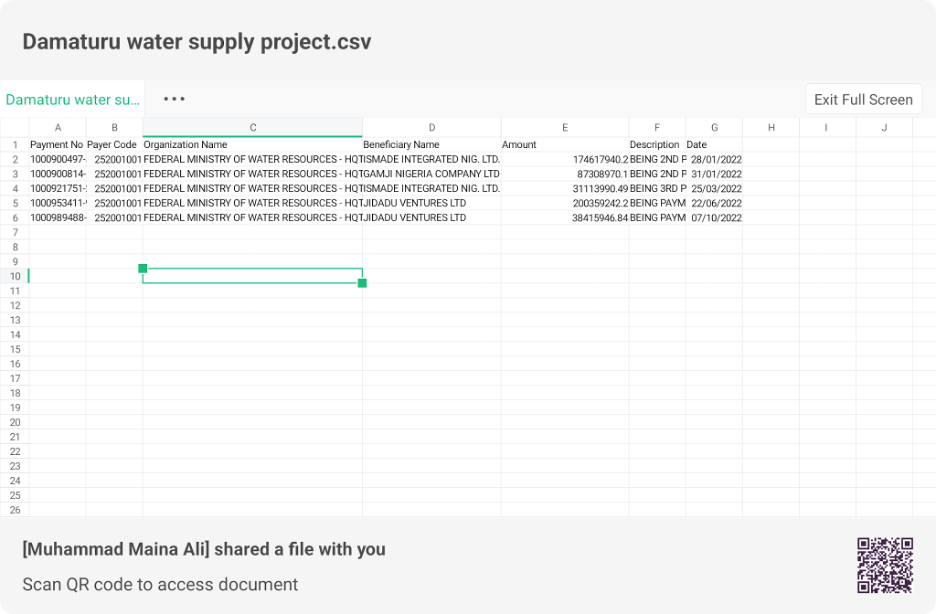
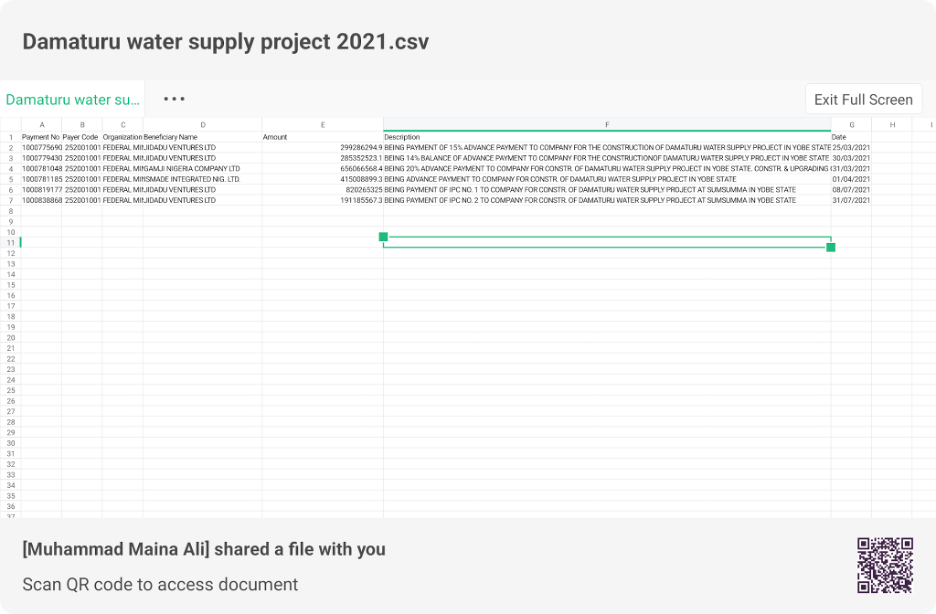
The money to build this lifesaver was paid out quickly. Government financial records from the Open Treasury Portal and Govspend show that between 2021 and 2023, the government paid N4,262,507,559 to three companies: Jidadu Ventures Nigeria Limited was paid N1.86 billion for the water project at Sumsumma (Lot C), Gamji Nigeria Company Limited was paid N1.73 billion for the water project at Malam Matari (Lot A), and Ismade Integrated Nigeria Limited was paid N667 million for the water project at Yanayiwa (Lot B).

However, at the Sumsumma site, a tall signboard introduces a water facility by Jidadu Ventures Nigeria Limited. The facility has security fences, offices, and hundreds of solar panels shining in the sun. But the gates were locked. Although water was enjoyed for 24 months (from January 2023 to December 2024), residents say the facility now sits completely dead and useless.
At the second site in Yanayiwa, Ismade Integrated Service Limited had drilled three out of 10 boreholes before abandoning the site to miscreants who vandalised the valuables, including panels and batteries.
At the third site in Mallam Matari, Gamji Nigeria Company did similar work but on a large field. Residents said the company vanished, leaving expensive construction materials out in the open to rust and rot.
The security threat grew so bad that the Yobe State Ministry of Water Resources hired neighbourhood security guards to protect the remains of the failed federal project.
At the time of the visit, each facility had a maximum of three security guards. According to some guards, who spoke on the condition of anonymity because they were not authorised to speak, the facilities are too large for them to secure. The 10 boreholes were sited outside the fenced facility, some a kilometre away in the bush, making patrols difficult.
“We were deployed here some months ago because miscreants were taking advantage of the boreholes in the bush. They removed cables and pulled Simor,” a local security guard at the Sumsumma facility said.

Residents groan under failed promise
The Yobe State Governor, Mai Mala Buni, noted in his 2023 governance blueprint that resolving the capital’s water crisis is critical to sustaining regional stability, emphasising that completing the federal project is vital to complementing the state’s own emergency water interventions.
Yet, the project remains mired in delays. Because the massive federal infrastructure is broken and regular state boreholes lack steady electricity, residents of Damaturu find themselves at the mercy of water vendors who are cashing out from their misfortune. The price for 20-litre jerricans of 12 is sold from N500 to N2,000 depending on the neighbourhood’s desperation. Areas like Sumsumma are hit the hardest, with prices pegged at between N1,500 and N2,000.
Unlike Mohammed Adamu, families who cannot afford water vendors in Sumsumma have to trek long distances, up to three kilometres, in search of water. The most affected by this are women and children.
“It is quite difficult to trek far distances and carry something heavy on your head, but we are used to it,” said18-year-old Halima Musa, a resident of Sumsumma. She, however, noted that it doesn’t affect her education because she goes in search of water after school hours.
The Sumsumma traditional leader, represented by his son, Mohammed Bello, complained that there was no news on whether the government ever plans to fix the facility, and an electric borehole by Yobe State Water Corporation is affected by poor electricity supply.
But unlike in Sumsumma, where the project lasted only two years before it collapsed in Yanayiwa and Malam Matari, the project never worked and remained incomplete.
In Yanayiwa, Bulama Samaila Ali, the traditional leader, said the whole community relied on a tap provided by the Yobe State University Teaching Hospital and the efforts of water vendors who sell between N500 and N600.
Speaking on the failed federal project, he said, “I was told seven out of 10 industrial boreholes they constructed had failed before the remaining three also followed suit. We have never enjoyed a drop of water from it,” Bulama Ali said.
Residents of Mallam Matari told this reporter that their concern goes beyond the abandonment of the project to the failure of the government to compensate them after their lands were confiscated.

“Our problem is the lack of compensation for land confiscated. We have followed up with the state government, but for many years now nothing has come out,” said Bulama Usman, a resident.
Dangers of consuming contaminated water
A medical doctor with Maiduguri Specialist Hospital, Dikko Nasir, warned that drinking contaminated water exposes one to aggressive, hard-to-treat diseases.

He explained that while E. coli is a well-known sign of sewage contamination, Klebsiella is a “feared opportunistic pathogen” that aggressively attacks vulnerable individuals. These germs, he says, trigger severe intestinal and bodily infections.
According to Dr Nasir, “E. coli, a versatile pathogen, causes intestinal and extraintestinal infections, such as acute diarrheal infections and urinary tract infections (UTIs).”
The warning becomes even more severe regarding Klebsiella, which the doctor noted causes “severe pneumonia and bloodstream infections.”
According to him, the bacteria in the water are highly resistant to standard medication “because of their roles in escalating antimicrobial resistance, which complicates treatment and necessitates strict infection control.”
In plain terms, he explained that if a resident falls ill from the water, common antibiotics bought at local chemists may fail to cure them.
The medical doctor advised boiling water for drinking, adding that “chemical tablets such as Chlorine or iodine be used, and appropriate storage be done.”
An academic research: “Microbial analyses of municipal water in Damaturu metropolis, Yobe State” by Dr Abubakar El-Ishaq, also revealed critical faecal contamination in groundwater (boreholes and wells).
It stated that high levels of coliform bacteria, E. coli, and Salmonella often exceed World Health Organisation and National Agency for Food and Drug Administration and Control (NAFDAC) drinking standards, largely due to poorly sited septic tanks, cracked pipes, and unhygienic storage.
Although community leaders of the affected areas have confirmed zero cases of the statewide kidney failure pandemic among their residents, their most frequent health challenges are malaria, typhoid, and cholera.
In Sumsumma, people like Adamu never thought these diseases could come from the water they buy for thousands of Naira. “Our major challenges are malaria and typhoid, and it eats up a lot of our income,” Adamu said and lamented that the financial burden is stopping him from achieving his dream of building a house to create space for his siblings in the family home.
Although there is no medical facility in Sumsumma to confirm these diagnoses, localised studies indicate a 30 to 41 per cent prevalence rate for gastrointestinal and water-related illnesses (such as diarrhoea and typhoid) among Damaturu populations that rely heavily on untreated water sources.
According to reports between 2018 and 2024, waterborne disease killed nine to 61 people in the state.
Contractors speak
Under Section 16(16) of the Public Procurement Act, contractors carry the burden of proving that they have fulfilled their contract requirements.
When contacted, the owners of Jidadu Ventures Nigeria Limited stated that they had completed their work. Because the overall project—including the other sites—is not yet ready for commissioning, the company handed it over to the state government so that local communities, like Sumsumma, could continue to benefit.
”The project is divided into three slots. We handled Slot C and finished our first phase earlier than the other contractors,” said Nan Don, the company’s project manager. “We were then approved for Phase 2, which included constructing overhead tanks, a water treatment plant, and piping to a central reservoir at the state water board. We completed Phase 2 and handed the facility over to the State Ministry of Water Resources on January 19, 2025,” he said.
According to the company, the facility was operational from January 19, 2025, to July 19, 2025 (covering the six-month defect liability period). However, the Sumsumma community stated that the facility has been dormant since September 2024 (almost two years).
Although other residents disputed the date the facility stopped working and argued it was December 2024, a public servant familiar with the project confirmed that it was in September 2024, adding that the community continued to enjoy water until December because it was reserved in a million-litre overhead tank inside the facility.
To clarify this, on the 9th June, 2026, this reporter reached out to the spokesman of the state ministry, Sulaiman Baba Gimba, who claimed he was newly posted to the ministry and invited the reporter to Damaturu to meet the permanent secretary of the ministry, Saleh Muhammad Bello. While at his office, the permanent secretary said he was not prepared to speak on the issue and asked this reporter to consult the spokesman for feedback.
When contacted again on WhatsApp on 22 July, the spokesman said he would make consultations and revert, but he never did even after several reminders.
Meanwhile, the management of Ismade Integrated Services Limited offered a different perspective. Despite over half a billion Naira paid to the company, it claimed it left the site because it was still processing its second payment. Following their departure, the security personnel they hired also walked off the job due to alleged unpaid wages. The company reported that the site was heavily vandalised afterwards, with batteries and solar panels stolen.
”We are still officially on the project,” claimed Adeleke Adesun, a company representative. “We are currently in discussions with the Ministry of Water Resources to resolve a few issues before we resume work,” he said.
However, sources within the company revealed a deeper conflict. Some said the unpaid security men reportedly took items from the site as compensation for their missing wages.
”We suspect the security guards were involved in the vandalism,” a source said on the condition of anonymity. “They left the site without a proper handover and were caught with panels, pumps, and batteries. They claimed they were holding the equipment until the company paid them.”

The third contractor, Gamji Nigeria Company Limited, also spoke in response to a FOIA request delivered to their office in Abuja. The person who called introduced himself as the managing director of the company. Although he refused to share his name, open sources identified the company’s MD as Ambassador Abubakar Sunusi Gamji and Truecaller equally identified the caller as Alhaji Sunusi Gamji.
In a phone conversation, the MD confirmed that the company is still on site. However, he explained that the company completed the first phase of the project while the second phase stalled because the government has not paid the contractor.
“Covi19 affected our work in so many ways. Our scope of work has increased, and money hasn’t been paid,” he said, adding that “And after COVID-19, prices of materials have increased. The variation we sent has not been approved.”
The MD defended the company, saying the scope of work done on the project exceeds the money released to them.
“That 31-meter concrete tower water tank at the State Water Board we constructed. That is not a small achievement. It takes courage and professionalism to do that kind of work. But all our efforts are shattered. By now, Damaturu people, including the Teaching Hospital, should be enjoying water if not for the government’s poor handling of the project,” he added.
Ministry keeps mum
The Public Procurement Act 2007 (as amended) mandates the accounting officer—typically the Permanent Secretary—to ensure value for money when spending public funds. Furthermore, Section 16(12) requires ministries to preserve procurement records for a minimum of 10 years and make unclassified records available for public inspection.
On April 14, 2026, this reporter visited the field office of the Federal Ministry of Water Resources in Damaturu, but the doors were locked. The reporter was directed to speak with a staff member named Mr Galadima. After several phone calls, Mr Galadima said he was away on an assignment in Jigawa. This reporter asked when he would be available in the office, but Mr Galadima replied okay in a message without saying anything further. Phone calls to his mobile phone kept saying the user was busy.
On April 30, 2026, this reporter submitted a Freedom of Information (FOI) request to the office of the Permanent Secretary, Federal Ministry of Water Resources, seeking details regarding the contract and its current implementation status. Although the office officially acknowledged receipt of the letter, no response was subsequently provided. A staff member of the ministry who volunteered to follow up on behalf of this correspondent repeatedly reported there was no response from the office.
When contacted on July 22, 2026, the spokesperson for the ministry, Mrs Funmi Imuetinyan, said she was tracking the letter submitted by the correspondent and promised to provide feedback, but she never did.
CSO, expert speaks
A procurement expert and founder/lead of the Spotlight For Transparency and Accountability Initiative, Muazu Alhaji Modu, remarked that project implementation has been very slow.
According to him, apart from the recent ₦4.2 billion released to the contractors, the administrations of Olusegun Obasanjo and Ibrahim Geidam (at the state level) also committed resources to the project. He argued that “Malam Matari borehole was drilled around 2007, and Sumsumma was also drilled long before 2023.”
He explained that the ₦4.2 billion released earlier was meant for the construction of dams and the piping of facilities to the central reservoir at the state water board. He lamented the delay in project implementation and called on the government to complete it quickly to prevent vandalism.
However, he disagreed with claims that the project had been abandoned.
Meanwhile, another procurement expert with over 10 years of experience—who spoke on the condition of anonymity due to fear of victimisation because he is an active contractor also shared his thoughts. He described the funding shortfall for the ₦8.4 billion Damaturu project as a shared failure. “The contractors may have delayed early milestones, preventing the Ministry of Water Resources from verifying progress, while the Office of the Accountant General often withheld funds due to national revenue deficits,” he said.
“Ignoring this approval has severe consequences: skyrocketing inflation forces costly contract variations, uncompleted infrastructure is ruined in the elements, and public trust erodes. Crucially, it leaves thousands of citizens in Damaturu stranded without the safe, clean drinking water they were promised,” he said.
However, he advised that the negligence and derelictions of responsibility by public officials must be addressed by enforcing section 58 of the Public Procurement Act, which states that any public official who fails to do their work and is found guilty under these provisions faces summary dismissal from government service and a prison term of not less than five calendar years without the option of a fine.
This report was funded by the Budeshi Media Grant, an initiative of the Public and Private Development Centre.



