

Education
Environmental society decries indiscriminate waste disposal in FCT – EnviroNews


– Advertisement –
The Nigerian Environmental Society (NES) has expressed concern over indiscriminate waste disposal and poor waste management practices in the Federal Capital Territory (FCT).
The society warned that the trend poses serious environmental and public health risks.
The National President of NES, Dr Efegbidiki Okobia, stated this during a stakeholders’ training on waste management for the six area councils of the FCT in Abuja.
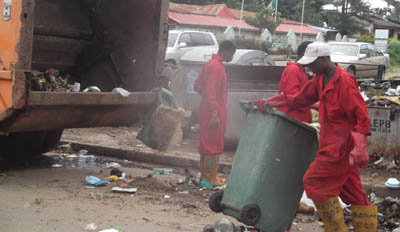
Participants at the training included officials of the Abuja Environmental Protection Board (AEPB), the Satellite Towns Development Department (STDD) of the FCT Administration, waste recyclers and members of the Waste Pickers Association of Nigeria.
The training was organised by Integrated Recyclers in collaboration with NES and other partners.
Okobia warned that continued indiscriminate waste disposal and poor waste management could have grave consequences for both the environment and public health.
“If we continue with indiscriminate waste disposal and improper waste management, the environment will fight back and we will face serious health challenges,” he said.
He identified the Abuja Municipal Area Council (AMAC) as having the highest number of illegal waste dump sites in the FCT.
While commending the FCT Administration for its ongoing infrastructure development projects, including road construction, Okobia urged the FCT Minister, Nyesom Wike, to give greater attention to effective waste management.
He said prioritising proper waste management would improve public health, create jobs and promote environmental sustainability.
According to him, poor environmental sanitation could increase the burden on healthcare facilities and undermine the benefits of infrastructure investments.
“We are doing a lot in infrastructure, but waste management is a critical sector that should not be taken for granted.
“If roads are functional but people cannot use them because of health challenges arising from environmental degradation, then the effort is defeated,” he said.

Okobia called for the establishment of integrated waste management facilities with capacity for recycling plastics, cartons, wood, biodegradable materials and electronic waste.
He said such facilities would create jobs across the waste value chain, including waste collection, transportation, sorting, recycling and processing.
The NES president said the training was designed to equip participants with skills to convert waste into valuable resources and generate income while promoting environmental sustainability.
“Once waste is converted into resources, it becomes a source of revenue and helps reduce environmental pollution,” he said.
According to him, NES is partnering with Integrated Recyclers, the United Nations climate agency and the FCT Administration to strengthen waste management practices across the territory.
He said 120 participants drawn from Bwari, Kuje and Abuja Municipal Area Councils, as well as officials of AEPB, STDD and members of the Waste Pickers Association of Nigeria, took part in the training.
Okobia said the first phase of the programme, held in Kwali Area Council on June 9, covered participants from Abaji, Kwali and Gwagwalada Area Councils.
He expressed optimism that the training would help participants appreciate the economic value of waste and serve as advocates for proper waste management in their communities.
Also speaking, Dr Augustine Osayande, Chairman of the Nigerian Environmental Outlook, NES FCT Chapter, attributed the growing waste burden in the territory to rapid urbanisation and population growth.
Represented by Dr Andesikuteb Ali, National Council Member, North Central Region of NES, Osayande identified inadequate funding, insufficient equipment and poor operational logistics as major challenges facing area councils in waste management.
Other challenges, he said, include poor public attitudes toward waste disposal, limited recycling facilities, inadequate waste-processing infrastructure and weak enforcement of environmental regulations.
He stressed that effective waste management requires collaboration among government agencies, institutions, private sector operators and citizens.
“Improved policies, increased funding, modern infrastructure and active public participation are essential to achieving efficient and sustainable waste management outcomes in Abuja and the FCT at large,” he said.
In a separate presentation, Dr Abani Okoh, Head of Phase I, Environmental Services Division, STDD, FCTA, decried the absence of an Integrated Solid Waste Management Policy for the FCT.
Okoh described the proposed policy as a critical instrument for achieving effective and sustainable waste management in the territory.
By Felicia Imohimi



