

Education
Financing a clean megacity: The $400m trash problem – EnviroNews


– Advertisement –
Every single day, Lagos wakes up to an avalanche of waste. As one of Africa’s most populous megacities, it generates over 13,000 metric tonnes of garbage daily. From the gridlocked streets of Ikeja to the coastal communities of Lekki, managing this sheer volume of trash has pushed traditional state budgets to their absolute limit.
Currently, Lagos relies on an expensive, short-term survival strategy.
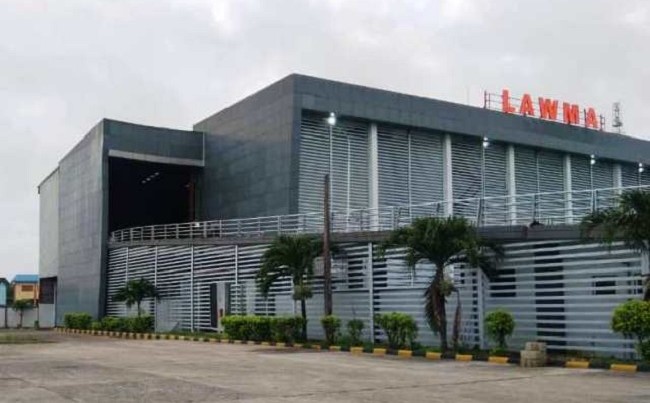
The state directs a large share of its waste management spending into recurrent costs such as personnel, waste evacuation operations, and support for Private Sector Participation logistics. This keeps the city functioning on a daily basis, but only a small portion goes into capital investment. As a result, the system is maintained rather than fundamentally upgraded, leaving the deeper infrastructure gaps largely unresolved.
Lagos does not simply need more manpower for cleanup; it needs a full upgrade of its waste management infrastructure from the ground up.
Operations Over Infrastructure
A review of the Lagos State Y2024 Citizens Accountability Report and Audited Financial Statements reveals a waste management system heavily weighted toward day-to-day operations. LAWMA recorded actual expenditure of approximately ₦23.32 billion in 2024, of which about ₦21.8 billion (93.5%) was spent on recurrent costs, while only ₦1.52 billion (6.5%) went into capital infrastructure. This means that for every ₦1 invested in long-term waste infrastructure, more than ₦14 was spent on operational activities such as waste collection, evacuation, personnel, and administrative costs.
While operational spending is essential to keep a megacity functioning, the imbalance highlights a broader challenge: Lagos must simultaneously fund daily waste evacuation and invest in the transfer stations, material recovery facilities, recycling infrastructure, engineered landfills, waste-to-energy plants, and circular economy systems required for long-term sustainability.
To effectively manage a staggering daily waste generation of 13,000 tons, the state requires an active fleet of at least 650 specialised compactor trucks for basic evacuation, alongside a network of 26 large-scale Materials Recovery Facilities (MRFs) or recycling centres to process the volume sustainably. Funding these assets demands a massive capital expenditure (CAPEX) investment that the state’s fiscal framework simply cannot accommodate.
To bridge this massive logistical deficit, Lagos State requires an estimated initial capital expenditure (CAPEX) of $273 million – or roughly N409.5 billion at current exchange rates. Breaking down these infrastructure requirements, procuring a baseline fleet of 650 heavy-duty compactor trucks at $120,000 each demands an immediate N117 billion ($78 million) investment. Simultaneously, constructing 26 semi-automated Materials Recovery Facilities (MRFs) to handle the 13,000-ton daily waste stream requires an additional N292.5 billion ($195 million), assuming a baseline development cost of $7.5 million per facility.
When contrasted against the N1.52 billion actually spent on LAWMA’s capital infrastructure, this N409.5 billion deficit exposes a staggering fiscal reality: at the state’s current pace of independent capital allocation, it would take more than 260 years to fund the specialised vehicles and processing facilities desperately needed to stabilise the city’s environment.
This structural financial overhaul is equally critical for the survival of Lagos’s Private Sector Participation (PSP) operators, who are currently trapped in an ecosystem doomed to failure under traditional frameworks. Under the current system, PSPs are systematically undermined by three fatal bottlenecks: first, the total absence of MRFs and the continuous breakdown of overwhelmed dumpsites trap trucks in agonizingly slow turnaround times, resulting in reduced service frequencies, missed collections, and severe revenue loss.
Second, a lack of state finance to strictly enforce waste policies means PSPs suffer from low cost-recovery rates, as free-riding and low patronisation remain rampant in unmonitored neighborhoods. Third, massive, high-density, low-income areas across Lagos are simply not commercially viable for private operators to service under a standard fee-for-service model.
Beyond this initial asset procurement, scaling the total funding to a comprehensive $400 million urban framework will accommodate vital operational buffers. This expanded envelope integrates initial operational expenditure (OPEX) to seed the transition, capitalizes a dedicated low-interest credit line for PSP operator support, and funds a massive increase in policy enforcement to guarantee cost recovery across unviable, low-income neighborhoods.

Financing a clean megacity requires looking past the next fiscal year. Relying on annual budget allocations of the current levels to fight a 13,000-ton daily crisis is like trying to empty the Atlantic Ocean with a bucket.
Financing the Future of Lagos Waste Management
Attempting to bridge this chasm through traditional commercial debt is highly unfeasible, as prevailing high-interest rates would saddle the state with toxic, short-term debt servicing costs that drain public coffers without allowing the infrastructure time to break even. Ultimately, the scale of Lagos’s daily waste crisis demands a departure from traditional, overstretched public budgeting toward bold, structured climate finance.
By scaling up the subnational green bond framework that the state has already pioneered, Lagos can realistically mobilise the N409.5 billion required to deploy 650 compactor trucks and construct 26 Materials Recovery Facilities. Transforming the city’s waste management system from an operational financial drain into a bankable, low-interest investment ecosystem will do more than just clear the streets of 13,000 tons of trash daily.
By shifting the capital burden off the back of overstretched operators and building the necessary MRF network, the state can transform the PSP model into a resilient, commercially sustainable public utility.
This approach will safeguard the state’s fiscal future, protect public health, and position Lagos as a global model for sustainable megacity infrastructure in sub-Saharan Africa. Financing a clean megacity requires answering a $400 million trash problem, and global precedents show that massive municipal green issuances are the definitive roadmap.
Major global entities routinely issue bonds of this magnitude to overhaul urban ecosystems; for example, the New York State Environmental Facilities Corporation frequently issues green bonds exceeding $300 million to $400 million to fund clean water and waste infrastructure, while the city of Johannesburg pioneered a multi-billion Rand green bond to finance sustainable urban infrastructure.
By stepping decisively into this international tier of green issuance, Lagos can unlock the deep pockets of global impact capital to finally turn its waste crisis into an economic win.
By Abimbola Gbenjo, Founder, Sokedowo Recycling



