Education
FSU researchers explore how video games are advancing research, education and training


Soon after the development of the first computers, engineers and programmers began tinkering with them to create games. Turning a calculating machine into a device for fun pushed the capabilities of the new technology, stimulated creative thinking and inspired interest from the public.
From their origins in the 1950s and 1960s, video games have come a long way. They’re now an industry that generates more than $180 billion annually around the world. Faculty at Florida State University are innovating in this rapidly evolving field, studying how games can reduce mental health stigma, improve language learning, train child welfare professionals and create new opportunities for science communication.
Games and human behavior
At the College of Communication and Information (CCI), researchers are investigating the cultural impacts of video games and how they can affect perceptions of mental illness. In 2025, Professor Nicholas Sellers authored a book chapter titled “GAMES FOR GOOD: Exploring the Potential for Traditional Video Game Narratives to Reduce Mental Health Stigma.”
The chapter is based on a study published in Frontiers, conducted by Sellers and Associate Professor Arienne Ferchaud. The study examined whether playing or watching a video game character experiencing mental illness affected participants’ attitudes toward mental health.
Researchers found that players who directly engaged with the game felt more connected to the character and demonstrated lower levels of stigma, which may help remove impediments to treatment.
“One of the main barriers to seeking treatment is the stigma around mental health. If we can find ways to destigmatize mental illness, we can remove that barrier and encourage treatment when necessary,” Ferchaud said. “Video games are an effective medium for representation because of their interactivity, allowing players to ‘practice’ interactions in a way that is not possible in non-interactive media.”
Other CCI researchers are also exploring applications of video games in the classroom. In a multi-institutional research study published in ACM Journals, Professor Sana Tibi co-led research examining whether collaborative video games can help English as a Second Language (ESL) students develop language skills. The study paired native English speakers and ESL students in a game that required communication and cooperation to complete tasks.
Other research is examining games as a communication medium that intrinsically involves decision making from the audience. Gabrielle Lamura, a doctoral student at FSU, explored horror and morality in video games in her paper, “Moral Dilemmas: Horror Video Games Narrative Mechanics,” which she presented at a 2025 National Communication Association conference.
Some of her other projects are examining how environmental factors and game mechanics influence player behavior and a review of morality and moral decision making in games.
At the FSU College of Music, Assistant Professor Julianne Grasso researches music in multimedia, especially video games, examining how musical themes associated with characters and places develop during a game’s narrative.
“Video game music is interesting for the ways that it seems to function as background and yet has such an effect on us,” Grasso said. “It’s similar to film music in that it can affect how we perceive the emotions and meanings of the scenes we are watching, but video game music goes one step further in influencing ultimately how players interact with virtual environments.”
As technology developed, game designers gained a greater ability to add richness and interactivity to in-game sounds and music, changing how users perceived their experience. Early adaptive audio has evolved so musical directors in modern games have a wide number of parameters they can adjust to fit their creative goals.
“In a film, we might get tense, dissonant music to accompany a suspenseful scene and help the audience feel what characters feel. In a game, that same kind of music might be used as a signal for the player to watch out for danger and to act accordingly,” she said.


From screen to reality: Practical applications of video game technology
The Florida Institute for Child Welfare (FICW) collaborated with different contractors to launch two new virtual reality (VR) tools that help social workers train for a critical job in low-stakes virtual environments.
“We are working to create real-world practice opportunities for both current child welfare professionals and students preparing to enter the field,” said FICW Associate Director of Professional Development Kristina Finch. “Through our immersive VR platforms, including the Accenture Avenues headset experiences and our AI-powered virtual home environment being developed with MeetKai, participants can build and strengthen the skills needed to effectively engage with children and families while promoting safety and well-being.”
These interactive simulations provide controlled environments where College of Social Work students can develop skills before practicing in real-world settings. These AI-powered tools allow students to practice observing environmental factors in a virtual setting, helping students connect classroom instruction with real-world practice.
The first platform is an AI-home developed in collaboration with MeetKai AI, accessible on a computer. During the training, students select a scenario and enter a virtual home to complete an inspection. Once inside, participants practice flagging items based on a color-coded system. For each item, students enter their rationale into the training’s system. The scenario is then followed by a debriefing session, where students discuss their findings and next steps.
The second platform is a VR headset training developed in collaboration with Accenture AVENUES. It is an immersive, voice-acted simulation, where students are put into scenarios to gain experience with real-world problem solving. Both platforms offer students opportunities to practice before they are sent out into the field. FICW has deployed 200 headsets and these two virtual reality simulations throughout Florida, blending traditional instruction with new, hands-on technology.
“Some of the most valuable learning comes from mistakes, reflection, and trying again, but the stakes are incredibly high when real children and families are involved,” Finch said. “Virtual reality allows us to simulate complex environments and interactions where learners can practice, make decisions, receive real-time coaching and feedback, and grow their confidence without causing harm to the people we ultimately aim to serve.”
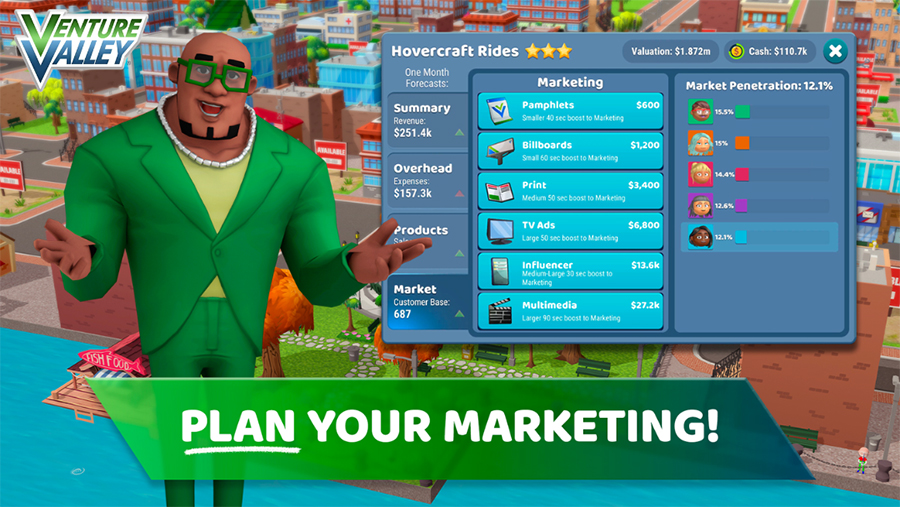
The Jim Moran College of Entrepreneurship has also used video games to create community and educate through competition. In 2023, the college’s Blackstone LaunchPad hosted a Venture Valley Collegiate Cup, where students competed for prize money in the virtual game, “Venture Valley,” a multiplayer game in which players create and manage their own small business.
Students gained hands-on experience with building and running a business while they grew their virtual ventures through expansion and investment. Tournaments like these allow students to bring their knowledge from the classroom and expand it with hands-on, virtual experiences that simulate real-life.
Connecting through competition: Gaming as a medium for sharing science
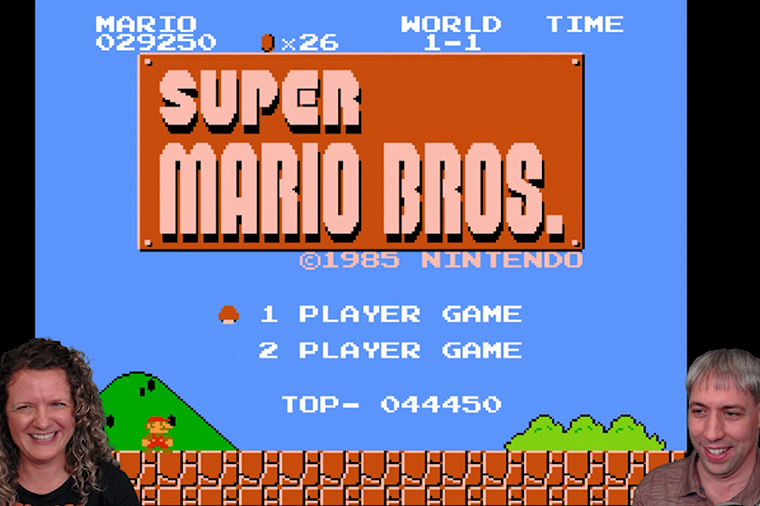
Beyond training and education applications, FSU Department of Chemistry and Biochemistry Professor Kenneth Hanson is using video games to share the research and expertise of fellow scientists. During each episode of “Ask a Scientist Gaming,” Hanson invites a new guest onto his livestream to play games, discuss science and answer questions from viewers in the chat. The series can be found on Twitch.tv, an online video game streaming site, and YouTube.
“One of my goals is broadening interest in science and because most scientists I know are not only the world’s foremost in their fields but also generally interesting people, a streaming Q&A seemed like a fun idea,” Hanson said. “Unlike traditional podcasts, livestreams allow for questions directly from the viewers, driving the discussion forward. It is a unique opportunity for anyone to interact directly with an expert.”
The livestream format fosters collaboration, connecting scientists and non-scientists and allowing the audience to make comments and ask questions. The gaming background provides an interesting and engaging format to make scientific research accessible for a wider audience. Recent guests included Department of Earth, Ocean and Atmospheric Science Associate Professor Allison Wing (playing MarioKart 64 and Super Mario Land) and Department of Philosophy Professor Michael Bishop (playing MarioKart8 and the arcade game Missile Command).
“The often cartoonish and visually exciting background of a video game offers a fun contrast to technical topics,” Hanson said. “Very few scientists are expert gamers, so livestreaming games is a way to make scientific discussion more accessible. It shows that, despite dedicating their lives to understanding a particular domain of science, scientists are also people that like to hang out and play video games.”
Across FSU, researchers are finding new uses for video games and interactive media as a tool for education, healthcare, workforce training and scientific engagement. As gaming technology continues to evolve, faculty members expect its application in research and teaching to grow as well.