

Education
FSU sport management professor discusses how pickleball builds social connections in older adults


The rise of pickleball has been rapid, growing in popularity since the pandemic. While the game is mostly promoted for its physical benefits in older adults, its greatest effect is shown in the social connections it builds.
According to the National Poll on Healthy Aging conducted by the University of Michigan and the AARP, 1 in 3 adults aged 50 to 80 reported feeling lonely or lacking companionship some of the time or often. Now known as a public health risk, loneliness is defined as the feeling that results from a perceived gap between a person’s desired social connections and their actual relationships.
Distinct from loneliness is the other public health risk of social isolation — an objective lack of social connections, encompassing few social roles, infrequent interactions and minimal participation in community activities. Further examinations on social connection point to both loneliness and social isolation in older adults presenting a major risk for premature mortality.
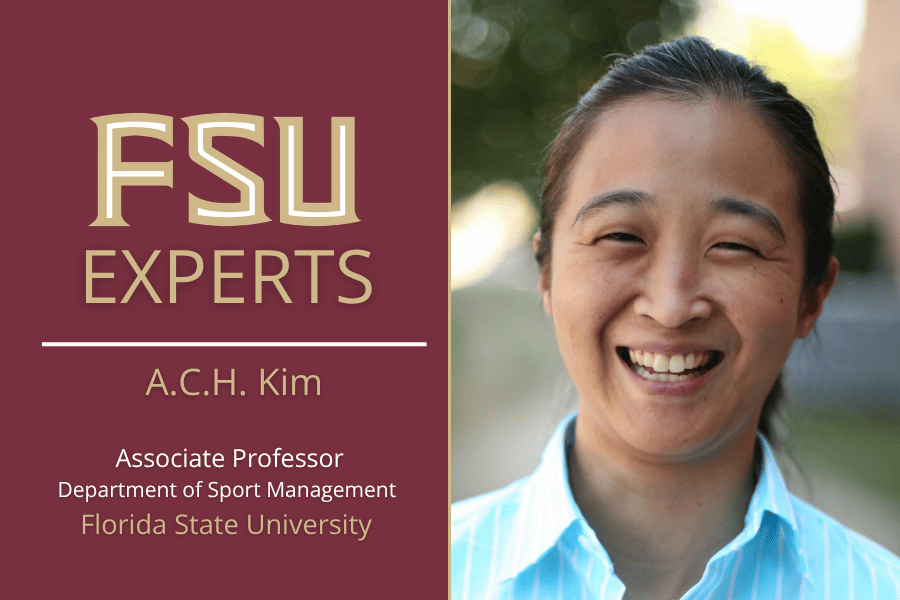
Florida State University’s A.C.H. Kim is an associate professor in the Department of Sport Management whose research focuses on promoting sport for health from a social epidemiological perspective. Of her many research projects, Kim has worked exclusively with the United States of America Pickleball Association and has produced research on pickleball’s benefits for retirees in the Journal of Aging and Physical Activity.
While noting all the physical benefits of pickleball, from improved strength to cardiovascular health, Kim believes the less obvious one comes from a cognitive angle.
“Research has shown that playing pickleball strengthens older adults’ social connections and sense of community while reducing feelings of loneliness and isolation,” Kim said. “Part of this comes down to the court itself, which is considerably smaller than a tennis court and keeps players close enough to talk easily with partners and opponents throughout a match/rallies. This sets pickleball apart from activities such as running or walking alone, which improve fitness but rarely bring people together in the same way.”
An advocate for expanding the sport’s growth, Kim believes the solution to continued momentum is accessibility.
“The more durable path is a network of accessible courts and welcoming local programs that make it easy for anyone to pick up a paddle and stay with it,” Kim added. “Court access remains the single largest barrier, as many communities still rely on tennis courts marked with temporary lines or a handful of public courts that fill up before most people arrive. Dedicated courts, whether built from scratch or converted from underused facilities, would do more than any advertising campaign to sustain growth. Beyond facilities, the next step is to make the game welcoming to people who assume it is not for them, including younger adults, families and those who have never considered themselves athletic.”
To learn more about how pickleball bridges much-needed social connections in older adults, as well as how the sport has grown in popularity, media may reach associate professor A.C.H. Kim via email at kamy@fsu.edu.
A.C.H. Kim, associate professor, Department of Sport Management
How does the setup of a pickleball court help in building social connections?
The format of the game reinforces a sense of closeness, since players can rotate partners, share courts and often stay to talk long after the last point. These social connections, in turn, are closely tied to better mental health and psychological well-being, with studies reporting lower levels of depression, stress and anxiety among regular players, along with greater happiness and life satisfaction. For older adults, the combination of movement and companionship may be the most valuable aspect of playing pickleball.
While it’s clear that the benefits outweigh the negatives, what are some things older adults should be weary of when playing pickleball?
Injuries are the most common concern, particularly strains and sprains of the ankle, knee, shoulder and Achilles tendon, which often occur when players lunge or backpedal for the ball rather than letting it go. Falls deserve special attention as well, since a single fall can lead to a fracture that takes months to recover from. Footwear helps guard against both, and proper court shoes are worth the investment because running shoes are built for forward motion and offer little support during the side-to-side movement the game demands. Heat is another factor, especially in Florida, where playing in the middle of the day can lead to dehydration or heat exhaustion. Sunscreen matters just as much for anyone playing outdoors, since regular sun exposure over time raises the risk of skin damage and skin cancer. Finally, older adults managing heart conditions, joint replacements or balance problems should talk with their physician before starting, not to be discouraged from playing, but to set sensible limits. With a warm-up, appropriate footwear, sensible pacing and attention to the body’s signals, most of these concerns can be managed rather than avoided.




