

Education
Nigeria showcases high‑integrity carbon market vision at London climate summit – EnviroNews


– Advertisement –
Nigeria on Monday, June 22, took centre stage at the Nigeria Climate Investment Summit (NCIS) 2026, held at the historic Mansion House, City of London, as part of London Climate Action Week (LCAW). With more than 1,000 events taking place during LCAW 2026, NCIS was selected as one of the week’s official Flagship Events – a distinction reserved for only a handful of high‑level global convenings.
Organised by GLOBE Legislators, in collaboration with SOStainability, and supported by leading global institutions including the Commonwealth Secretariat, United Nations Sustainable Energy for All (SEforALL), and the City of London Company of Fuellers, the Summit convened senior Nigerian officials, legislators, governors, regulators, global investors, development finance institutions, innovators, and diaspora capital networks.
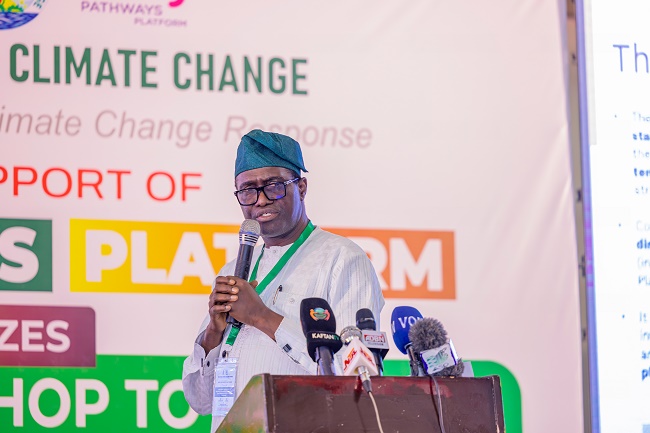
The event served as a strategic platform to mobilise partnerships, unlock climate finance, and advance Nigeria–UK cooperation on green industrialisation.
Nigeria’s Policy Architecture Inspires Investor Confidence
Speaking during the high‑level panel on “Climate Finance and Opportunities in Nigeria’s Carbon Markets,” Dr. Eugene Itua, CEO of Natural Eco Capital, Executive Director of the Africa Green Economy & Sustainability Institute (AGESI), and Board Chair of the Carbon Market Association of Nigeria (CMAN), outlined Nigeria’s strategic direction for building a sovereign, rules‑based, high‑integrity carbon market.
Dr. Itua highlighted Nigeria’s strong policy foundation to include:
- Climate Change Act (2021) – providing long‑term legal certainty.
- Long‑Term Low Emissions Development Strategy (LT‑LEDS) – defining Nigeria’s 2050/2060 pathway.
- Nationally Determined Contribution (NDC 3.0) – outlining 2030 mitigation ambition across clean cooking, methane abatement, forestry, agriculture, and energy transition.
- National Carbon Market Activation Plan (CMAP) and National Carbon Market Framework (CMF) – defining roles, processes, and governance for carbon market operations.
- National Carbon Registry – fully developed and ready for launch, enabling sovereign tracking and corresponding adjustments.
- Clean Cooking Policy & LPG Transition Framework – unlocking large‑scale credit generation.
- National Methane Mitigation Policy and Gas Flare Commercialisation Programme – anchoring methane abatement and high‑value credit opportunities.
- Energy Transition Plan (ETP) and Decade of Gas Programme – reinforcing Nigeria’s shift to cleaner fuels.
He noted that Nigeria can generate 40–60 million high‑integrity carbon credits annually, unlocking US$1.2–3 billion in new climate finance.
“Nigeria’s challenge is not policy design — it is implementation.”
Dr. Itua emphasised that Nigeria’s next chapter requires disciplined execution, including:
- Operationalising Article 6 with clear authorisation, benefit‑sharing, and corresponding adjustment rules.
- Deploying a national digital MRV system to ensure real‑time, verifiable data for investors.
- Launching the Nigeria Country Investment Platform to consolidate pipelines and de‑risk private capital.
- Strengthening state‑level readiness, especially in land use, forestry, agriculture, and clean cooking distribution networks.
- Finalising carbon rights and benefit‑sharing frameworks aligned with AfDB safeguards.
- Deploying blended finance tools through NSIA, NIRSAL, and AfDB to reduce investor risk.
“These actions will turn Nigeria’s carbon market from a policy idea into a functioning investment ecosystem,” he said.
Communities Must Be at the Centre of Nigeria’s Carbon Market
Dr. Itua stressed that Nigeria cannot build a credible carbon market without the full inclusion of the communities who protect the country’s natural assets – from forests and mangroves to farmlands and biodiversity hotspots.
He noted that:
- Communities are the first line of defence for Nigeria’s natural capital.
- They bear the highest environmental and social risks.
- They must therefore be primary beneficiaries of carbon finance.
He emphasised that any national blueprint must embed community participation, FPIC enforcement, transparent benefit‑sharing, and safeguards that prevent disenfranchisement.
“Communities are not stakeholders on the sidelines – they are co‑owners of the assets that make carbon markets possible. If they are not at the table, the market will lack legitimacy and long‑term sustainability,” he said.
NCIS London: A Strategic Bridge Between Nigeria and Global Capital

The NCIS platform was designed to:
- Catalyse climate finance pipelines and advance Nigeria–UK partnerships.
- Connect Nigerian policymakers with global investors and financial institutions.
- Broker deals and initiate twinning opportunities for green investments.
- Support Nigeria’s climate diplomacy ahead of COP31.
- Showcase Nigeria’s bankable energy transition and carbon market opportunities.
The Summit featured high‑level plenaries, themed panel discussions, an exhibition, and investor networking sessions. Distinguished speakers included:
- Benjamin Kalu, Deputy Speaker, House of Representatives of Nigeria
- Sam Onuigbo, President‑designate, GLOBE Legislators
- Damilola Ogunbiyi, CEO, SEforALL; Special Representative of the UN Secretary‑General
- Babajide Sanwo‑Olu, Governor of Lagos State
- Catriona Laing, Former UK High Commissioner to Nigeria; UN Special Representative to Somalia
- Pablo Vieira, Global Director, NDC Partnership
- Suresh Yadav, Director, Climate Change, Commonwealth Secretariat
- Ashutosh Shastri, Master, Worshipful Company of Fuellers
- Trevor Hutchings, CEO, Renewable Energy Association (REA)
A Unified Blueprint for Nigeria’s Carbon Market Future
Dr Itua announced that his forthcoming book on Nigeria’s Carbon Market Transition – together with CMAN’s ongoing technical work – will provide a unified national blueprint to attract foreign investment, secure bilateral offtake agreements, and integrate carbon finance into the National Development Plan (2026-2030).
He emphasised that this blueprint aligns strongly with NCIS’s mission to mobilise the partnerships, technical expertise, and investment pipelines required to translate Nigeria’s NDC 3.0 commitments into bankable projects and measurable outcomes, particularly in clean cooking, methane abatement, renewables, and subnational climate action.
“Nigeria stands at the edge of a new economic frontier. The architecture exists. The opportunity is real. What we need now is disciplined implementation,” he concluded.



