

Education
Stakeholders call for collective action against climate-induced flooding – EnviroNews


– Advertisement –
Stakeholders have called for stronger collaboration among government agencies, media organisations, civil society groups and communities to address climate-induced flooding and environmental degradation across Nigeria.
The call was made during the monthly Climate hangout in Kaduna, where scientist, environmentalist, researchers journalists , among others come together to discuss and learn more about climate change and ways to prevent or mitigate its effect.
A lecturer from the Department of Mineral and Petroleum Resources Engineering, Kaduna Polytechnic, Mrs. Halima Haruna, described rain as both a blessing and a revealer of environmental neglect.
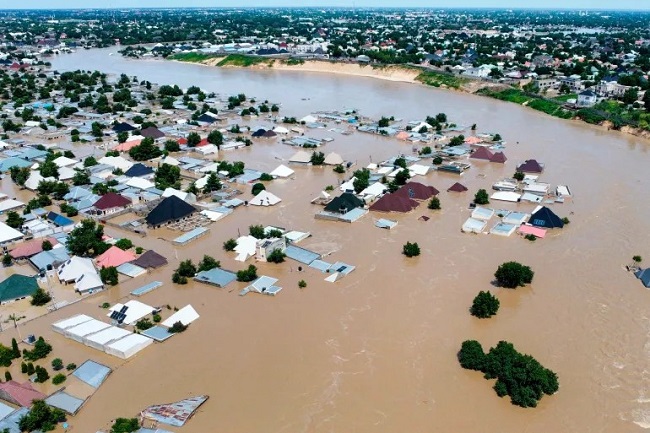
According to her, rainfall naturally supports farming, vegetation and livestock, but also exposes the damaging effects of poor environmental practices carried out before the rainy season.
“Rain itself is not harmful to humans. Rain is a gift and a blessing because once it falls, vegetation returns, farmers go back to their farmlands and livestock find pasture.
“But it also reveals what humans have done to the environment through destructive activities within communities,” she said.
Haruna said practices such as indiscriminate waste disposal, environmental pollution and open defecation contributed to flooding and contamination of water sources during rainfall.
She explained that many residents were unaware of the environmental consequences of their daily activities.
“Once rain falls, it washes waste and contaminants downstream into waterways used by communities,” she said.
Haruna urged journalists and other stakeholders to intensify awareness campaigns and community engagement on environmental protection and climate action.
She also advocated a shift from discussions to practical interventions through programmes such as community-led sanitation initiatives in both rural and urban areas.
Also speaking, the Lead and Executive Director of Transparency and Accountability in Totality Initiative, Mr. Halliru Ahmad, stressed the importance of accountability and multi-sectoral collaboration in tackling climate challenges.
Khalifa said climate change required the involvement of the media, civil society organisations, government institutions and the private sector.

“We need the media to spread information, CSOs to drive implementation at community level and the government to create enabling policies that support climate action,” he said.
He noted that many flood-prone communities lacked adequate drainage systems, awareness and infrastructure needed to reduce climate risks.
According to him, while human behaviour contributes to flooding, communities also require practical alternatives and government support.
Khalifa described stakeholder accountability platforms as critical spaces for dialogue, policy engagement and coordinated action against climate change.
He warned that failure to sustain such collaborations could further expose vulnerable communities to environmental disasters.
By Aisha Gambo



