

Foreign News
Wang Yi Calls for Greater Global South Voice, Warns World Has Entered ‘Dangerous Waters’


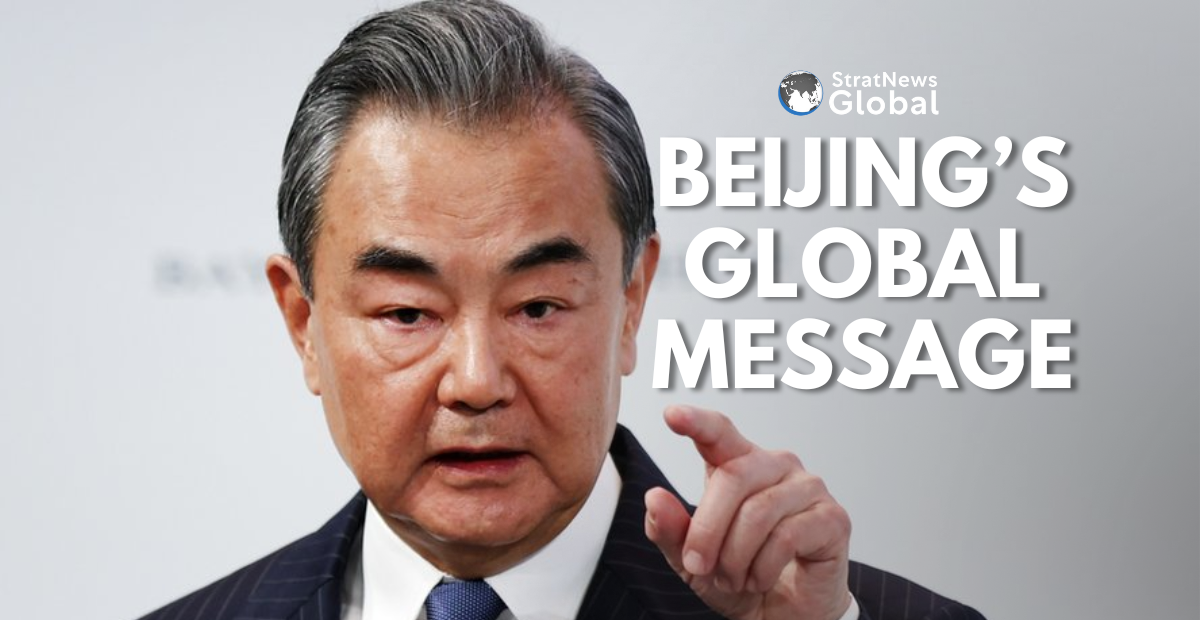
Chinese Foreign Minister Wang Yi on Wednesday called for a more equitable system of global governance, arguing that emerging economies remain underrepresented in international institutions and warning that rising geopolitical tensions are undermining the authority of the United Nations.
Speaking at a rare press briefing in Beijing alongside the release of a white paper on global governance, Wang said all countries, regardless of their size, wealth or level of development, should have an equal voice in international affairs.
Wang stressed that developing nations, often grouped under the banner of the Global South, deserve greater representation in global decision-making processes.
“Countries, whether large or small, strong or weak, developed or developing, are equal members of the international community,” he said, calling for more voices from emerging economies to be heard on the world stage.
Beijing has increasingly sought to position itself as a leading advocate for developing countries, arguing that existing international institutions do not adequately reflect shifts in global economic and political influence.
Warning Over Growing Global Instability
The Chinese foreign minister painted a bleak picture of the current international environment, citing a succession of crises that have created overlapping challenges for governments worldwide.
According to Wang, escalating political and economic disputes have exposed deep-rooted tensions within the international system. He warned that both unexpected shocks and foreseeable threats are becoming more frequent.
Using a maritime analogy, Wang said that “the ship of civilisation has entered dangerous waters with hidden reefs and violent storms,” highlighting the risks facing the global community.
Addressing ongoing conflicts, Wang urged all parties in the Middle East to commit to a ceasefire and work towards building what he described as a sustainable regional security framework.
While he made only brief references to the wars in the Middle East and Ukraine, his remarks were consistent with China’s long-standing position that disputes should be resolved through dialogue and negotiation.
Beijing has repeatedly attempted to portray itself as a neutral diplomatic actor and a supporter of peaceful conflict resolution, positioning itself as a stabilising force in international affairs.
White Paper Focuses on Reforming Global Governance
The white paper released by Chinese authorities seeks to build international consensus on how to respond to increasingly complex global challenges.
Wang argued that preserving the authority and central role of the United Nations remains essential for addressing issues ranging from security and development to climate change and economic stability.
He said meaningful reform of global governance structures should ensure greater fairness and inclusiveness while allowing developing nations to play a larger role in shaping international policies.

China Expands Diplomatic Messaging
The comments come as China continues efforts to strengthen its influence in global governance debates and deepen engagement with developing countries across Asia, Africa and Latin America.
By emphasising the need for a stronger Global South voice and defending the central role of the United Nations, Beijing is seeking to reinforce its image as a champion of multilateralism at a time of growing international uncertainty.
Wang’s remarks underscore China’s broader diplomatic message that a more representative and balanced international system is necessary to address the increasingly interconnected challenges facing the world.
(with inputs from Reuters)



