

Foreign News
PoJK Protests: Unkept Promises, Political Manipulation, Despair


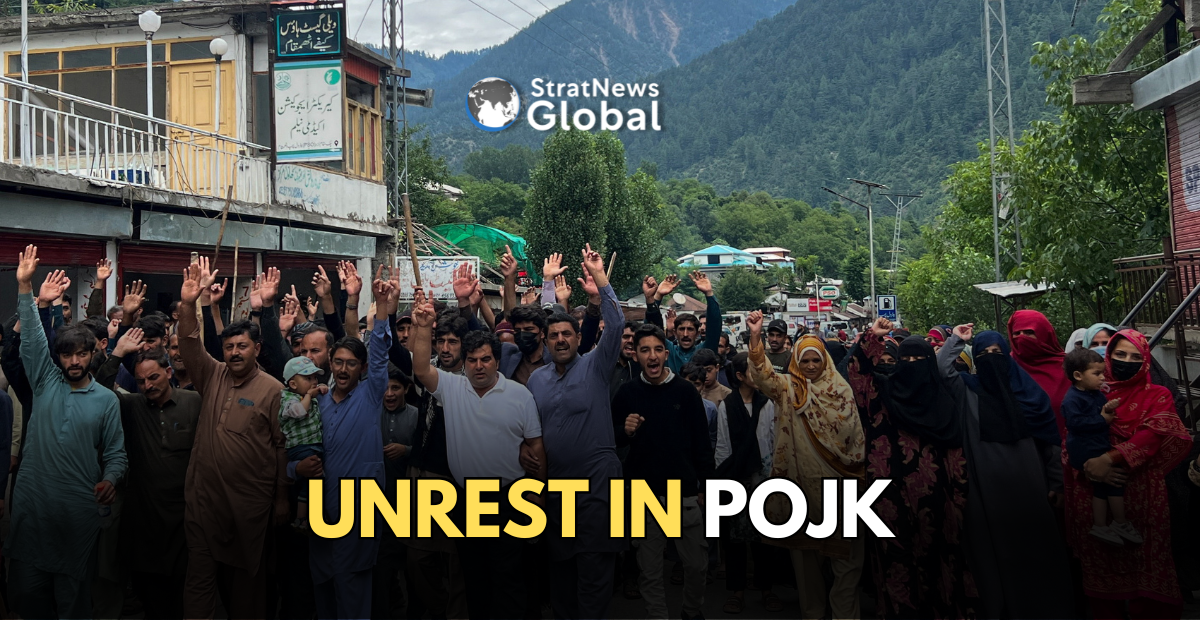
On Thursday, authorities in Pakistan-occupied Jammu and Kashmir (PoJK) are to release the list of candidates who will contest the legislative assembly elections on July 27th. The question is will the list be released? Will the elections be held as scheduled given the explosive situation that has prevailed in the region for the last two months.
What began as a protest in PoJK against high electricity bills, inflation and demands for subsidies and governance reforms has blown up into an indictment of the Pakistani establishment.
The Joint Awami Action Committee (JAAC), a civil-society grassroots movement leading the protests has been banned. The committee has demanded that 12 seats reserved in the assembly for refugees be ended forthwith. But the authorities in Islamabad, which actually runs the region, have said no since the seats help them manipulate and shape the politics there.
According to Sharat Sabharwal, India’s former high commissioner to Islamabad, “Pakistan’s national assembly has often manipulated the smaller parties to change from one government to another. By using force to suppress voices in PoJK instead of making amendments, the mainland government is spoiling its own case.”
IDSA Researcher Priyanka Singh also confirmed that the 12 seats are “used as instruments in powering the mainstream political parties of the country. Pakistan uses these seats to project itself as the ambassador of this whole region of Kashmir.”
That has taken a hard knock after India amended Article 370 in August 2019, revoking the special status of J&K. It removed the last hope among sections of the population that J&K would be “unified” as the Pakistanis have been promising since 1947.
“They have been made to hope to achieve what they now understand is an unachievable goal,” Priyanka Singh said. It has also exposed the faultlines in Pakistan’s Kashmir strategy.
Ambassador Sabharwal believes that the very voices in PoJK that once mobilised that diaspora to target India are now turning against Pakistan’s establishment amid these protests.
The issue also seems to have been about generational awareness. Anju Gupta, a former IPS officer and author of Glocal Terror in South Asia pointed out that “Until now, Pakistan has been living under the dictatorship of the army. They suppressed the voices of people by using brute power against everyone. But the generational change all over the country is now reflecting through PoJK in its protests.”
She argues that the protests mirror a broader, youth-led restiveness across Pakistan — from PTI’s support base to Balochistan’s nationalist movements. The youth are at the forefront of this unrest and have a greater appetite to restore democracy to whichever extent they can.
As for the more immediate question about elections, she says that while the hybrid civil-military model may continue in PoJK, it may not work in the long run. For India, this means paying more attention to the situation beyond the few statements by the MEA.




