

Education
Adaptation Fund backs first Nigeria Bank of Industry project in $98.8m climate finance approval – EnviroNews


– Advertisement –
The Adaptation Fund Board has endorsed its first project submitted by Nigeria’s Bank of Industry (BOI), marking a significant development in the country’s efforts to mobilise international climate finance through public development banks.
The endorsement came as the Board approved $98.8 million in new climate adaptation projects at the close of its 47th meeting on October 23, 2026, while setting a target to mobilise at least $1.2 billion between 2026 and 2029 to respond to growing demand for adaptation funding.
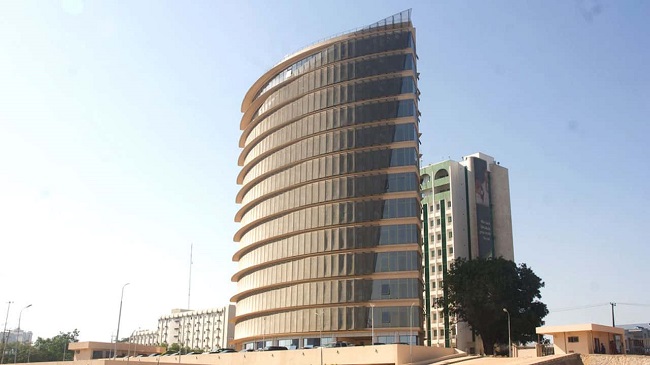
The approval of the Nigerian institution’s proposal represents an expansion of collaboration between the Adaptation Fund and public development banks, potentially strengthening the role of domestic financial institutions in delivering climate adaptation interventions.
However, the Fund’s announcement did not disclose the amount allocated to the Bank of Industry project, its specific objectives or the Nigerian communities and sectors expected to benefit.
The development comes amid growing concerns over the impacts of climate change on developing countries, particularly those facing increasing exposure to flooding, drought, food insecurity and other climate-related hazards.
For Nigeria, where climate risks threaten agriculture, infrastructure, livelihoods and economic development, access to adaptation finance is critical to strengthening resilience and protecting vulnerable communities.
The Bank of Industry, a Nigerian public development finance institution, provides financing and support to businesses across productive sectors of the economy. Its involvement in the Adaptation Fund’s project portfolio could create additional opportunities to connect development finance with climate resilience priorities.
The Fund’s decision also highlights the growing importance of diversifying the institutions through which international climate finance reaches developing countries.
Adaptation finance demand hits record levels
According to the Adaptation Fund, its active project pipeline has reached nearly $2 billion, reflecting record demand for financing as global temperatures continue to rise and the world faces the prospect of exceeding the 1.5-degree Celsius warming threshold.
The Board responded by establishing a resource mobilisation target of at least $1.2 billion for 2026–2029, supported by an action plan to engage both sovereign and non-sovereign contributors.
It also called for the Fund’s transition to serve the Paris Agreement to be finalised at the 31st United Nations Climate Change Conference (COP31), scheduled to take place in Antalya, Türkiye, from November 9 to 20, 2026.
The transition is expected to open access to an additional source of climate finance through a five per cent share of proceeds from carbon credits generated under Article 6.4 of the Paris Agreement.

Article 6.4 establishes a United Nations-supervised mechanism through which countries and other eligible participants can generate and trade carbon credits from activities that reduce greenhouse gas emissions.
The proposed share of proceeds would provide a dedicated funding stream to support adaptation in developing countries, helping diversify the Fund’s resources beyond voluntary contributions.
Ali Daud Mohamed, Chair of the Adaptation Fund Board, said the transition would enable the Fund to enhance and diversify its resources while expanding support for vulnerable communities.
“The Adaptation Fund Board underscored the urgency of the Fund’s Transition to the Paris Agreement at COP31,” Mohamed said.
He added that the transition would allow the Fund to receive a five per cent share of proceeds from carbon credits.
“The Adaptation Fund turns these resources into support for vulnerable communities to adapt, protecting life’s and livelihoods, and enhancing resilience and food security,” he said.
Mohamed noted that the Fund was experiencing increasing demand for its support amid rising climate impacts.
New strategy to guide future investments
The Board also directed the Adaptation Fund secretariat to begin work on a new medium-term strategy to guide its operations over the next five years.
Mikko Ollikainen, Head of the Adaptation Fund, said the strategy would help the institution respond to changing climate risks, shifting political priorities and the widening gap between adaptation needs and available finance.
“After nearly 20 years serving the most vulnerable on the front lines of climate change, we have delivered concrete results and learned a great deal,” Ollikainen said.
“Now we are kicking off work on a new medium-term strategy to guide us for the next five years.”
He said adaptation finance needs were growing much faster than the resources available, making it necessary for the Fund to assess what was working and how its operations needed to evolve.
The strategy is expected to help position the Fund to respond to increasing requests for support while improving the effectiveness of its investments.
Africa receives significant adaptation support
The latest funding approvals include major regional projects targeting climate vulnerability in Africa.
A $30 million project to be implemented by the United Nations Development Programme (UNDP) will support Ethiopia, Kenya and Somalia, while the Sahara and Sahel Observatory will implement a $25.2 million regional project in Chad and Togo.
The approvals reflect the Fund’s continued focus on countries facing significant climate risks, including those with limited financial and institutional capacity to respond.
Other approved projects include $5 million for a large-scale innovation project in Burundi, to be implemented by the United Nations Environment Programme (UNEP), and $4.9 million for a locally led adaptation project in Rwanda, to be implemented by UNDP.
The Burundi initiative represents an expansion of an earlier successful pilot, demonstrating the Fund’s interest in scaling up approaches that have shown potential to strengthen climate resilience.
The Board also approved $4 million for a project in Tanzania to be implemented by the National Environment Management Council, alongside a $500,000 learning grant for the country.
Beyond Africa, the approved funding includes $14.9 million for a project in Tonga, to be implemented by the Pacific Community, and $10 million for a project in Viet Nam, to be implemented by the International Fund for Agricultural Development.
The Board also approved $4.1 million in Project Formulation Grants to implementing entities to develop 33 associated project concepts further.
The Fund said least developed countries were involved in nearly three-quarters of the newly approved projects, while small island developing states also featured prominently in the latest round of funding.
Implications for Nigeria’s climate finance mobilisation
The endorsement of the Bank of Industry’s proposal provides a new entry point for Nigeria in its engagement with the Adaptation Fund.
Public development banks can potentially help bridge the gap between international climate finance providers and domestic investment priorities by drawing on their existing financial systems and relationships with businesses and other economic actors.
For Nigeria, the significance of the endorsement will ultimately depend on the project’s funding allocation, implementation arrangements and expected adaptation outcomes, details of which were not provided in the Fund’s announcement.
The decision nevertheless comes at a time when developing countries are seeking more predictable financing to address the effects of climate change and integrate resilience into their development plans.
With its nearly $2 billion active pipeline and a new $1.2 billion resource mobilisation target, the Adaptation Fund is preparing for a period of increased demand.
Its planned transition to serve the Paris Agreement, alongside the proposed carbon-credit proceeds and a new medium-term strategy, could reshape its capacity to finance adaptation in vulnerable countries.
As preparations for COP31 intensify, the Fund’s latest decisions underline the importance of mobilising additional resources and expanding partnerships to ensure that climate finance translates into practical support for communities facing increasingly severe climate risks.



