

Education
African civil society groups reject wildlife carbon markets, warn against ‘Carbon Colonialism’ – EnviroNews


– Advertisement –
African civil society organisations have rejected plans to expand global carbon markets through wildlife conservation and nature-based carbon offset schemes, warning that such initiatives could deepen colonial exploitation, undermine national sovereignty and violate the rights of local and Indigenous communities.
In a statement titled Defending Our Continent from Carbon Colonialism, the organisations accused wealthy countries, multinational corporations and international financial institutions of seeking to turn Africa’s forests, wildlife habitats and marine ecosystems into carbon offset assets to compensate for their continued greenhouse gas emissions.
They argued that Africa’s natural heritage, including its lions, elephants, whales and other wildlife, should not become instruments for helping industrialised countries and major polluters avoid reducing emissions at source.
The groups maintained that Africa’s wildlife and ecosystems belong to its people and should not be commodified for the financial benefit of foreign investors and corporations.
“Africa is for Africans, not for the Global North’s big polluters, who have destroyed the climate, are cooking our continent, and threaten the inhabitability of our planet,” the statement declared.
The organisations described the growing interest in wildlife-based carbon credits as a new form of colonialism, drawing parallels with the 1885 Berlin Conference, during which European powers partitioned Africa among themselves.
They cited an October 2026 European Parliament resolution calling for the formal integration of wildlife conservation into global climate policy, arguing that the initiative could facilitate the conversion of wildlife habitats and migration corridors into carbon offset projects.
According to the groups, such proposals risk turning the habitats of Africa’s iconic wildlife, including elephants and wildebeests, into carbon trading assets for multinational corporations and wealthy countries.
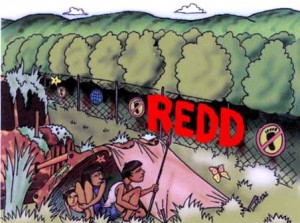
They also expressed concern over the expansion of Reducing Emissions from Deforestation and Forest Degradation (REDD+) projects, which they described as a model for emerging premium wildlife carbon schemes.
The organisations alleged that some REDD+-type projects facilitate extractive activities within project areas while threatening national sovereignty, customary land rights, women’s rights and the livelihoods of local communities.
They warned that the growing commercialisation of conservation could marginalise communities whose livelihoods and cultural identities are closely connected to forests, wildlife and other natural resources.
Rejection of nature-based financial instruments
The civil society groups also criticised the growing use of financial instruments such as nature bonds and debt-for-nature swaps, arguing that they subject natural ecosystems to financial speculation rather than prioritising their protection and the needs of communities.

They specifically questioned the World Bank’s prototype Rhino Bond, describing it as a flawed initiative that creates conflicts of interest and provides opportunities for private investors to profit from wildlife conservation.
According to them, attaching financial value to nature does not necessarily guarantee its protection but risks turning ecosystems into commodities for financial markets.
They similarly rejected debt-for-nature swaps, describing them as another manifestation of debt colonialism through which African countries could become increasingly entangled in international carbon markets.
The organisations insisted that conservation should protect nature as a source of life, food, livelihoods and cultural heritage rather than transform it into a financial asset.
Call for emissions cuts at source
On the climate science underpinning carbon offsets, the groups argued that nature-based carbon credits were an inadequate response to the climate emergency because ecosystems have limited capacity to absorb and store carbon dioxide.
They maintained that carbon offsetting through terrestrial and marine ecosystems could create a false impression that continued fossil fuel emissions could be compensated for through conservation projects.
The statement called on the United Nations to acknowledge the limitations of carbon offsets, citing studies which, according to the organisations, indicate that nature’s capacity to absorb carbon dioxide peaked almost two decades ago.
They further claimed that global forests became net sources rather than sinks of carbon in 2023 and 2024, reinforcing the need for immediate reductions in greenhouse gas emissions.
“There are no alternatives to cutting greenhouse gas emissions at source,” the organisations declared.
They called for a fundamental shift in global climate policy towards prioritising people over corporate profits, planetary survival over fossil fuel interests and environmental protection over destructive economic activities.
Demands to UN climate negotiators
The African civil society organisations urged the Conferences of the Parties to the United Nations Framework Convention on Climate Change (UNFCCC) to abandon efforts to build global carbon markets around the commodification of nature.
Specifically, they demanded that climate negotiators reject wildlife carbon offsets and REDD+ schemes linked to Articles 5 and 6 of the Paris Agreement.
They also called for immediate measures to reduce greenhouse gas emissions at source and accelerate the phase-out of fossil fuels.
Additionally, they urged the UN Special Committee on Decolonization to expand its mandate to address what they described as carbon colonialism, arguing that the exploitation of African ecosystems through international carbon markets represents a continuation of historical patterns of domination.
The groups maintained that African countries must retain control over their natural resources and determine conservation priorities in ways that respect the rights, interests and aspirations of their people.
Wildlife should not become a marketing tool for carbon trading
The statement also criticised the use of wildlife imagery and merchandise to promote nature-based solutions, rewilding initiatives and carbon offset projects.
It specifically condemned the sale of stuffed animal toys to generate funding for conservation-related carbon schemes, describing the practice as an inappropriate commercialisation of Africa’s wildlife heritage.
The organisations warned against using the emotional appeal of iconic animals, particularly lions, to improve the public image of carbon markets and sell pollution permits.
“Our Big Cats are not to be used for a public relations make-over of beleaguered carbon markets,” the statement said.
Emphasising the cultural and symbolic importance of lions to Africa, the groups declared that wildlife should be protected as part of the continent’s natural and cultural heritage rather than converted into commercial carbon products.
“Our Lion King belongs to Africa, and is our symbol, pride and heritage,” they stated.
The declaration adds to growing civil society concerns about the implications of carbon markets, nature-based solutions and international conservation financing for land rights, community participation and African countries’ control over their natural resources.
The organisations insist that addressing climate change requires wealthy countries and major polluters to reduce their emissions directly rather than rely on African ecosystems and wildlife to offset continued pollution.



